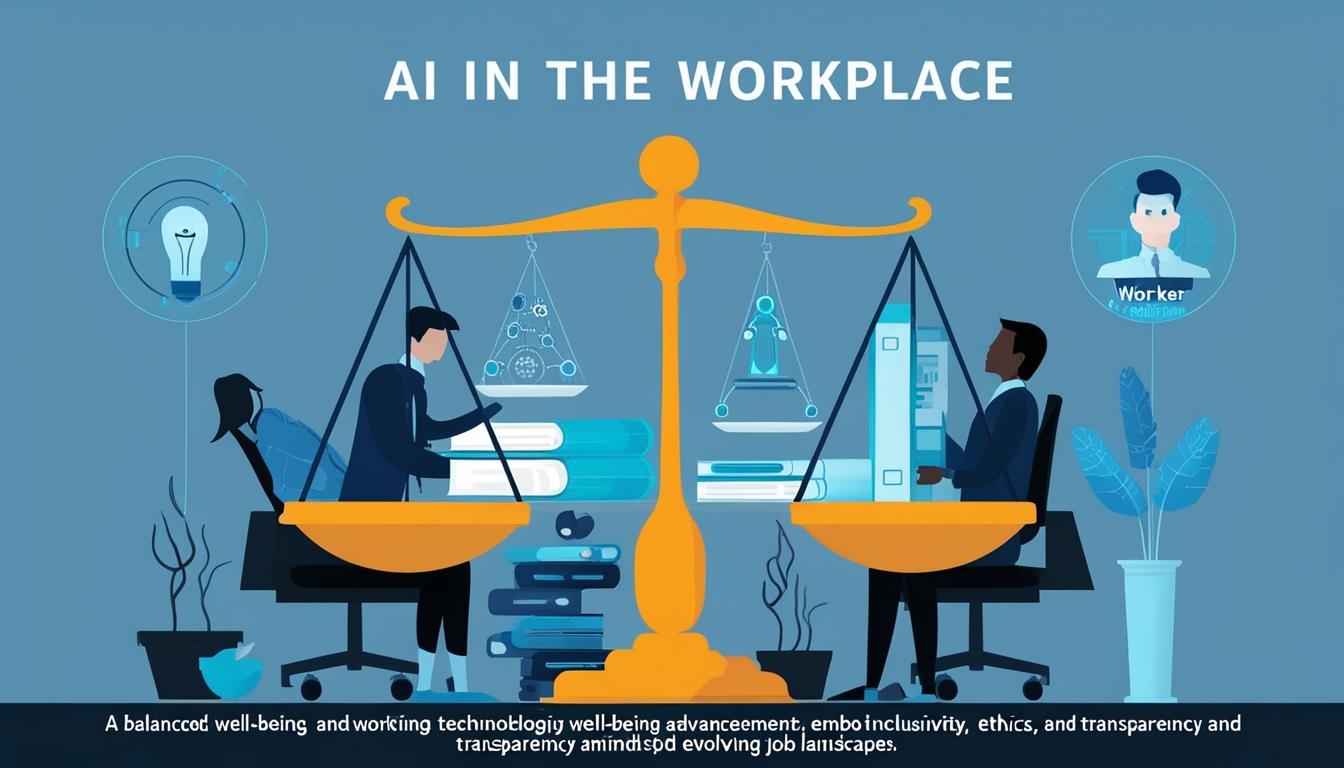
The U.S. Department of Labor (DOL) has published a comprehensive set of best practices aimed at guiding developers and employers in the responsible deployment of artificial intelligence (AI) technologies in workplaces. Unveiled last week, these voluntary guidelines seek to strike a balance between the potential efficiency gains AI offers and the imperative to safeguard workers from issues such as discrimination and job displacement.
This initiative follows a significant stride from the administration approximately one year ago when President Joe Biden signed an executive order targeting the evaluation of AI's capabilities and associated risks across both public and private sectors. The executive order led to the establishment of the White House AI Council and set forth guidelines for privacy protection, workforce equity, and the management of AI talent amidst evolving labour market conditions.
At the heart of the DOL’s effort is the publication titled "Artificial Intelligence and Worker Well-being: Principles and Best Practices for Developers and Employers." This guide was crafted with insights culled from broad stakeholder engagement, including sessions with workers, union representatives, researchers, academics, employers, and AI developers. This collaborative effort aims to mitigate AI-related risks, such as data privacy concerns, potential discrimination, and workforce upheaval, while fostering innovation.
Acting Secretary of Labour, Julie Su, emphasised the pivotal nature of these guidelines, stating, "Whether AI in the workplace creates harm for workers and deepens inequality or supports workers and unleashes expansive opportunity depends (in large part) on the decisions we make. The stakes are high."
The report delineates eight guiding principles, beginning with the fundamental premise of centring worker considerations. It advocates for workers, particularly those from marginalised communities, to be involved in the AI design and development process. This inclusive approach is expected to enhance both job quality and business outcomes. Furthermore, the guidelines urge unions to engage in good-faith negotiations regarding AI use and surveillance within workplaces.
Among other best practices, the DOL emphasises ethical AI development, ensuring systems are designed with input from and protection for workers. Organisations are encouraged to establish robust governance structures for AI assessment and to maintain transparency about systems employed within the workplace.
The report stresses that AI systems should not contravene workers’ rights or undermine protections concerning health, safety, wages, and discrimination. Employers are advised to conduct audits on AI systems before deployment to identify and make public any potential discriminatory impacts pertaining to race, colour, national origin, religion, sex, disability, age, genetic information, and other protected categories.
Moreover, the guidelines suggest employers assess the potential implications of AI tools on job opportunities before implementation, with a recommendation to share the economic benefits gained from AI-induced productivity increases with employees, potentially through better wages, benefits, or additional training opportunities.
Recognising AI's transformative impact, the DOL also touches upon the potential displacement of workers due to AI. In such cases, employers are encouraged to retrain employees and endeavour to redeploy displaced workers within the organisation. Collaborating with state and local workforce agencies for skills development and upskilling programs is also recommended.
Lastly, the DOL advises stringent data privacy measures for employers using AI that collects employee data. The data collection should be minimal and consent-based, aimed solely for functional improvement without unnecessary external sharing.
Julie Su encapsulated the vision guiding these recommendations by underscoring AI's transformative potential prioritised towards enhancing worker well-being and facilitating innovative advancements. These guidelines are intended as a framework to complement, not replace, existing or forthcoming regulations at federal or state levels, providing a flexible foundation that can be tailored with input from the workers themselves.
Source: Noah Wire Services