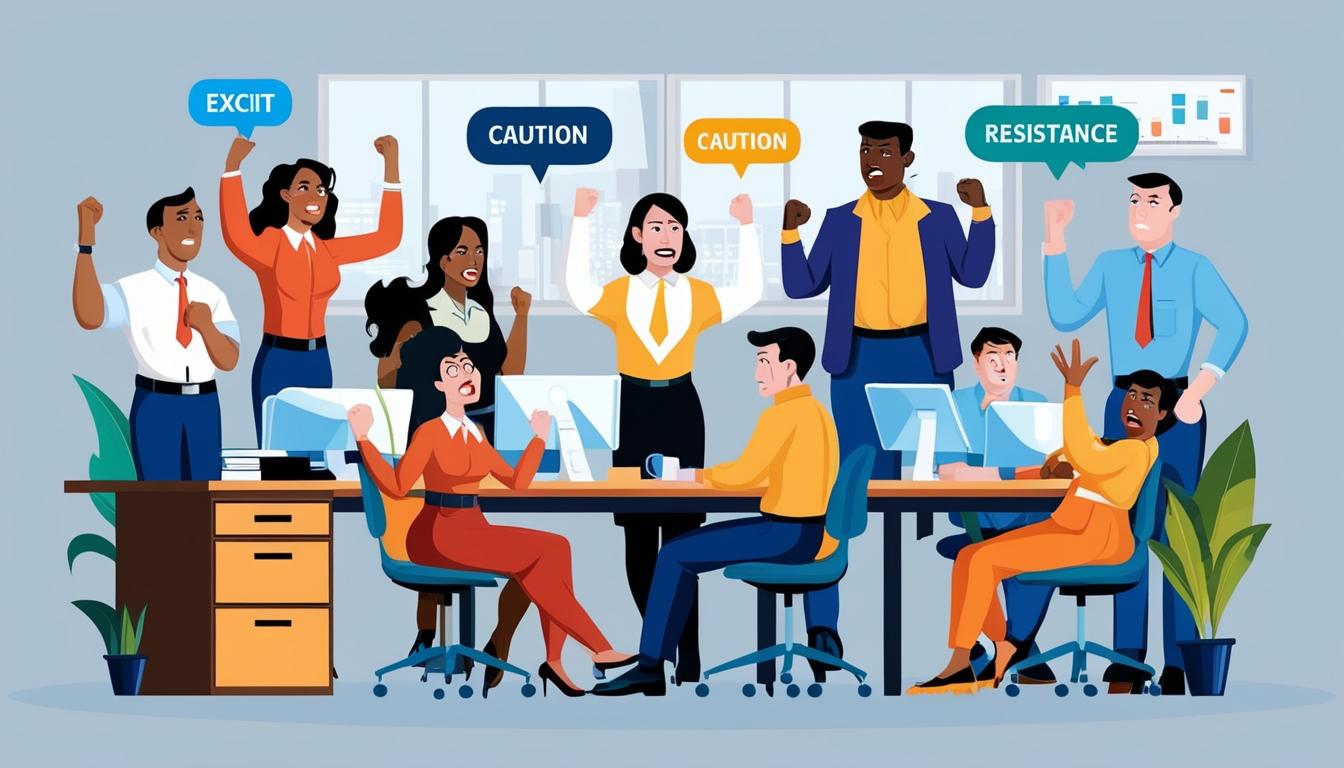
SAN FRANCISCO — As the technological landscape shifts, the rise of Artificial Intelligence (AI) has become a central topic in business discussions, leaving many office workers uncertain about the frequency and manner of its use, as well as its potential to replace human roles in the workplace. The workplace communications platform, Slack, recently conducted an extensive study to probe these concerns, surveying 5,000 desktop workers.
The findings revealed a diversity of 'AI personalities' among respondents, categorised into five archetypes based on their interaction with AI. These include "The Maximalist," those who are enthusiastic users of AI; "The Underground," who discreetly use AI, perhaps fearing judgment; "The Rebel," those who are resistant to AI; "The Superfan," who are excited about AI but have yet to use it; and "The Observer," who prefer to take a cautious approach.
Among these groups, only half of the respondents identified as either Maximalists or Underground users, indicating a potential hurdle for companies that aim to integrate AI more extensively into their operations. In a conversation with the Associated Press, Christina Janzer, Slack’s senior vice president of research and analytics, highlighted the complexity of these varied perceptions, stating that understanding the emotional responses to AI is crucial in promoting its adoption.
Janzer noted that Maximalists are enthusiastic about AI and actively discuss their use of it, encouraging others to follow suit. Conversely, Underground users operate clandestinely, worried about perceptions of incompetence or cheating. This suggests a need for companies to offer clear guidelines and encouragement to use AI openly and positively.
The study also noted a significant gender disparity among the Rebel group, with a majority being women, who also tend to be older. Janzer speculated that this might be related to a lack of trust women perceive in the workplace, which affects their willingness to adopt technologies that might be seen as job replacements. Men, on the other hand, seem to have higher adoption rates of AI, potentially due to a greater sense of trust and confidence from their employers.
Janzer argues that clear company policies and a culture that celebrates AI use could promote more open usage. Encouraging a culture of experimentation, where employees feel at ease to try, test, and gradually incorporate AI into their tasks, could be key to broader adoption.
Despite the enthusiasm and potential benefits, concerns remain about AI's implication for employment. Janzer posits that individuals who embrace AI will replace those who don’t, implying a future workplace where collaboration with AI technologies is a significant advantage.
This study underscores the transformative impact AI is having across workplaces and the complex emotional and behavioural landscape it is navigating. As AI technology continues to develop, its integration into the workplace will likely remain a nuanced and evolving topic.
Source: Noah Wire Services