AI-Assisted Garden to Feature at 2025 Chelsea Flower Show
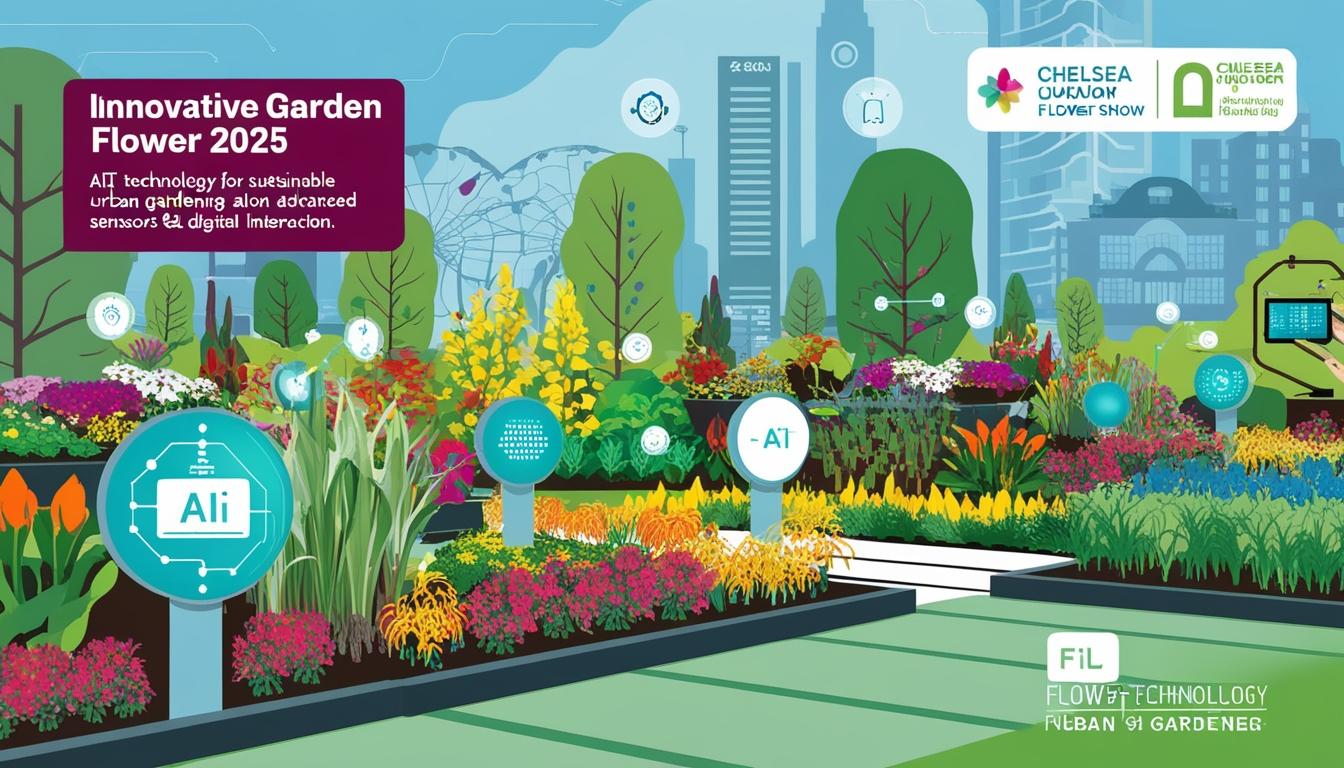
In a groundbreaking development for horticulture, the prestigious Chelsea Flower Show will showcase an innovative garden incorporating artificial intelligence (AI) to enhance its sustainability. This unique garden, courtesy of Chelsea gold medal-winning designer Tom Massey, has been developed in collaboration with Microsoft and is sponsored by Avanade, a prominent technology company. This AI-assisted garden aims to revolutionise urban gardening by optimising plant care through advanced technology integration.
Scheduled to debut at the world-renowned show in Chelsea, London, in 2025, the garden is designed to adapt to its surrounding environment, even under changing climate conditions. Sensor data will be analysed to customise watering, feeding, and other necessary gardening processes, ensuring optimal plant growth. Seen as a pioneer in the field, Massey has assured that the garden's aesthetic remains green and organic, appealing to traditionalists despite its high-tech backbone. As Massey explains, "AI hasn't designed the garden, but it is assisting the gardeners who will look after it."
The garden is set to be equipped with a multitude of sensors and monitors that track factors such as soil moisture, pH levels, and nutrient content. The AI system allows gardeners to engage with the garden interactively, essentially 'asking' the garden what it requires to thrive. Responses might include insights such as needing additional water or even a 'haircut,' a playful reference to pruning.
Incorporating a digital twin accessible via QR code, the garden will also offer projections on how it might perform under different future climate scenarios, a vital feature given the current focus on environmental sustainability. This innovation aims not just to assist in plant care but also to address critical concerns such as water usage efficiency and biodiversity enhancement. The AI components play a crucial role in deciding what kind of plants flourish best in given soil conditions, potentially revolutionising how urban gardens could be designed and maintained in future.
Annette Giardina, Avanade's UKI innovation & sustainability lead, provided insights on the energy consumption associated with AI technology. Although initial usage can be high, she noted that as models receive more training, their energy consumption decreases. Siting data centres in residential areas, where waste heat can be repurposed for building heating, is one way the environmental impact can be mitigated.
The Royal Horticultural Society (RHS), which organises the Chelsea Flower Show, is also capitalising on AI advancements. The RHS is set to develop a knowledge bank of plants that aid in pollination, carbon capture, and water management. Furthermore, the society's 'ChatBotanist' tool is designed to offer gardening advice to members and users of the RHS Grow app, thereby allowing expert advisers more time for critical research.
Among the various highlights of the upcoming show, other notable features include the first-ever Chelsea garden by famed horticulturist Monty Don focusing on canine-friendly spaces and an emphasis on diversity and inspiration in gardening design. The event is expected to attract a wide range of garden enthusiasts, eager to explore the intersections of nature and technology.
The Chelsea Flower Show continues to be a beacon of innovation in horticulture, offering a glimpse into the future of gardening. These advancements firmly place the show at the forefront of discussing sustainability and technology within the domain, setting new benchmarks for urban garden management. As technology becomes an increasingly integral part of life, the integration of AI in garden design signifies a bold step towards future-proofing our green spaces.
Source: Noah Wire Services