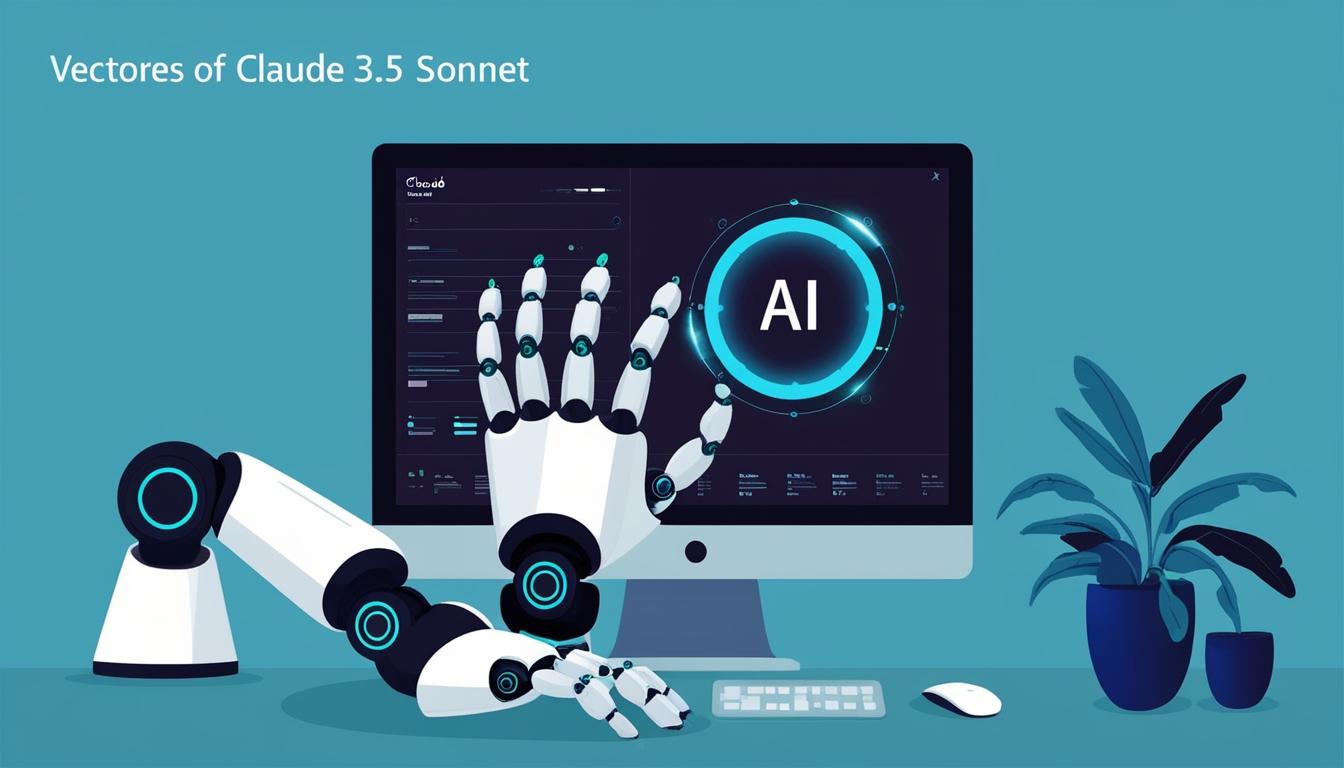
Anthropic has introduced a new AI model named Claude 3.5 Sonnet, designed to carry out computer tasks autonomously. This model, unveiled on Tuesday, signifies a significant step forward in artificial intelligence, with capabilities that allow it to perform desktop functions such as keystrokes and mouse clicks, effectively interacting with any installed software on a user's computer.
This groundbreaking development marks Anthropic's entry into the competitive arena of "AI agents," a burgeoning category of productivity-oriented AI technologies. These agents are crafted to execute various software functions and other computer-related tasks with a degree of adaptability that, in theory, mirrors human capabilities.
Jared Kaplan, Chief Science Officer at Anthropic, described this advancement as heralding a new era, where models can utilize the tools humans employ for task completion. The concept has garnered interest for its wide range of applications, from simple trip planning to more intricate tasks like programming.
In practical demonstrations, the Claude 3.5 Sonnet showed potential in tasks such as planning a sunrise visit to the Golden Gate Bridge. The AI used a web browser to scout viewing spots and incorporated the details into a calendar app. However, it overlooked practical travel directions. In another scenario, it set up a basic website using Microsoft's Visual Studio Code and corrected a minor error when prompted.
Despite the potential, challenges remain, particularly regarding reliability. As reported by TechCrunch, the AI completed less than half of its tasks related to booking and modifying flight reservations during testing. This showcases ongoing issues in dependability, especially prevalent in AI tasks involving code generation.
Security is another significant consideration, as such AI systems, with their comprehensive access to computer systems, may pose risks. Anthropic acknowledges this and stresses the importance of releasing the AI in a controlled manner to observe and mitigate potential issues. The company argues that introducing these systems at a controlled scale will aid in the development of safety precautions as they evolve.
Released in a beta mode for developers, Claude 3.5 Sonnet can be integrated via an API, allowing users to program it for diverse tasks such as moving cursors, typing, and clicking buttons—akin to human computer interactions. This model's deployment aims to automate repetitive procedures and test software, while also undertaking more exploratory tasks like research.
Several companies, including Asana, Canva, Cognition, DoorDash, Replit, and The Browser Company, have already begun leveraging Claude 3.5 Sonnet’s capabilities. Replit, for instance, uses it to assess applications on its Replit Agent platform. These implementations reflect the potential impact of AI on various industry sectors.
The AI's ability to interact with computers is facilitated by its capability to process and respond to images, such as screenshots, determining cursor movements through pixel analysis. However, the model is in its nascent stages and currently lacks the sophistication required for more complex operations, like window manipulation or screen zooming.
In benchmarking tests, the model achieved a 14.9% performance score, a notable improvement from previous models, although still significantly below human proficiency. As this technology evolves, Anthropic anticipates rapid improvements in speed, reliability, and utility for end users, while prioritising the incorporation of safety measures alongside enhanced functionalities.
Developers interested in experimenting with Claude 3.5 Sonnet can access the computer-use beta through the Anthropic API, Amazon Bedrock, and Google Cloud’s Vertex AI, opening new possibilities for AI integration into everyday computing tasks.
Source: Noah Wire Services