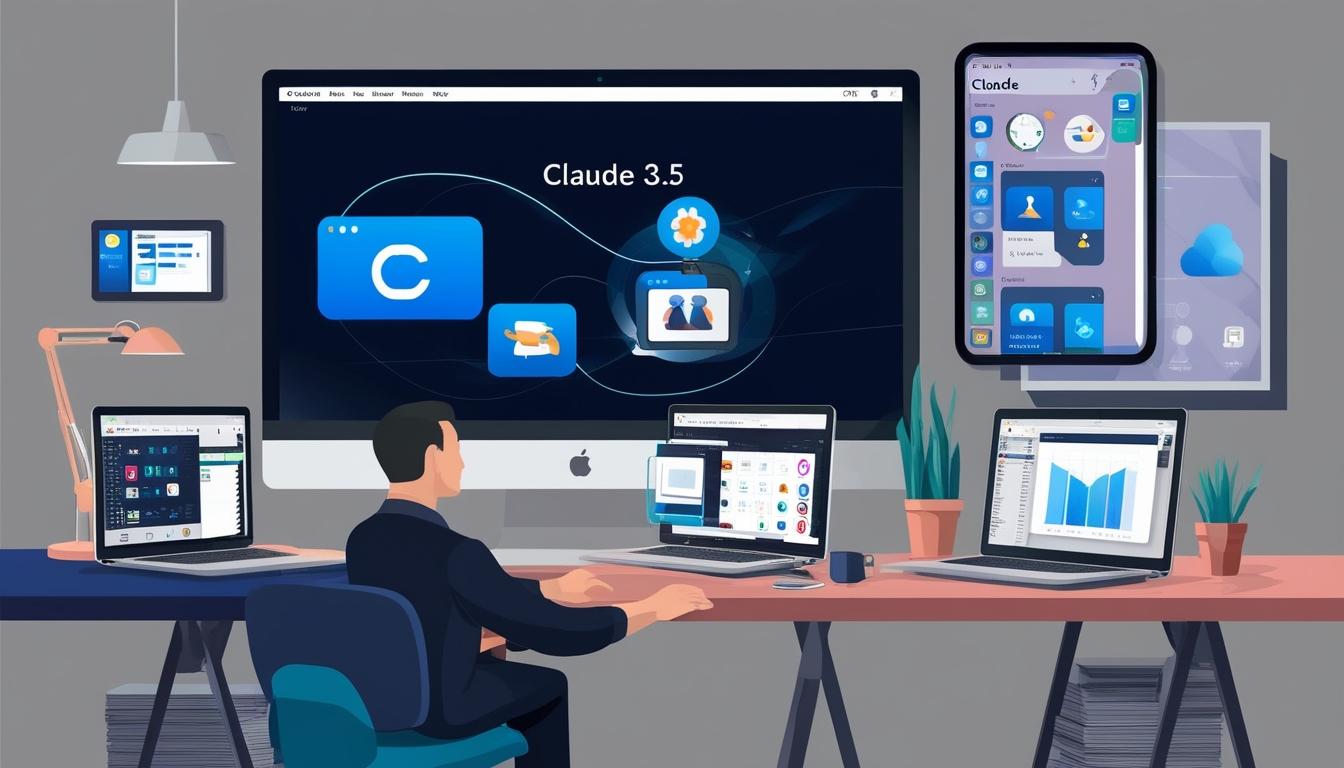
Anthropic, known for its focus on artificial intelligence research and safety, has unveiled new advancements in its AI model series, introducing Claude 3.5 Sonnet and Claude 3.5 Haiku. These developments aim to transform how businesses handle complex processes by incorporating a feature known as "Computer Use." This capability allows the AI to mimic human interactions with computer interfaces, such as navigating applications, clicking buttons, and inputting text, potentially heralding a new era of automation and efficiency in various industries.
The "Computer Use" feature represents a significant leap from traditional AI functionalities, as it extends beyond mere text interactions to more dynamic engagements with digital environments. According to Mike Krieger, Chief Product Officer at Anthropic, these innovations could revolutionise productivity across sectors by enabling AI to undertake tasks involving multiple application processes, such as conducting research online, managing repetitive tasks, and automating multi-step actions.
Notably, early adopters like GitLab, Canva, and Replit are already reaping benefits from Claude 3.5 Sonnet's features. GitLab reports a 10% improvement in reasoning capabilities within its software development processes. Similarly, Replit foresees Claude acting as an autonomous verifier capable of alleviating bottlenecks in coding projects. Canva is also exploring how Claude's capabilities can expedite design work, aiming to bring substantial advantages to their workflow.
What distinguishes Claude's new abilities is its capacity to "see" a screen via screenshots, allowing it to operate across diverse software platforms and applications. In one illustrative demo, Claude efficiently completed a vendor form by cross-referencing information across multiple systems, highlighting its potential to minimise human intervention in complex processes. This flexibility positions Claude as a versatile tool for industries such as finance, legal services, and customer support, where tasks often involve navigating between various software systems.
Despite the potential, the introduction of such capabilities inevitably raises concerns about security and privacy. Anthropic has proactively addressed these issues by implementing stringent safeguards, ensuring that Claude can only access a computer when developers enable specific tools, such as a screenshot functionality and an action-execution layer. Furthermore, misuse detection systems and restrictions on accessing particular websites are in place to ensure data privacy and security.
Currently, the "Computer Use" feature is being rolled out in a limited public beta, accessible via an API. This strategic approach allows developers to explore its functionalities in a controlled environment before a broader public release. Anthropic is committed to improving this technology, acknowledging that while the AI can perform complex tasks, it still struggles with simple actions, such as scrolling or zooming, necessitating human oversight for critical operations.
The potential applications of this technology are vast. From automating data entry, customer service tasks, and IT support to envisioning AI-assisted processes in legal, compliance, and healthcare fields, Claude's capabilities hint at a future where AI seamlessly integrates into and enhances digital workflows across industries. As the technology matures, businesses could see dramatic shifts in how work is conducted, sparking discussions on the implications for roles traditionally reliant on such tasks. While still in its nascent stages, Claude's "Computer Use" sets the stage for a future where AI plays a crucial, expanded role in the workplace.
Source: Noah Wire Services