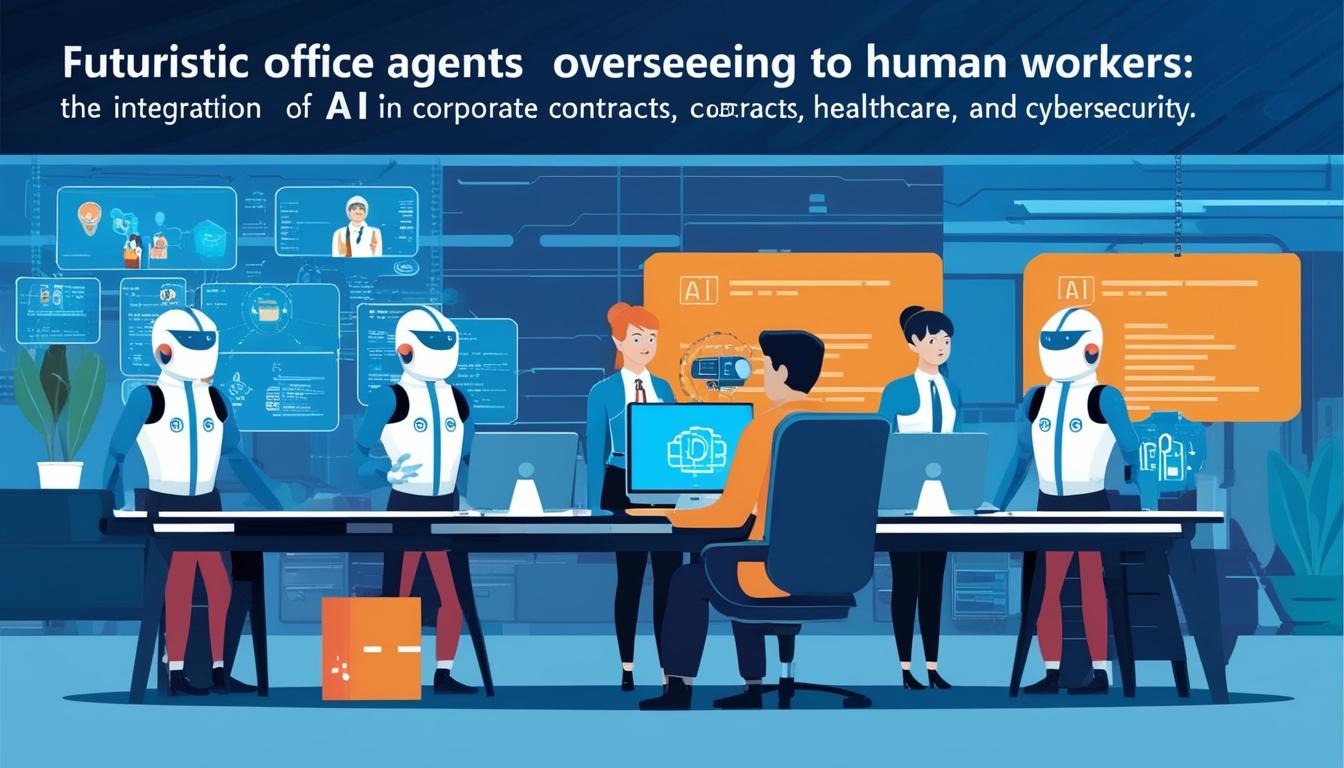
The rapid integration of Artificial Intelligence (AI) into various industry sectors is set to redefine workforce contracts, healthcare operations, corporate branding, and cybersecurity measures by the end of the decade, according to predictions from industry experts.
A notable transformation is anticipated in employment contracts by 2027, where it is projected that 70% of new hires will encounter terms regarding licensing and fair use of AI representations of their personas. The rise of large language models (LLMs) in enterprises presents a challenge as these models, with no fixed expiration date, hold onto employees' personal data far beyond their tenure. This scenario is expected to spark public debates over digital persona ownership, potentially resulting in legal actions.
In the healthcare sector, emotional AI is gaining traction as a viable tool to combat burnout among healthcare providers. By implementing emotional AI for tasks like patient data collection, providers aim to alleviate the pressure from increased workloads, ultimately addressing what has been termed an 'empathy crisis'. By 2027, it is predicted that 70% of healthcare technology contracts will include stipulations related to emotional AI to avert substantial financial risks.
The corporate world is also poised to embrace AI innovations, with 30% of S&P companies expected to incorporate generative AI branding, such as "xxGPT", by 2028. Chief Marketing Officers (CMOs) recognise generative AI (GenAI) as a catalyst for developing new products and business models, enhancing customer experiences, and streamlining processes, thereby unlocking novel revenue streams. As competition in the GenAI landscape intensifies, companies are geared towards developing customised models specific to their industries.
However, the integration of AI also introduces significant security challenges. It is estimated that by 2028, a quarter of enterprise cybersecurity breaches will be attributed to the misuse of AI agents, instigated by both external threats and discontented internal parties. This evolving threat landscape necessitates the development of robust security measures to protect businesses from sophisticated attacks.
To counter these risks, 40% of Chief Information Officers (CIOs) are expected to call for the inclusion of 'Guardian Agents' by 2028. These agents are designed to autonomously monitor, supervise, and, if need be, constrain AI agent activities. The concept extends traditional security monitoring to include observability, compliance assurance, ethics, and data filtering. However, experts caution that current security protocols may not be sufficient to ensure the appropriate utilisation of AI agents, signalling a need for vigilance as enterprises continue to incorporate AI into their strategic frameworks.
This upcoming AI-driven transformation across industries paints a complex picture for businesses, employees, and consumers, as they navigate these technological advancements and their implications.
Source: Noah Wire Services