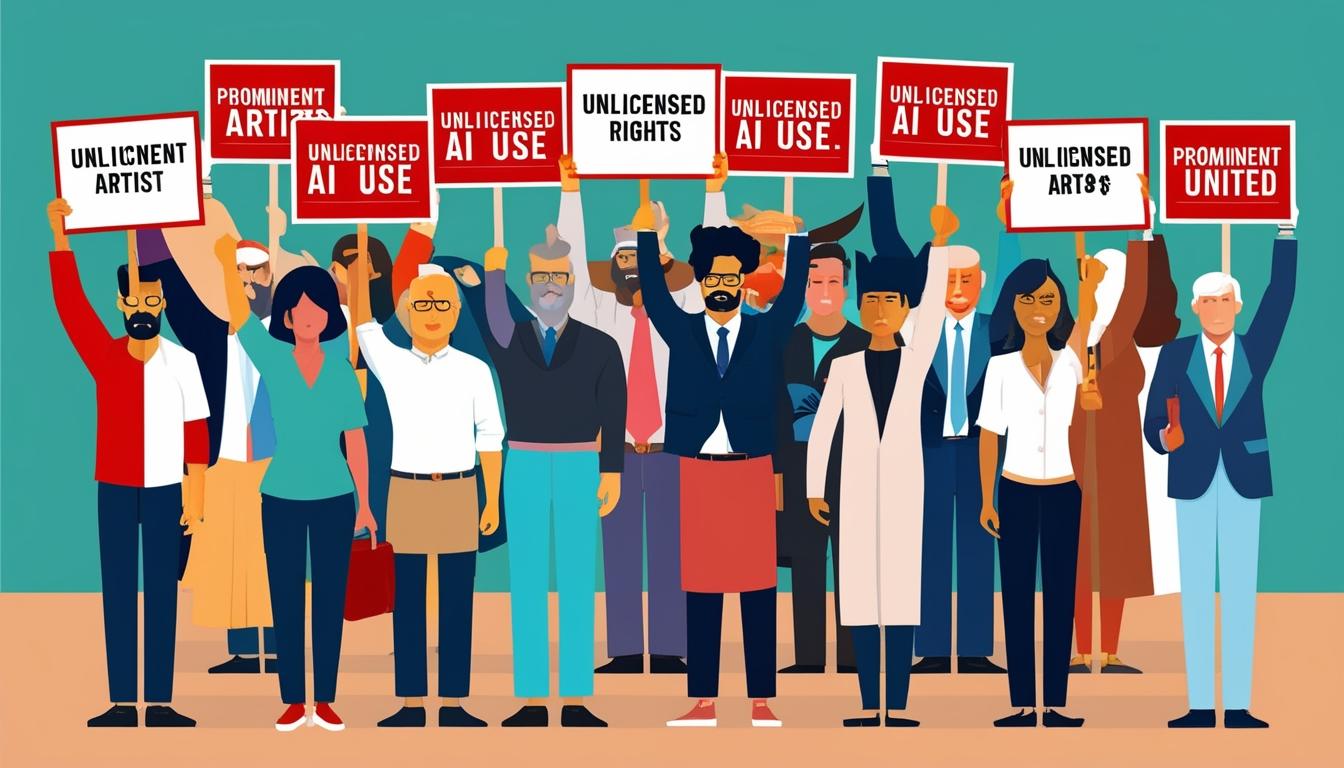
A substantial coalition of artists, comprising some of the most recognisable names in literature, film, and music, has taken a collective stand against the unlicensed use of creative works for the training of generative AI models, such as OpenAI's ChatGPT. This move has seen a significant number of luminaries, totalling 11,500, publicly assert that these practices pose a "major, unjust threat" to the livelihoods of creators worldwide.
The concise statement they issued, containing merely 29 words, conveys a strong message: “The unlicensed use of creative works for training generative AI is a major, unjust threat to the livelihoods of the people behind those works, and must not be permitted.”
Among those lending their voice to this cause are prominent figures such as Thom Yorke, the frontman for the renowned band Radiohead, acclaimed actors Julianne Moore and Kevin Bacon, Nobel Prize-winning novelist Kazuo Ishiguro, and Björn Ulvaeus, a songwriter and performer with the iconic group ABBA. Their collective involvement highlights the industry's growing discontent with current practices in AI technology development.
These generative AI tools, developed by companies like OpenAI, derive their capabilities from vast datasets sourced from the internet. This data, encompassing text, images, videos, music, and speech, allows AI models to perform tasks ranging from conducting human-like text or spoken conversations to generating images, videos, or even music based on user instructions.
The controversy centers on how such data is acquired. Frequently, it is collected, or "scraped," from the internet without the artists' approval, and without any financial compensation or acknowledgment. This method has come under fire for potentially infringing on copyright laws, with tech companies arguing that their data collection falls within the bounds of "fair use."
The last year has seen a surge of legal disputes in U.S. courts addressing these copyright concerns, forcing companies like OpenAI to justify their practices. In response, some firms developing generative AI technologies are beginning to negotiate licensing agreements with media publishers. These agreements aim to provide legally sound access to creative content in exchange for compensation to mitigate further legal challenges.
As generative AI continues to evolve as a cutting-edge technology, regulatory bodies are increasingly tasked with catching up to ensure fair practices. However, the complexity of copyright issues means that a resolution might still be some distance away.
This development underscores a broader discussion about the intersection of technology and creative rights, as industries grapple with the implications of rapidly advancing AI capabilities on artistic and creative livelihoods.
Source: Noah Wire Services