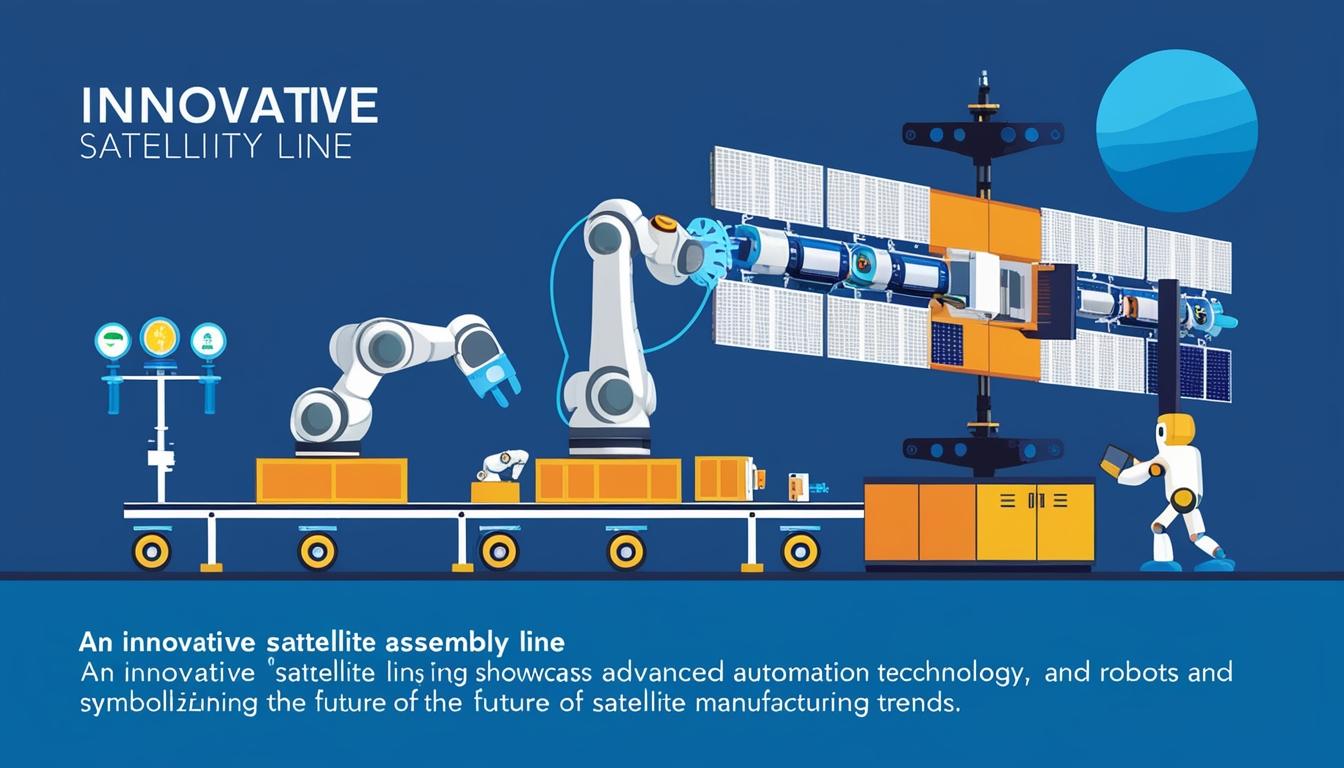
Emerging Trends in Satellite Manufacturing Highlighted at Silicon Valley Space Week
The Silicon Valley Space Week continued to captivate attendees with its Satellite Innovation strand on the second day of the event, where industry leaders gathered to discuss the evolving landscape of satellite manufacturing. Noel Rimalovski, Managing Director at GH Partners, opened the session by assessing the ongoing impacts of the COVID-19 pandemic on production and supply chain efficiency. A significant 80% of audience members expressed the belief that the pandemic's effects on component lead times linger.
The expert panel assembled for this session included notable figures such as Col. (Ret) Dean Bellamy, Executive Vice President for National Security Space at Redwire, who highlighted a shift towards the utilisation of smaller satellites. He emphasised the importance of reliable supplier partnerships over the past five years, as well as the emerging trend of demanding earlier financial milestone payments within the industry.
Chris Winslet, General Manager at Blue Canyon Technologies, underscored the increasing reliance on automation to expedite production cycles. He advocated for "smart automation," particularly when manufacturing on a large scale, while cautioning against its hasty implementation in scenarios requiring frequent production adjustments.
Representing Machina Labs, Vice President of Production John Borrego described the integral role of large robots in their manufacturing processes. He explained that the shortage of aerospace engineers has made automation indispensable, especially as the pandemic extended production timelines for various components. Borrego emphasised the necessity of understanding production processes to effectively integrate automation.
Karolis Senvaitis, Director of Engineering Operations at Kongsberg NanoAvionics, a relatively young company established just a decade ago, warned of the potential risks associated with vertical integration. He advocated for collaboration with trusted partners instead of shouldering full responsibility and risk. Senvaitis highlighted the importance of incorporating automation from the initial design phase to the final testing stage.
In a broader perspective on industry trends, Tim Shroyer, Chief Technology Officer at CPI, noted a transformation in the types of data traffic handled by their ground station and amplifier manufacturing operations. With operations extending to lunar traffic, he pointed out the necessity for adaptability in manufacturing practices to remain competitive.
The panel also delved into the role of artificial intelligence (AI) in the manufacturing sector. Winslet urged caution, emphasising the importance of understanding the origins of production data. Senvaitis echoed this sentiment, voicing concerns about AI's potential to misinterpret data. Borrego described their approach as 'trial and error,' while also acknowledging their efforts to store all collected data for future AI applications.
As these industry leaders presented their viewpoints, attendees were offered a comprehensive overview of the burgeoning trends shaping satellite manufacturing. The discussions highlighted an industry in flux, balanced between the challenges brought about by the pandemic and the opportunities presented by technological advancements such as automation and AI.
Source: Noah Wire Services