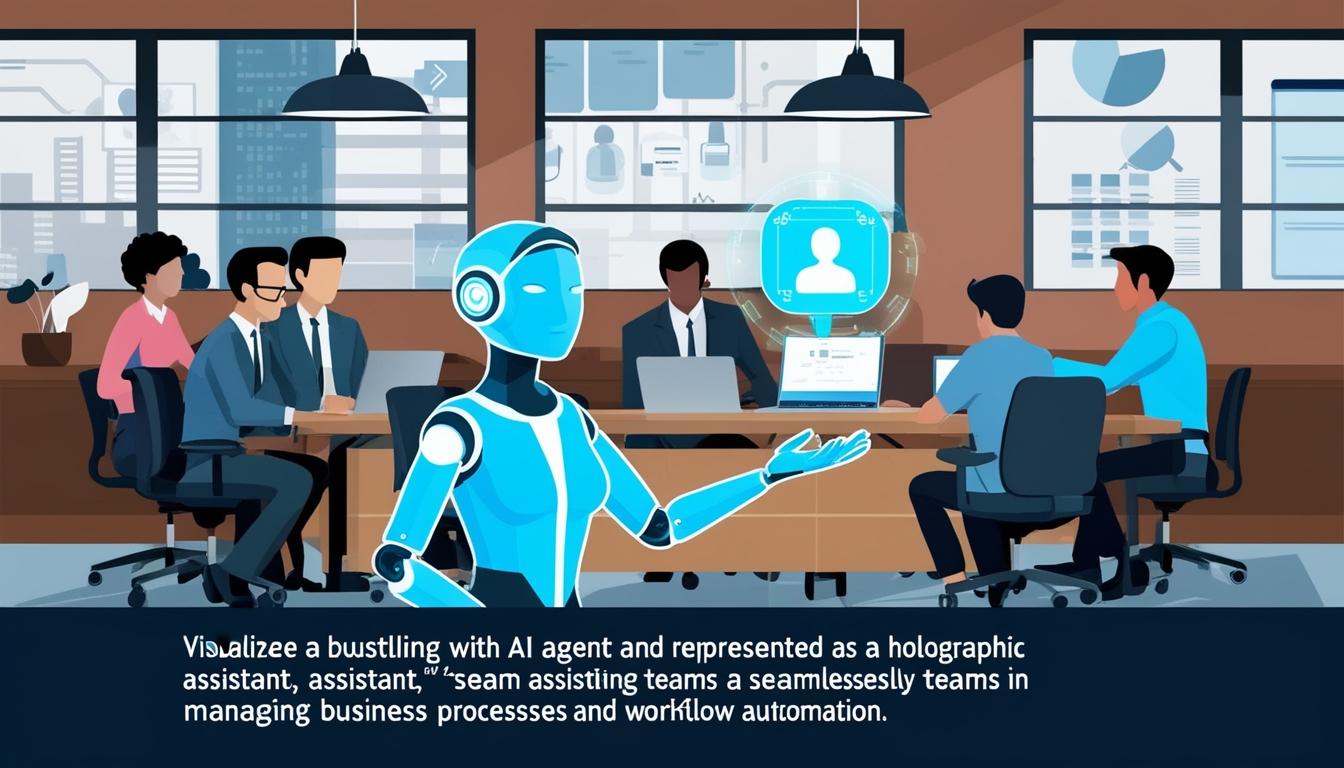
Microsoft has announced a significant leap in the deployment of artificial intelligence, as it begins to rollout autonomous AI agents capable of executing a variety of business processes on behalf of individuals or teams. Detailed in a blog post published by the company, this development is part of Microsoft's broader effort to integrate AI into business workflows, enhancing efficiency across various sectors.
The key tool enabling this innovation, named Copilot Studio, will be available in a public preview starting next month. These AI agents are designed to utilise contextual work data to automate and manage tasks that have traditionally required human intervention. Microsoft envisions applications ranging from serving as a virtual assistant for IT help desks to assisting with employee onboarding processes. These agents are also expected to function as personal concierges, particularly aiding sales and service sectors.
Furthermore, Microsoft is expanding its Dynamics 365 suite by introducing ten specific autonomous agents aimed at bolstering operations in sales, service, finance, and supply chain management. Among these, the company has unveiled a sales qualification agent, a supplier communications agent, and a customer intent and customer knowledge management agent.
The sales qualification agent is crafted to streamline the sales process by researching leads, prioritising opportunities, and assisting in customer interactions through personalised emails and responses. This allows sales teams to focus their efforts on the most promising leads without the burden of preliminary research.
The supplier communications agent is tasked with optimising supply chain operations. It autonomously tracks supplier performance, detects potential delays, and takes necessary actions, thereby reducing the need for manual monitoring and interventions by procurement teams. This enhancement is expected to minimise costly disruptions and improve overall supply chain efficiency.
Meanwhile, the customer intent and customer knowledge management agents are designed to augment customer service operations. These agents collaborate with customer service representatives by learning resolution strategies for customer issues, subsequently contributing to a repository of knowledge-based articles that can disseminate best practices across a customer care team.
While Microsoft plans to introduce more AI agents over the coming year, the rise of AI in business communication has sparked considerable consumer concern. A study by Exclaimer, an email signature management platform, revealed substantial apprehension about the use of AI in brand communications. According to the study, 79% of consumers indicated a willingness to switch to competitor brands due to AI-generated communications, with 55% viewing such communications negatively.
Consumers cited the perceived lack of authenticity in AI-driven emails as a primary concern, with 41% believing they diminish the genuineness and transparency of brand interactions. This sentiment has resulted in 27% of respondents reporting a diminished connection with brands utilising AI for email communication. Further, a significant majority, 88%, stated they would ignore marketing emails suspected of being AI-generated, and 51% are less likely to recommend brands that employ AI in this manner.
This development unfolds amidst a larger context of technological advancements, with other major companies also pioneering in the AI space. These initiatives highlight both the potential benefits and challenges of integrating AI into core business operations. As Microsoft moves forward with its AI plans, the reactions from users and consumers provide a critical lens through which the impact of AI on business and consumer interactions will undoubtedly continue to evolve.
Source: Noah Wire Services