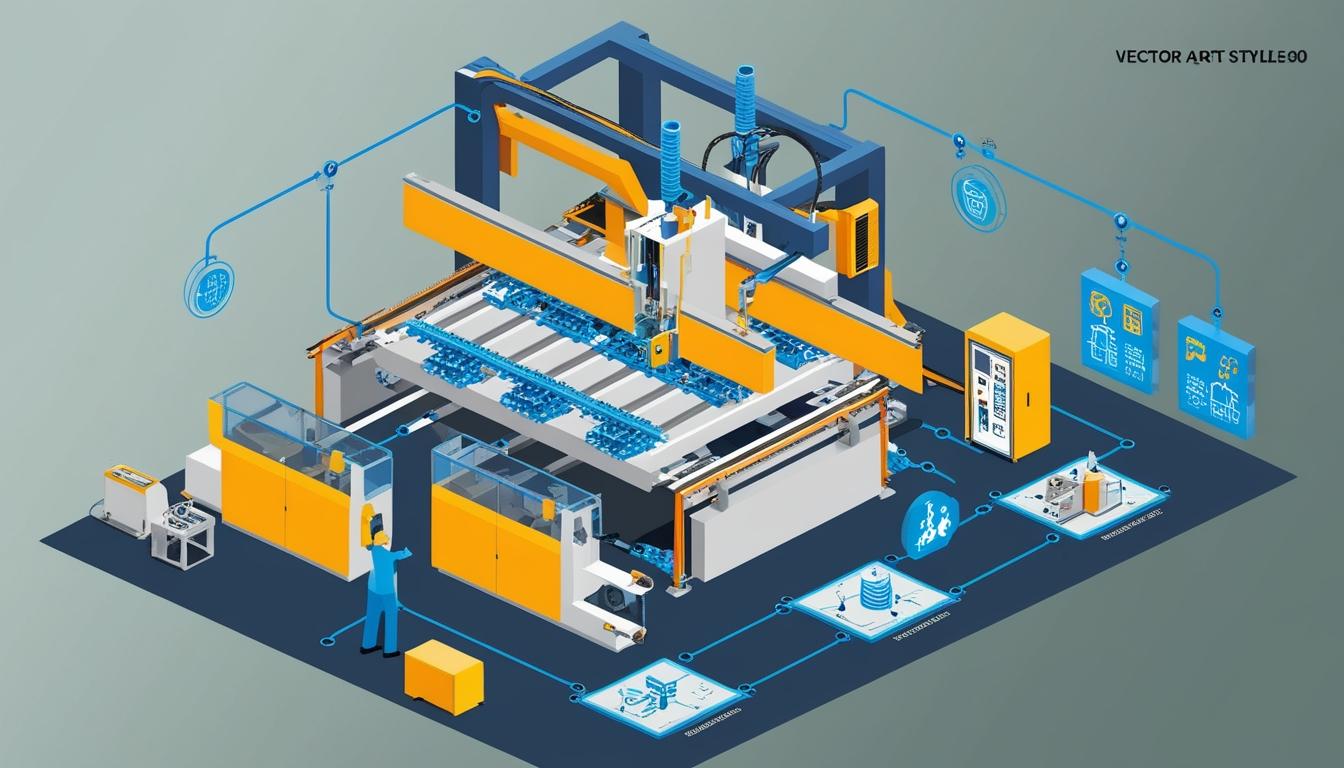
The global market for sheet metal processing equipment is on the verge of significant expansion, with projections indicating a growth of USD 4.38 billion between 2024 and 2028. This growth is predicted to occur at a compound annual growth rate (CAGR) of over 6.33%, as outlined in a report by Technavio. Central to this anticipated increase is the surge in industrial automation seen worldwide.
The market's growth is underpinned by the launch of innovative products by vendors within the industry. These new products often incorporate advanced automation and precision, alongside integration with Industry 4.0 technologies, such as the Internet of Things (IoT), artificial intelligence (AI), and big data analytics. A prominent example of such innovation is TRUMPF's introduction of the TruMatic 5000, a manufacturing cell that offers fully automated laser-cutting, punching, and forming, equipped with a six-kilowatt fibre laser designed for high productivity and enhanced energy efficiency. Similarly, Mazak Optonics' OPTIPLEX 3015 NEO provides a large working space coupled with advanced beam shaping technology, improving the quality of cutting results. Both companies illustrate a strong dedication towards connected manufacturing processes and smart factory integration within the sector.
Various industries contribute to the increasing demand for sheet metal processing equipment. The aerospace, defence, and space sectors rely heavily on welding equipment, while the automotive, construction, and electronics industries are primary consumers of lightweight and precision components. Technological advancements in metal cutting and bending processes, such as plasma cutting and 3D printing, are further driving the market's expansion.
The incorporation of industrial automation via robots and remote-operated machinery is enhancing both the precision and efficiency of metalworking. By integrating machine networks with machine learning and IoT, there is an observable improvement in productivity, contributing to more intelligent manufacturing processes.
However, the market is not without challenges. Fluctuating raw material prices, especially for steel and aluminium, present a considerable obstacle. These fluctuations are influenced by supply chain disruptions, geopolitical tensions, and varying demands from key industries, resulting in increased costs. The World Bank projects that aluminium prices will rise by 2% in 2024, with a further 4% increase the following year. Such cost escalations could lead to higher production expenses for manufacturers, which might translate into higher equipment prices for consumers, potentially dampening demand. Smaller companies, in particular, could face difficulties affording advanced technologies, impacting their competitive edge.
Notwithstanding these challenges, the outlook for the sheet metal processing equipment market remains optimistic. The ongoing demand for precision metalworking and sophisticated machinery across diverse industries is set to drive substantial market growth. The rapid evolution of the sector, driven by AI, IoT, and other Industry 4.0 technologies, points towards a transformative future. As manufacturers persist in their innovation efforts and the introduction of new, improved products continues, the market is poised for a significant growth trajectory in the forthcoming years.
In summary, the sheet metal processing equipment market represents a highly dynamic and rapidly evolving industry. While faced with certain obstacles, the potential for robust growth is clear. The ascent of industrial automation and the deepening integration of AI in manufacturing processes predict a prolific period ahead, offering vast opportunities for those manufacturers capable of innovation and adaptation within this burgeoning landscape.
Source: Noah Wire Services