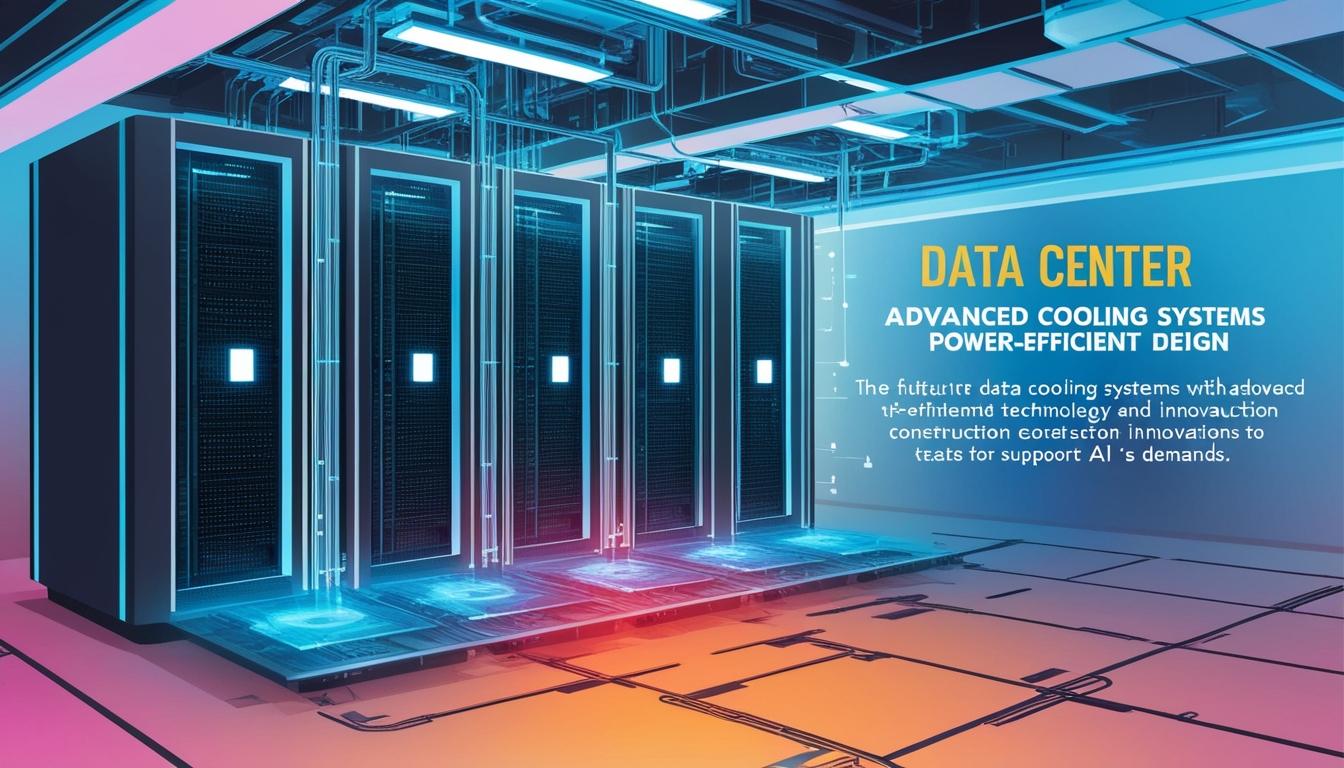
The advent of artificial intelligence (AI) is prompting a rapid transformation within the construction industry as it braces to support the burgeoning requirements of AI technology. This swift evolution is particularly evident in the field tasked with constructing state-of-the-art data centers tailored to AI's unique demands, indicative of a broader shift in how infrastructure is conceived and executed.
Data centers, traditionally designed for functions such as supercomputing and data storage, are now morphing to accommodate AI's real-time processing capabilities. This shift is underscored by the growing need for data centers that house power-intensive, heat-producing microprocessors, requiring significant changes in design and operational execution to meet AI's specific requirements. Prominent among the firms tackling these new challenges is McGough, a construction company recognized for its expertise in building advanced data centers.
As AI continues to evolve, so too do the conditions impacting the construction of data centers. Notably, the demand for enhanced power and thermal cooling solutions is paramount, influenced by ongoing advancements in microchip technology. This demand necessitates a rethinking in strategies, placing an emphasis on innovative solutions for power distribution, cooling technologies, and overall maintenance to support AI's expanding footprint.
One of the fundamental differences between traditional and AI data centers is their operational focus. While older data centers were engineered primarily for secure, timely data transactions and storage, the modern AI data center prioritizes real-time data processing. This has resulted in structures where vast spaces are dedicated to electrical and cooling equipment capable of handling substantial power loads, equivalent to that of a small town.
The construction of these AI-centric facilities presents several new challenges and opportunities. One of the pressing demands is the acceleration in construction timelines, driven by the need for rapidly available infrastructure to support the roll-out of new AI tools by major technology firms. Construction companies must be agile, finding ways to condense project schedules and navigate potential barriers such as labour and material shortages.
Additionally, a new trend has emerged akin to a 'land/power rush.' Developers are keenly seeking sites proximal to existing or forthcoming power generation facilities, often in rural areas. Some developers are also exploring the possibility of establishing their own power generation facilities, a complex endeavour fraught with regulatory challenges. This has increased the value of construction partners with experience in both data center construction and power generation.
Energy density in data centers has seen a staggering increase, necessitating expertise in electrical and mechanical engineering to accommodate these new power requirements. This rise in energy demands has also spurred interest in alternative cooling mechanisms, such as liquid cooling systems, given the inefficiency of traditional air cooling in managing the escalating heat output.
Moreover, the requirement for data center uptime is undergoing transformation, with some AI implementations shifting away from the previously coveted 'five nines' of availability. Instead, some are opting for battery support systems that permit strategic shutdowns when necessary, thus potentially lowering costs associated with continuous power backup solutions.
Procurement logistics have become more crucial, necessitating early and strategic ordering of materials to adhere to stringent project timelines. This aspect is compounded by the geographical challenge of building these centers in remote locales, which has led to a growing reliance on off-site prefabrication of large system components that can later be installed on-site.
As AI progresses, the construction of supporting infrastructure remains a field of dynamic evolution. Amid the lack of predictability about energy density growth or future grid adaptations, flexibility and innovation in construction practices are indispensable. Companies are urged to seek construction partners adept in evolving with the rapidly changing technological landscape, as the narrative of AI and its infrastructural necessities is still unfolding.
Source: Noah Wire Services