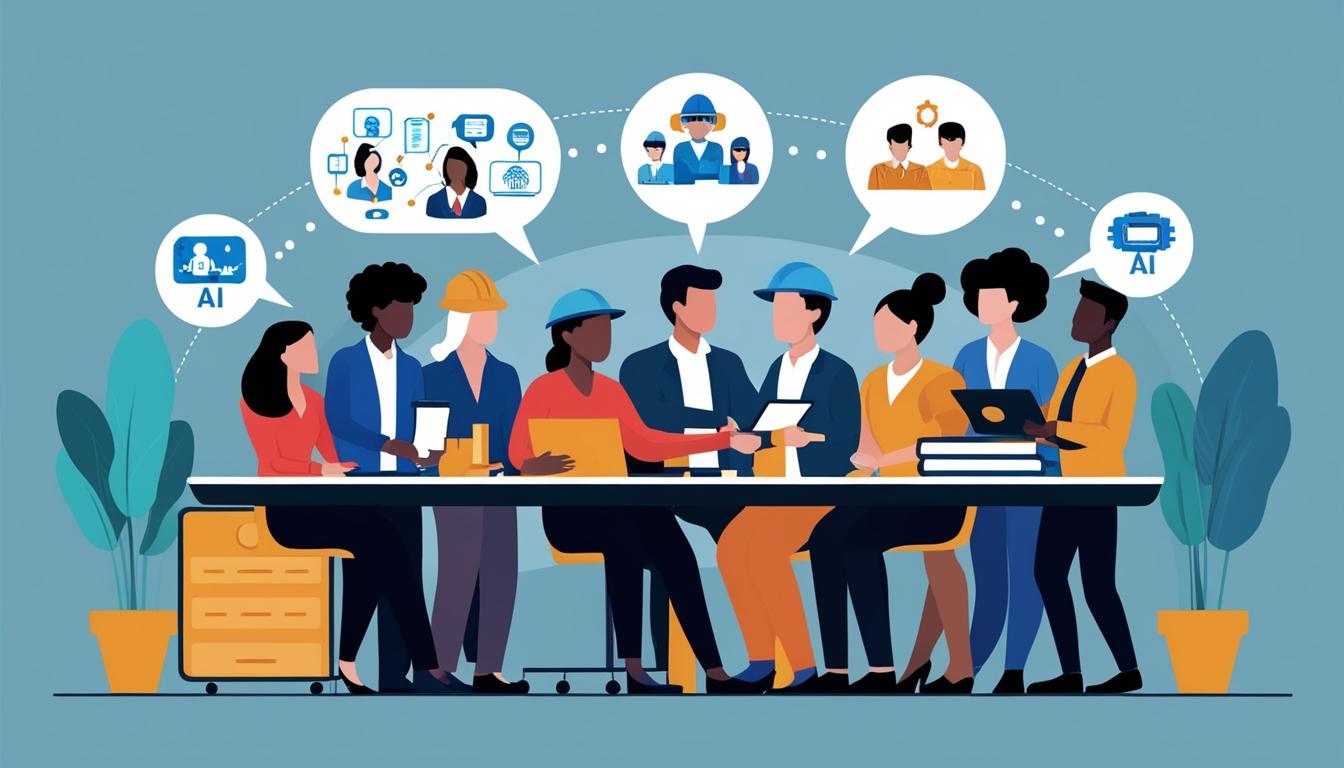
The United States Department of Labor (DOL) has released a set of recommended practices for the integration and development of artificial intelligence (AI) systems in the workplace. Published this week, the guidelines aim to assist employers in leveraging AI to achieve productivity and cost efficiencies while safeguarding employees against the risks of discrimination and job displacement.
This initiative follows President Joe Biden’s executive order from the previous year, which sought to evaluate AI's potential and its associated risks within both governmental and private sectors. This order led to the establishment of the White House AI Council and emphasized the need for a clear framework for federal agencies to protect privacy, secure AI talent, and ensure fairness in AI application.
President Biden remarked on the importance of harnessing AI's benefits while addressing its significant risks, calling for a collaborative effort across government, private sectors, academia, and civil society to realize the responsible deployment of AI.
The document titled “Artificial Intelligence and Worker Well-being: Principles and Best Practices for Developers and Employers” was compiled with insights from diverse contributors, including public listening sessions, workers, unions, researchers, academics, employers, and developers. It aims to address potential ethical challenges such as discrimination, data security, and employment disruptions, while also promoting innovation and efficiency.
Julie Su, the Acting Secretary of Labor, highlighted the critical nature of decision-making regarding AI in workplaces, noting that the future impact of AI could either harm employees and deepen inequalities or facilitate worker empowerment and increased opportunities based on choices made now.
A central theme of the report is the emphasis on prioritizing workers' needs and inputs, especially from underserved communities, in the lifecycle of AI systems. The document advocates for transparency and inclusion, recommending that employees should be involved in the design, testing, training, use, and management of AI technologies at their workplaces. Furthermore, it proposes that labor unions engage proactively in discussions related to AI deployment and electronic monitoring.
Besides ethical development, the guidelines stress the establishment of a robust governance system for assessing the implications of AI in workplaces. Organisations are urged to maintain transparency concerning the AI systems they implement.
The report underscores that AI should neither infringe on workers' rights to organise nor compromise their health, safety, wage, anti-discrimination, and anti-retaliation protections. Hence, employers are encouraged to conduct audits of their AI implementations to detect any potential discriminatory outcomes based on race, colour, national origin, religion, sex, disability, age, genetic information, and other protected categories, with these findings being published for transparency.
Before rolling out AI tools, employers are advised to consider their potential impact on job opportunities and clarify the roles these systems will play. Should AI lead to productivity improvements or increased profits, the guidelines suggest that employers might consider sharing these benefits through better wages, enhanced benefits, or additional training opportunities for their workers.
Acknowledging the possibility of workforce displacement due to AI, Su's summary calls on employers to train employees adequately in using new systems and to reposition those displaced into alternate roles within the organisation where possible. Employers are also encouraged to collaborate with state and local workforce initiatives for education and skill development to ensure their workforce adapts rather than becomes obsolete.
Finally, the guidelines urge employers using AI systems that collect employee data to safeguard such data stringently, limit data collection to what is essential, and refrain from external data sharing without explicit worker consent.
While these guidelines serve as a comprehensive framework for the responsible deployment of AI in businesses, the DOL clarifies they are not intended to replace federal or state laws but rather to serve as a customizable foundation, contingent on feedback from workers.
In her remarks, Julie Su championed the vision of AI as a transformative tool for enhancing worker well-being, advocating for a collaborative human-centric approach in its design and utilisation to place workers as beneficiaries rather than barriers to innovation.
Source: Noah Wire Services