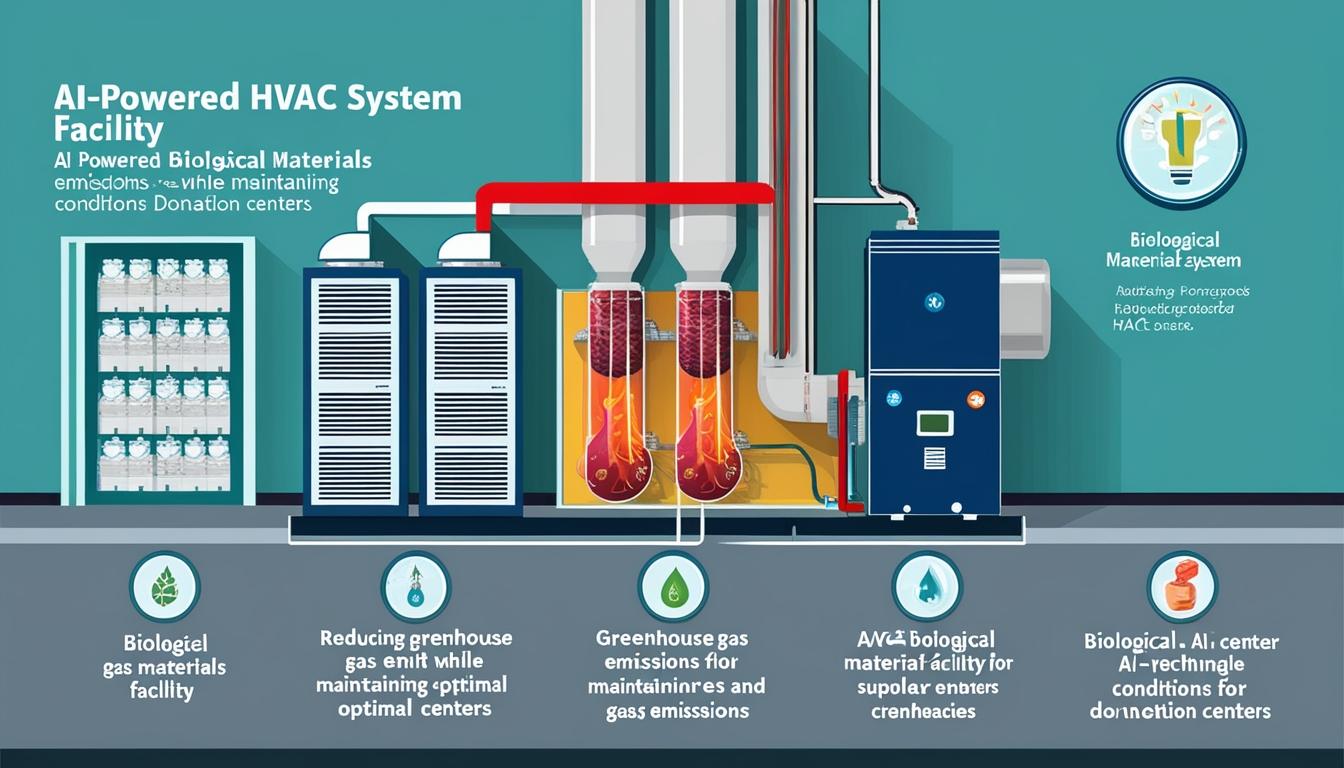
AI-Enabled Initiative Targets Greenhouse Gas Reduction for Biological Materials Industry Leader
In a significant stride towards environmental sustainability, a prominent client specialising in the collection and processing of biological materials has embarked on an ambitious journey to reduce greenhouse gas (GHG) emissions. Collaborating with Trane, an industry giant in equipment, controls, and services, the client aims for a 40% reduction in GHG emissions by 2025 and an ambitious goal of achieving net-zero emissions by 2035.
The client, who operates a vast network of facilities across the United States, faces the challenging task of balancing strict environmental conditions required for biological materials with sustainability goals. With the paramount importance of maintaining optimal temperature and humidity for both donor comfort and the integrity of biological materials, the project necessitated a precision approach to energy management.
Trane responded with an innovative decarbonization strategy, leveraging advanced artificial intelligence technology to fine-tune HVAC operations across the client's 150-plus donation centres. The approach employed by Trane is a testament to the company’s ability to navigate the complex requirements set forth by the client – ensuring both environmental responsibility and operational efficacy without investing heavily in new hardware or increasing human labour costs.
The backbone of this strategy is Trane Autonomous Control, powered by the sophisticated AI technology of BrainBox AI. This system works by incorporating a diverse dataset including predictive weather patterns, occupancy trends, and real-time equipment performance data. Unlike traditional systems, this AI-enabled solution transforms existing HVAC infrastructure into a predictive network that operates dynamically. It achieves remarkable precision in adjusting environmental conditions zone-by-zone, ensuring the necessary critical conditions for biological materials.
Within the first six months, results from five pilot sites were promising, with a notable 26.1% reduction in CO2 equivalent (CO2e) emissions and 16.7% savings in electricity. This achievement was rendered all the more impressive considering it was accomplished without additional hardware installation, minimising potential disruptions and bypassing supply chain concerns.
Now operational in over 100 additional clinics, the AI solution has demonstrated a consistent pattern of success, reducing energy use intensity by 22% compared to facilities yet to integrate Trane Autonomous Control. The system’s effectiveness extends to significant reductions in both Scope 1 and Scope 2 emissions, addressing the dual challenges of natural gas and electricity consumption.
This initiative not only underscores the client's commitment to sustainability but also illustrates Trane's prowess in deploying scalable, adaptable technological solutions. It highlights how AI can be effectively harnessed to meet stringent industry requirements without sacrificing environmental goals or operational stability. The client remains on track to meet their 2025 objectives, showcasing how innovative approaches can yield considerable environmental and financial benefits across multiple locations without disturbing critical operations.
Source: Noah Wire Services