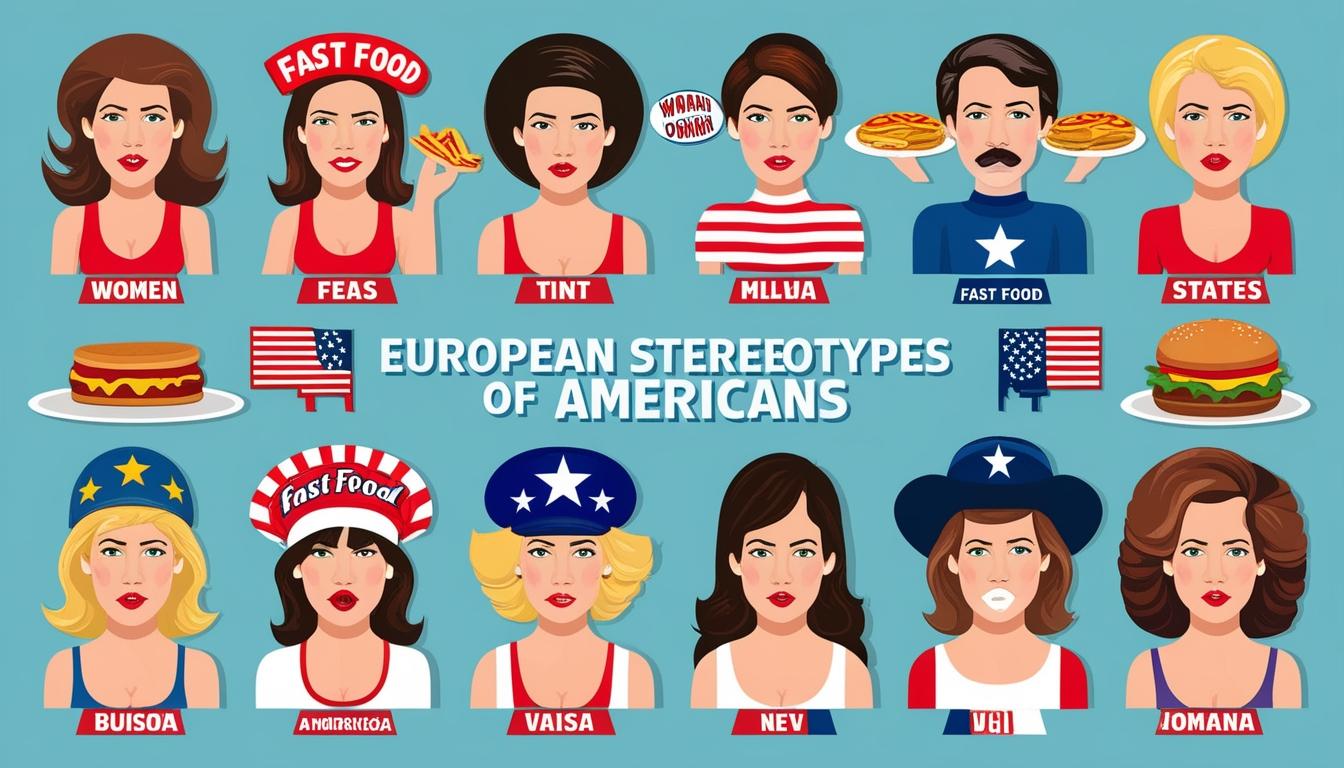
A recent exercise using artificial intelligence to portray European perceptions of the average American from various states has sparked significant conversation online due to the controversial images it produced. The AI drawings, shared by social media user Huff, illustrate a range of stereotypes that Europeans reportedly hold about Americans, highlighting both cultural caricatures and gender biases.
The images largely depict Americans as overweight individuals consuming fast food, specifically McDonald's, with all but two states—Florida and Texas—following this portrayal. These representations suggest a view of Americans as consumers primarily associated with unhealthy eating habits. For instance, the picture representing Californians includes a woman with purple hair wearing an LGBTQ pride shirt, sitting with an exaggeratedly large McDonald's meal, despite the state's reputation for healthy living.
In the case of Florida and Texas, the AI-generated images diverged from the overweight stereotype. Floridians were depicted as conventionally attractive and hyper-sexualised, with a blonde woman in a bright bikini suggesting a sun-loving, carefree lifestyle. Texas was similarly portrayed with a focus on conventional attractiveness and guns, showing a blonde woman in a low-cut dress holding a weapon.
Other states’ portrayals leaned heavily on cultural icons and state-famous products. The depiction of Kansans included a nod to the Wizard of Oz and Superman, featuring a woman dressed as Dorothy sitting in a fast food restaurant with Superman flying past. In Massachusetts, the stereotype veered towards an Irish-influenced individual enjoying Dunkin Donuts, whereas Mainers were linked with lobsters, a major export of the state, depicted by a grey-haired woman in rain gear surrounded by steamed lobsters.
States like New York and Pennsylvania continued the trend of linking sports fanaticism with gluttony. New Yorkers were depicted as angrily obsessed with the Yankees, while Pennsylvanians were shown as cheesesteak lovers dressed in Phillies apparel.
West Virginia’s portrayal leaned into the historical association with coal mining, depicting a woman in coal-dust covered attire. South Dakota was represented by an older woman in Native American clothing, suggesting a connection to heritage and age, while Vermont's image highlighted its maple syrup production, with a woman consuming a pitcher of the product alongside McDonald's pancakes.
The images not only reveal a perception of Americans as commonly consuming fast food, but also a bias in gender representation, as all the subjects are women. Huff addressed this point, stating that statistically, the choice of depicting women might align with demographics, as females constitute 50.8% of the U.S. population.
The series generated a wide array of reactions on social media. Many users were curious about the AI techniques and prompts used, while others critiqued the overt stereotypes and questioned their accuracy. Despite the intent, the images have sparked discussions around cultural perceptions and the ethics of AI use in reinforcing stereotypes.
Source: Noah Wire Services