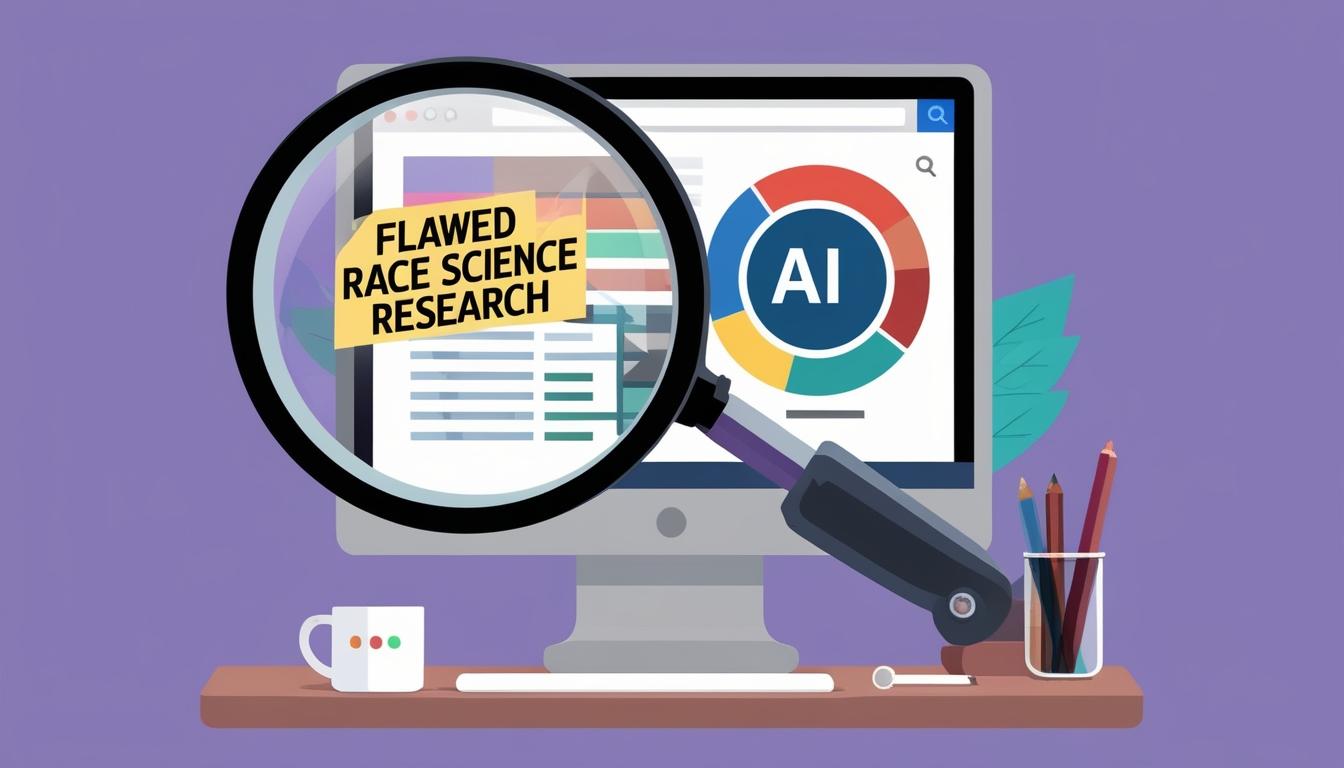
AI-Powered Search Engines Criticised for Amplifying Discredited Race Science
In recent developments, search engines employing artificial intelligence from tech giants Google, Microsoft, and the start-up Perplexity, have come under fire for disseminating outdated and discredited research related to race science. This concern has been raised by Patrik Hermansson, a researcher affiliated with the UK-based anti-racism organisation Hope Not Hate. While conducting an investigation into modern iterations of race science, Hermansson discovered alarming tendencies in AI search results that appeared to support notions of white supremacy.
The incident arose when Hermansson sought further information on a dataset suggesting IQ scores could validate racial superiority. His research was focused on the Human Diversity Foundation, an organisation founded in 2022 and backed by Andrew Conru, a billionaire tech entrepreneur from the United States. The foundation is perceived as a modern continuation of the Pioneer Fund, a US-based organisation established in 1937 by Nazi sympathisers, and was originally designed to promote "race betterment".
Hermansson utilised Google's AI Overview tool during his investigation, which provided him with exact and misleading IQ scores for countries including Pakistan, Sierra Leone, and Kenya. For example, Pakistan was assigned a score of 80, Sierra Leone 45.07, and Kenya 75.2, all derived from the discredited work of Richard Lynn, a former University of Ulster professor and president of the Pioneer Fund. Lynn, who passed away in 2023, was a heavily cited figure in the race science movement, known for his publication of scientifically unsound research linking IQ scores to racial hierarchies.
These AI search results, devoid of adequate citation or context, drew widespread criticism as they mirrored contentious findings used by far-right groups to bolster white supremacist ideologies. The danger of these narratives extends beyond academic fallacy, as such misinformation has been cited in real-world instances of racial violence, including the motives behind the Buffalo mass shooting of 2022.
In response to concerns, Google acknowledged the shortcomings of its AI-powered Overview tool and pledged to enhance its reliability. The company's spokesperson, Ned Adriance, asserted that Google has mechanisms to curtail low-quality responses, stating that corrective measures are swiftly enacted when policy-infringing content is identified.
This issue is not isolated to Google alone. Similar problematic references to Lynn's work were discovered in Microsoft's AI tools, including their CoPilot service, and the up-and-coming platform Perplexity. Microsoft's Bing was also noted to repeat dubious claims about national IQs sourced from unverified origins.
Experts such as Rebecca Sear from Brunel University London and Adam Rutherford emphasise the necessity for stringent regulation and accountability within the scientific community, given the longstanding propagation of Lynn's research and its permeation into academic and public discourses. They argue that the problem is deeply ingrained in academic structures rather than the AI technology itself. Until the systemic issues in academia are addressed, both human and artificial intelligence will continue to circulate unverified information.
The controversy has ignited further discourse on the responsibilities of technology companies to ensure their AI systems adhere to rigorous standards of factual accuracy and ethical integrity, especially when handling sensitive and potentially harmful content.
Source: Noah Wire Services