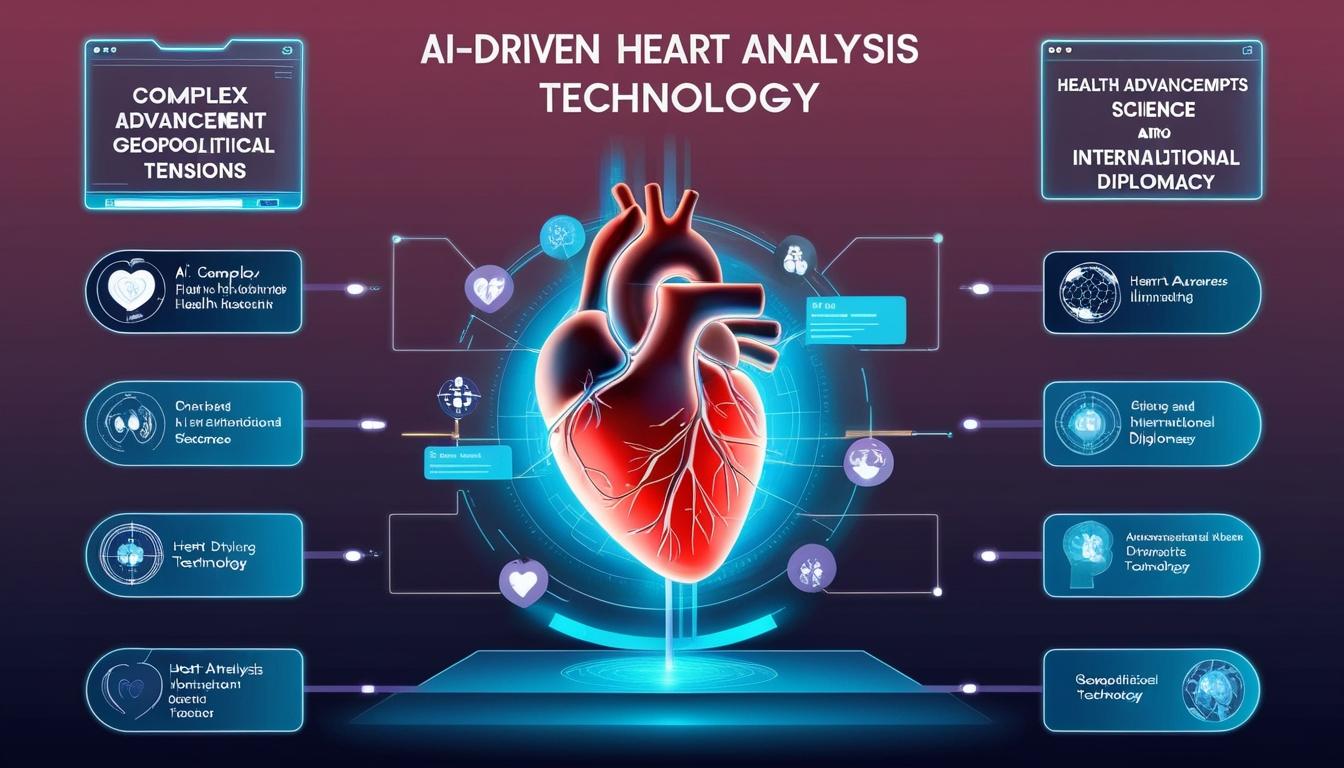
In a recent breakthrough in medical technology, artificial intelligence (AI) has shown remarkable capability in analysing subtle aspects of heart health that are traditionally overlooked by human clinicians. The advanced algorithms employed in these AI systems can discern intricate details regarding a patient’s heart structure and function. Surprisingly, these systems can even detect genetic information that may indicate a higher risk of heart-related issues, providing insights that go beyond the grasp of human expertise. This advancement promises to enhance the predictive accuracy and personalised care offered in the realm of cardiology.
Meanwhile, in the political sphere, United States Vice President Kamala Harris is being discussed as possessing potential influence over the delicate geopolitical situation in the Middle East, particularly concerning the ongoing conflict involving Israel and Gaza. There is speculation that Harris might sway a tightly contested race should she decide to deviate from President Joe Biden and Israeli Prime Minister Benjamin Netanyahu’s current stance. Such a move could involve declaring an intention to end the hostilities in Gaza or at least pledging a halt to military assistance to Israel. These actions could have significant implications not only for U.S. foreign policy but also for the broader political landscape in Israel, Palestine, and Lebanon.
The discourse around this potential pivot by Harris was sparked, in part, by an opinion piece reflecting on the moral and humanitarian responsibilities that accompany political leadership. It suggests that a stance aimed at ending violence and restoring humanitarian aid could resonate deeply with various stakeholders involved in the conflict. The humanitarian crisis in Gaza, where civilian casualties have been a point of international concern, adds further complexity to the situation.
Adding another layer to the geopolitical tensions is the influence of political contributions in the U.S., highlighted by reports earlier this year from the Israeli newspaper Haaretz. It was noted that Marian Adelson, a political donor, had urged former President Donald Trump to support the annexation of the West Bank by Israel. Additionally, Adelson has recently contributed $95 million to a pro-Trump SuperPAC, a development that underscores the intricate and often contentious interplay between finance and foreign policy in relation to Middle Eastern affairs.
These unfolding events underscore the multifaceted nature of political and technological landscapes today, where advancements in AI technology contrast sharply with the complexities of international diplomacy and humanitarian concerns. As these stories develop, they continue to captivate public interest, offering a mosaic of issues that range from cutting-edge science to global political strategy.
Source: Noah Wire Services