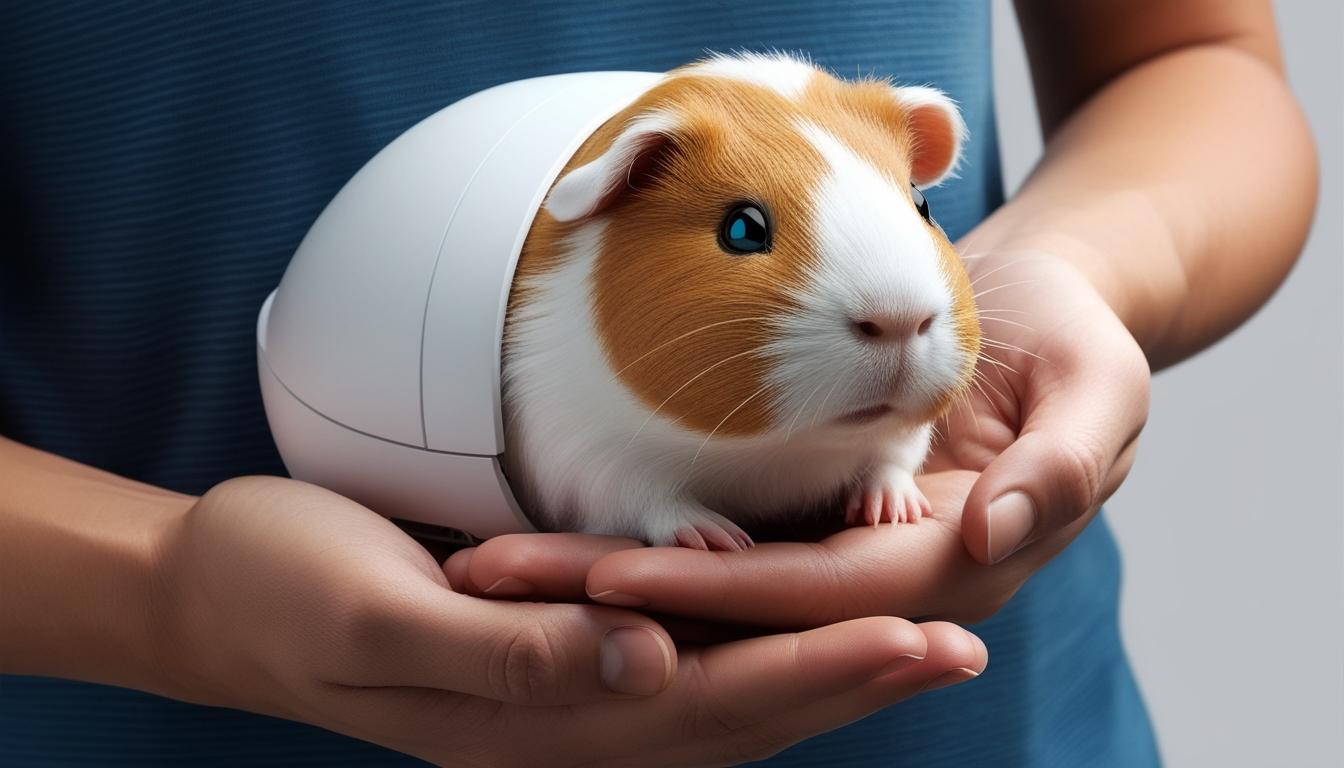
Artificial Intelligence Pets: A New Era of Digital Companionship
In a rapidly advancing technological landscape, artificial intelligence (AI) pets are emerging as a novel solution for those seeking emotional support without the obligations of traditional pet ownership. These digital companions are captivating tech enthusiasts and comfort-seekers alike by merging the worlds of high-tech innovation and emotional connectivity.
One of the frontrunners in this burgeoning market is Moflin, an AI-powered furry robot pet launched by Casio in Japan. Priced at approximately 59,400 yen, or $400, Moflin is noted for its resemblance to an oversized guinea pig or a Porg from Star Wars, albeit without visible facial features. It is designed to offer an emotional experience akin to that of a real pet, minus the responsibilities such as feeding or grooming. The appeal lies in Moflin's ability to "evolve" emotionally through interactions, forming attachments with its owner. Users, however, must rely on a companion app to interpret Moflin’s emotional states, a feature that might differ from the intuitive understanding of a living pet's body language.
Casio's initiative with Moflin signifies a new direction in the nexus of technology and wellness. The firm is tapping into the rising demand for stress-relief products by offering an optional subscription service called Club Moflin. This service covers maintenance aspects such as fur replacements, highlighting a potential shift in business models towards recurring revenue streams from ongoing service provisions.
This industry, however, is not limited to furry replicas of guinea pigs. Pioneers like Sony's Aibo, a robotic dog introduced in 1999 and reimagined in 2017, reinforces AI pets’ versatility. The latest Aibo model, ERS-1000, comes equipped with AI technologies that help it learn, perform tricks, respond to commands, and even capture photos using a nose-mounted camera.
Another contender, Tombot, offers Jennie, a robotic puppy designed for elders and individuals with dementia, focusing on companionship through realistic movements. Yukai Engineering's Qoobo presents a different angle, with a tailed cushion that wags to provide comfort without the complexity of full pet simulation.
For tech enthusiasts, Elephant Robotics' MarsCat offers an interactive experience with a robotic cat featuring face recognition and an open-source platform that allows owners to program unique behaviours.
Casio's co-founder Olivia Tapper noted that AI pets like Moflin could drive increased spending in wellness and tech gadgets, particularly for those unable to commit to real pet ownership. Reflecting on the nostalgic influence of digital companions like Tamagotchis from her past, Tapper sees AI pets as an evolution beyond simple digital caregiving toys.
Yet, within this high-tech domain, questions surrounding data privacy persist. As AI-driven products collect and manage data, considerations about user privacy and data handling become crucial. Tapper underscores the significance of understanding how personal data is utilised, especially with devices potentially listening and adapting to their environments.
Despite the appeal of these digital pets, Tapper herself remains committed to her traditional pet, a dog, emphasizing her personal preference for the irreplaceable bond shared with living animals. Nevertheless, she acknowledges situations where AI pets may be suitable, particularly for individuals seeking less responsibility and commitment.
As AI pets continue to infiltrate the market, the prospect of businesses capitalising on subscription models for ongoing customer engagement and product development expands. The intersection of emotional support and technology continues to innovate ways that digital companionship can transform lives while bridging gaps in human interaction.
Source: Noah Wire Services