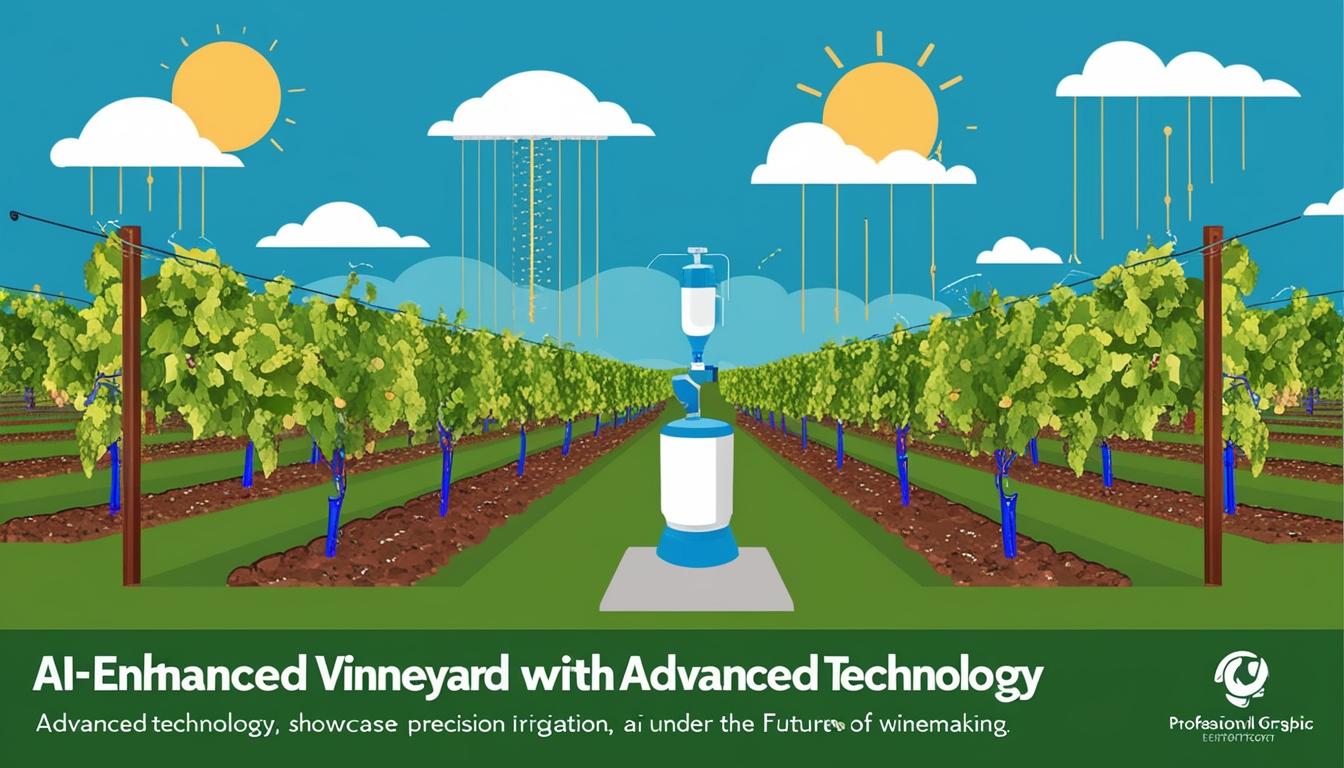
Artificial Intelligence is making significant inroads across all industries, including the traditionally manual and detail-oriented world of winemaking. From vineyard management to consumer interaction, AI is influencing every aspect of the wine trade. The technology is enabling the industry to operate more efficiently and adapt to evolving consumer preferences.
In the realm of viticulture and winemaking, AI is being used to streamline processes that were traditionally labour-intensive, such as monitoring soil, climate, irrigation, and pest control. At Chateau Montelena in Napa, AI technology is employed to monitor vine health and manage water efficiency. This allows for targeted irrigation decisions that enhance vine quality while conserving resources. AI also helps in addressing issues like smoke taint by using platforms like Tastry, which analyses grape chemistry to preemptively address potential issues.
Education within the wine industry is also seeing enhancements through AI. The use of large language models (LLMs) in wine education offers benefits such as the creation of study aids and summaries to help with complex information. However, experts like Master of Wine Anne McHale note that reliance on AI must be balanced with human judgement to prevent passive learning among students.
AI is revolutionising fraud prevention in the wine industry as well. Researchers in Bordeaux are utilising gas chromatography paired with AI to develop methods for identifying the unique chemical compositions of wines, allowing them to determine the origins of different châteaux and potentially preventing wine fraud. Similarly, New Zealand's Oritain is creating forensic fingerprints of wines to ensure authenticity based on geographical and chemical characteristics.
Marketing, branding, and winemaking strategies are also being reinvented by AI. Machine learning models can predict consumer trends by analysing social media data, consumer reviews, and sales figures. In 2023, the Languedoc-based producer Aubert & Mathieu used ChatGPT to inform their production of an organic Syrah-Grenache blend, highlighting AI's potential in product development. AI is also being used to create unique wine labels, as demonstrated by Maison Wessman's Imprévu line.
Wine recommendation platforms are growing more sophisticated with AI as well. Preferabli, for example, leverages a vast database to provide personalised wine recommendations based on specific aroma and flavour profiles. Additionally, Moët Hennessy Wine Estates has launched an AI-powered sommelière named Divine, which provides interactive recommendations in real-time, enhancing the customer experience at point of sale.
As these innovations demonstrate, AI is carving out a substantial role in the wine industry, offering tools and insights that promise to reshape winemaking and consumer engagement for years to come. These developments are indicative of a broader acceptance and integration of technology within an industry steeped in tradition, marking a significant evolution in how wine is produced and appreciated globally.
Source: Noah Wire Services