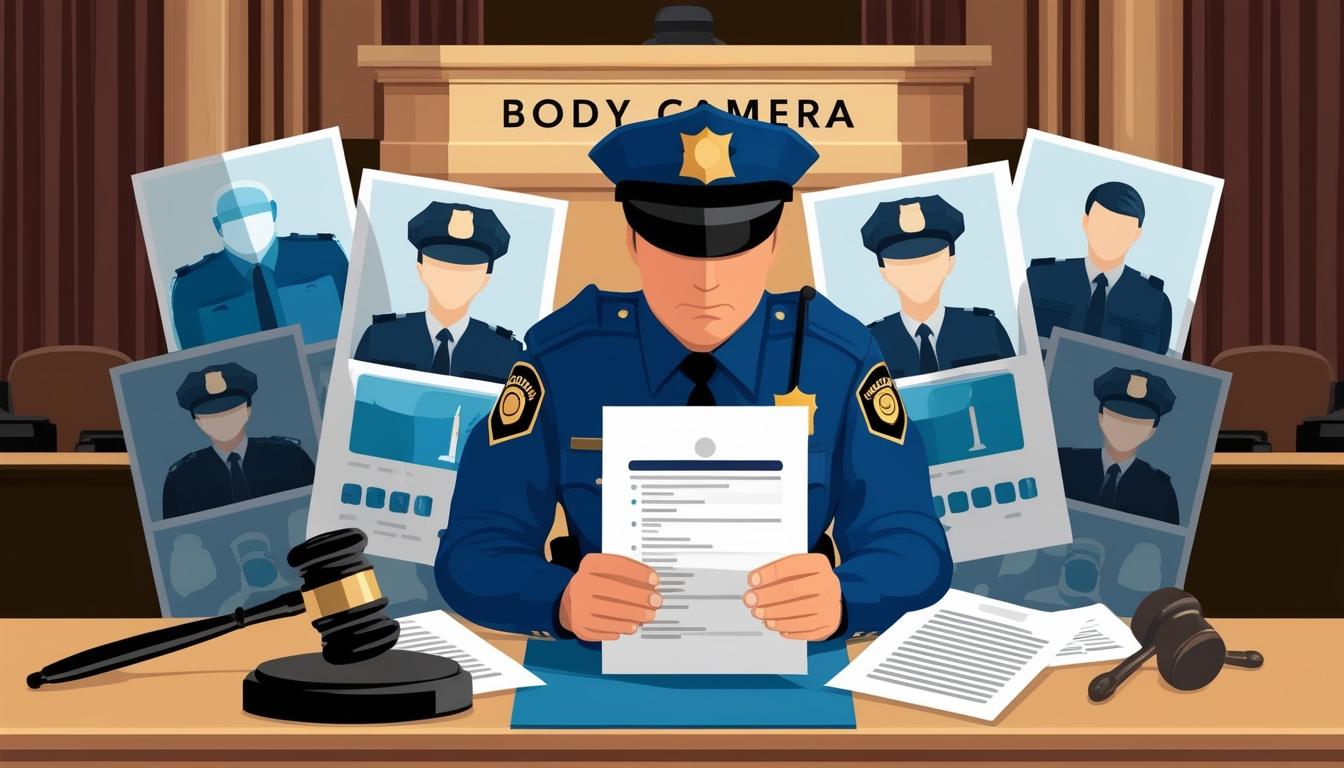
Axon's ambitious leap into integrating artificial intelligence (AI) within police operations has encountered a significant hurdle from an unexpected sector. The company, renowned for its Taser products, has diversified into offering AI tools that aim to streamline police report generation from audio transcriptions recorded by body cameras. This new tool, named Draft One, is touted to significantly reduce the time law enforcement officers spend on report writing, as evidenced by early trials in the Fort Collins Colorado Police Department which reportedly showcased an 82% reduction in the time officers dedicated to this task.
Axon's CEO, Rick Smith, articulated the potential benefit of this technology, expressing that cops could be freed from extensive paperwork, hence dedicating more time to policing. “If an officer spends half their day reporting, and we can cut that in half, we have an opportunity to potentially free up 25% of an officer’s time to be back out policing," Smith stated in an interview with Forbes.
However, the rollout of Draft One has not been without its detractors. A notable resistance has emerged from the prosecutorial realm, with the King County Prosecuting Attorney's Office (KCPAO) in Washington State taking a firm stand against accepting AI-crafted police reports. Chief Deputy Prosecutor Daniel J. Clark communicated this stance to police chiefs, explicitly stating that due to the potential for errors and inaccuracies, any reports generated with AI assistance would be rejected. His memo highlighted a previous incident where an AI-assisted report incorrectly included details about an officer who was not present at a scene.
"We do not fear advances in technology," Clark's memo noted, "but we do have legitimate concerns about some of the products on the market now. AI continues to develop and we are hopeful that we will reach a point in the near future where these reports can be relied on."
Axon, in response to the pushback, defended its product by emphasizing that Draft One is designed to create initial report narratives strictly from verbatim audio transcripts of body-worn camera recordings. The company assures that it has implemented rigorous testing environments to ensure the AI minimizes speculative or embellishment errors. Furthermore, Axon insists that all reports, even those generated with Draft One, are subject to human review and approval, thereby maintaining “accuracy and accountability.”
Nonetheless, the reliability of AI in producing police reports is under scrutiny, given past instances where technology has faltered. While Axon emphasizes that human review acts as a safeguard, critics argue that reliance on AI could pave the way for officers to distance themselves from mistakes by attributing errors to software glitches or misinterpretations.
Ultimately, King County's decision underscores a cautious approach to AI integration in law enforcement. Until AI-generated reports can be trusted for their accuracy, King County prosecutors are standing firm on accepting only human-generated reports, thereby maintaining the traditional chain of accountability and ensuring officers' narratives are personally authored.
The situation illustrates the ongoing debate over the adoption of AI technologies in critical public safety sectors, highlighting the balance between technological advancement and ensuring unfailing accountability in legal procedures.
Source: Noah Wire Services