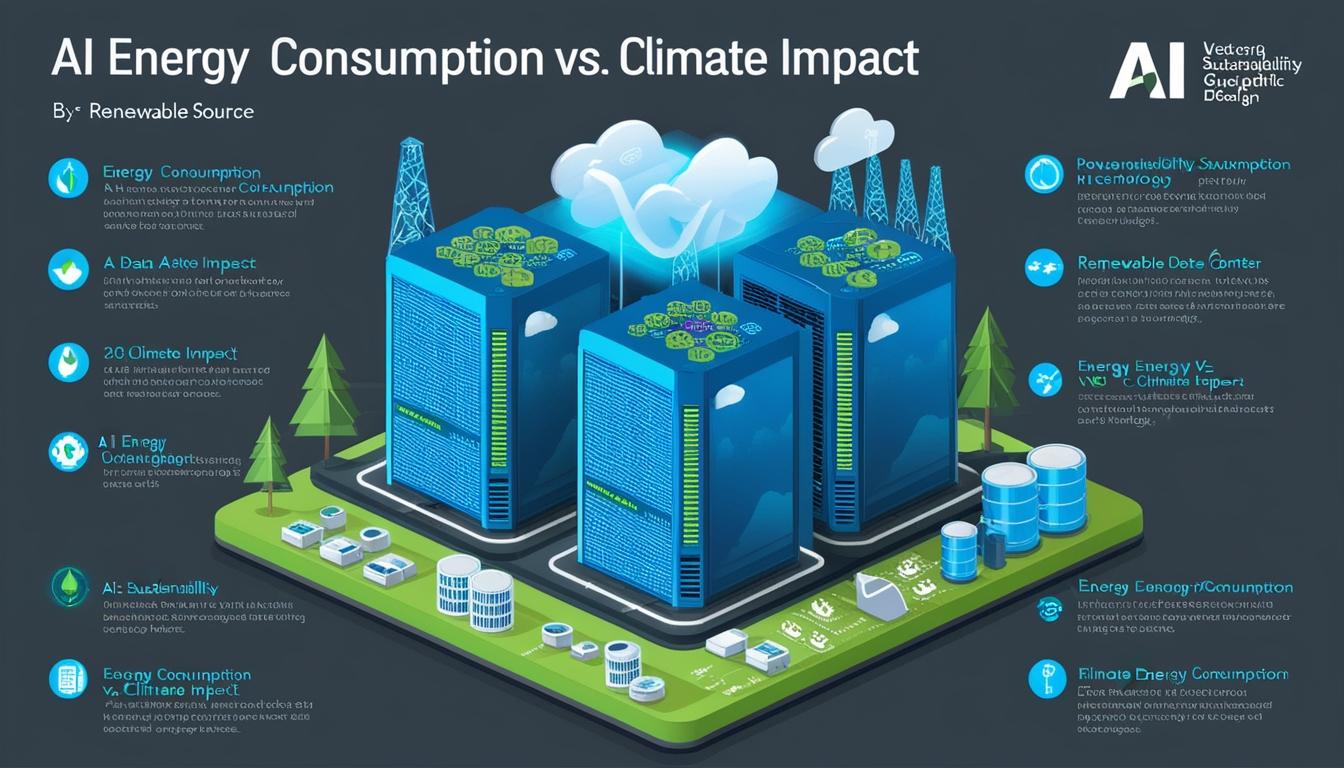
In the contemporary surge of artificial intelligence (AI) development, a paradox emerges: the very technology set to solve some of humanity's most daunting challenges may simultaneously exacerbate an already perilous one — climate change. As AI technologies proliferate across a multitude of sectors from meteorology to healthcare, concerns about their considerable energy demands are taking centre stage.
A striking statistic underscores the urgency of the issue: projections suggest that by 2030, AI might account for a staggering 21% of the global electricity consumption. This figure has been illustrated by reports of Microsoft's potential move to reactivate an old nuclear power plant to fulfil the energy demands of its data centre operations. This situation highlights the critical need to assess AI's environmental impact as its capabilities continue to expand.
Dr. Michela Taufer, a professor at the University of Tennessee, Knoxville, and Dr. Chandra Krintz, a professor at the University of California, Santa Barbara, are among the voices raising awareness within the field. Both academics are part of the Computing Research Association’s Computing Community Consortium (CCC) Task Force on Sustainability and Climate Resilience. They intend to lead discussions on these issues at the upcoming SC24 conference in Atlanta, where they will convene specialists from science and industry to deliberate on questions pivotal to balancing AI's growth with its environmental consequences.
Among the core queries proposed, the pair emphasises the need for AI to continue driving innovation without compromising environmental health. Current methodologies for developing large language models, such as GPT or BERT, necessitate immense computational power, resulting in significant energy consumption, reportedly as much as tenfold that of a conventional Google search. The rapid expansion of data centres has compounded these energy needs, suggesting that without reevaluation, AI’s environmental toll could negate its potential benefits.
Taufer and Krintz advocate for a shift in focus, urging the AI and high-performance computing (HPC) communities to prioritise energy efficiency. This means designing AI systems with energy consumption in mind, adopting efficient hardware and optimising algorithms to reduce carbon impacts. They argue that achieving this balance is crucial not only for innovation but for sustaining environmental health.
To bridge the evident gaps in understanding AI's complete carbon footprint, the academics propose a multifaceted approach. They highlight the necessity for comprehensive research into energy-efficient algorithms and the exploration of new architectures like neuromorphic and quantum computing to enhance efficiency. Furthermore, the development of new metrics and benchmarks to measure these impacts is crucial.
Another highlighted avenue involves fostering a culture of sustainability within the computing field by incorporating these principles into educational programs. Such initiatives would prepare a future workforce capable of innovating responsibly, keeping in harmony technological advancement and environmental protection.
Collaboration across disciplines is deemed essential for developing solutions, with Taufer and Krintz emphasising alliances between technologists and environmental scientists. The SC24 conference is set to be a platform for initiating such cross-disciplinary dialogue. Experts from diverse backgrounds, including computing, environmental science, ethics, and policy, will seek to pave new paths for reducing AI’s energy demands while fostering innovation.
This collective approach could lead to breakthroughs in sustainable AI practices, merging expertise to mitigate AI’s environmental impacts. By discussing improved data centre designs, renewable energy usage, and policy considerations alongside technical innovations, the meeting of minds from different domains is expected to inspire innovations that balance technological progress with ecological responsibility.
Ultimately, the path forward in AI demands an integration of sustainability as a foundational element rather than an afterthought. As AI continues to influence various sectors critically, from public health to agriculture, prioritising sustainability is not just a challenge but a societal necessity. The aim is to ensure that AI’s transformative potential is realised without undermining the health of our planet, integrating technological advancement with a commitment to preserving environmental resources.
Source: Noah Wire Services