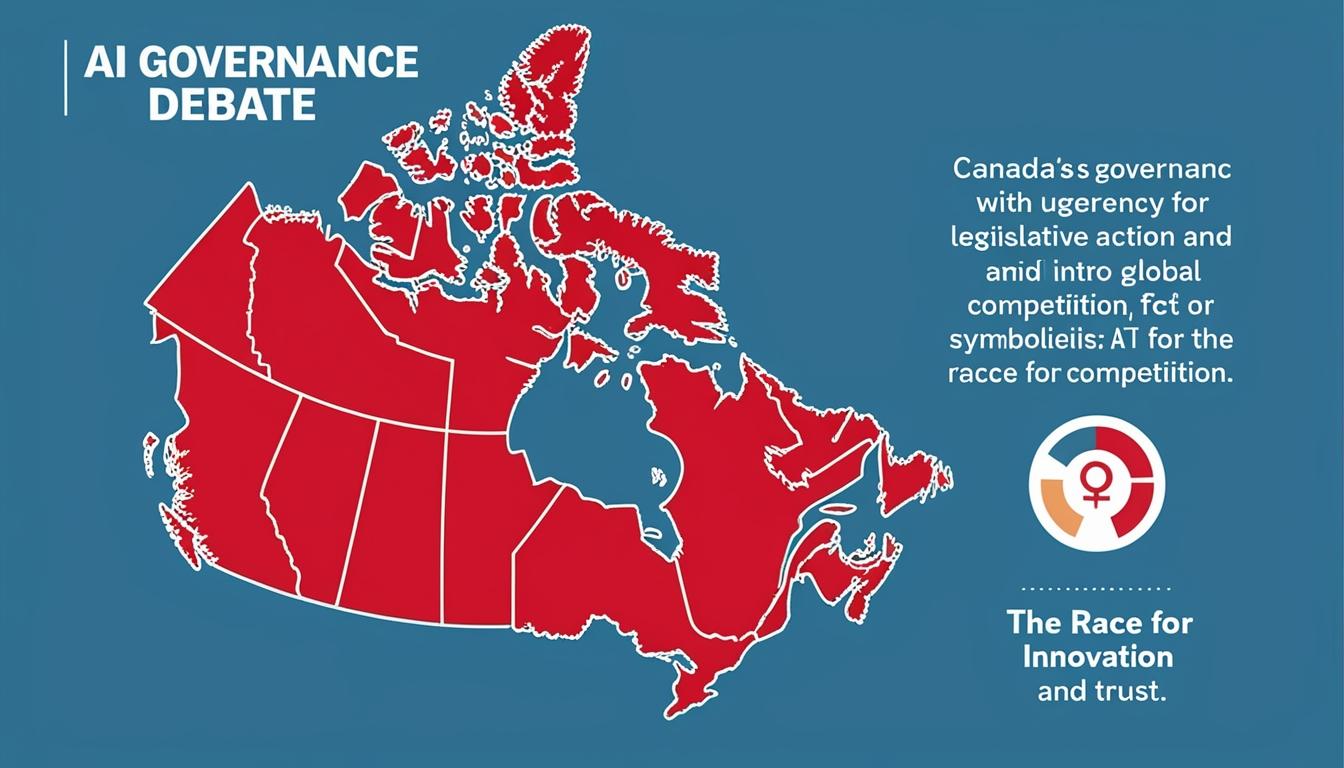
Canada Faces AI Governance Challenges Amidst Global Competition
A report by the Chartered Professional Accountants of Canada (CPA Canada) and the American Institute of Certified Public Accountants (AICPA) has raised concerns regarding Canada's position in the global race for effective artificial intelligence (AI) governance. The document, aptly named ‘Closing the AI Trust Gap: The Role of CPAs in Strengthening AI Governance and Risk Management,’ is part of a series aimed at exploring the implications and governance of AI technology.
This recent publication serves as the intermediate installment in a trio of investigative studies. According to the report, Canada is at potential risk of trailing behind the European Union, which has been advancing in its legislative frameworks surrounding AI. CPA Canada has stressed the importance of accelerating AI adoption through governmental action, advocating for the swift implementation of Bill C-27. This bill focuses on establishing the Consumer Privacy Protection Act, the Personal Information and Data Protection Tribunal Act, and the Artificial Intelligence and Data Act, aiming to create a robust legislative framework for data protection and AI.
Melissa Robertson, CPA Canada’s principal of research and thought leadership, commented on the report, stating that it provides a necessary framework for businesses. "Our research offers a framework for businesses to build public trust in AI, mitigate risks, and drive adoption forward,” Robertson explained.
Tony’s Chocolonely Expands Sustainable Cocoa Initiative with Albert Heijn
In the realm of sustainable commerce, Albert Heijn, a leading Dutch supermarket chain, has announced plans to source cocoa for its store-brand products exclusively through Tony's Open Chain. This initiative, launched by Tony’s Chocolonely in 2019, aims to promote sustainability and fairness in the cocoa supply chain, particularly in Ghana and Côte d'Ivoire.
Over the next three years, Albert Heijn intends to transfer the cocoa sourcing for over 600 of its private label products to Tony’s Open Chain, notably expanding from its previous collaboration on the Delicata brand. This strategic move is set to triple the volume of cocoa procured under the initiative, signalling a significant step in Albert Heijn’s commitment to sustainable practices.
Jan Willem Balk, director of sourcing at Albert Heijn, expressed pride in this sustainable transition. "We would like to inspire the rest of the market and show that it is possible: fair and more sustainable cocoa for all products,” he stated.
US Presidential Candidates Amplify Agri-Food Debate
In the United States, agricultural and food issues have surfaced as pivotal topics in the upcoming presidential election, with Vice President Kamala Harris and former President Donald Trump presenting distinct policy frameworks. With food inflation and industry consolidation taking centre stage, both candidates are vying for the support of rural swing voters, a vital demographic in the electoral battle.
Kamala Harris has positioned herself in favour of implementing a federal ban on price gouging by major food companies. Her economic strategy includes promoting competition within the food system and supporting federal intervention in food price regulation. Harris also advocates for sustainable agricultural practices and comprehensive immigration reform to support the workforce essential to the sector.
In contrast, Donald Trump emphasises an economic policy rooted in deregulation, reduced taxes, and increased energy production to tackle inflation indirectly. Trump's approach to agricultural policy has traditionally focused on reducing regulatory burdens and providing direct financial aid to farmers affected by international trade disputes.
While both candidates extend support to farm subsidies, their approaches differ—Harris connects these subsidies with environmental goals, whereas Trump provided extensive aid during trade tensions, mainly targeting retaliatory tariffs' effects.
As the election day approaches, the two candidates are underscoring their divergent strategies on agri-food policies, each reflecting broader ideological differences between their respective parties. The outcome will undoubtedly influence the direction of the US agricultural landscape in the coming years.
Source: Noah Wire Services