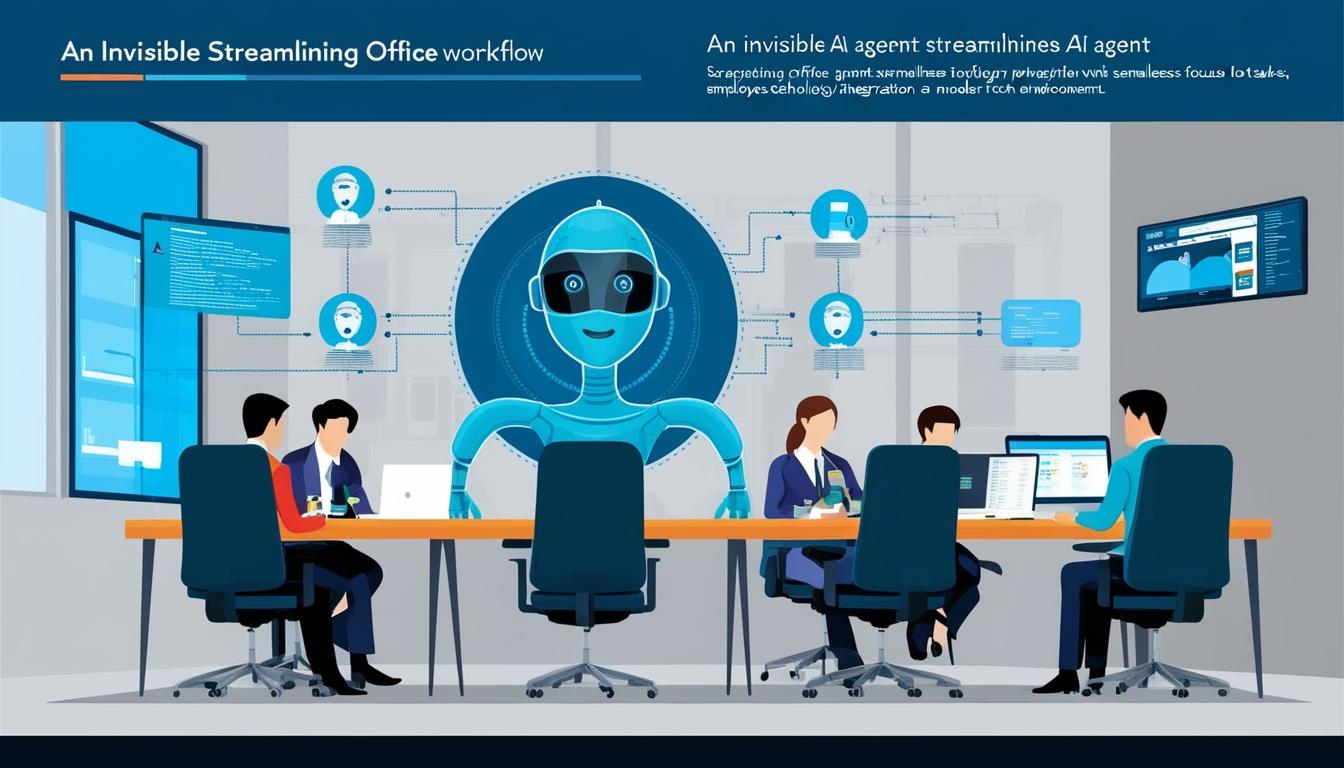
In recent developments within the tech industry, enterprises are increasingly adopting AI agents to streamline operations, though there are considerations for managing their integration effectively. The shift towards deploying these AI agents at scale is accompanied by the need for them to operate seamlessly in the background, thereby fostering an environment where employees are not burdened with understanding or managing these tools directly. This approach aims to alleviate any apprehension employees might feel about technological complexities.
Dorit Zilbershot, Vice President of AI and Innovation at ServiceNow, emphasised that the ideal situation involves AI agents working invisibly behind the scenes, thus allowing employees to remain focused on their primary roles without being conscious of the AI processes. According to Zilbershot, AI agents should autonomously trigger tasks, essentially making employees "managers" of these agents while they continue with their regular work.
ServiceNow has been instrumental in leading this AI transformation with their rapidly expanding platform, Now Assist. Launched with a library of AI agents in September, Now Assist represents the company's fastest-growing product. These AI agents are designed to automate various workflows, enhancing productivity by handling tasks such as encoding customer information, categorising data, and notifying changes, while requiring human intervention only when necessary.
ServiceNow CEO Bill McDermott highlighted the significant growth and potential of generative AI and related applications, noting that AI capabilities will be embedded across all of the company's products. This statement underscores the strategic direction ServiceNow is taking, focusing on integrating AI deeply into its offerings to address unique enterprise challenges.
Zilbershot further clarified the distinction between AI agents and AI assistants. She pointed out that treating agents as assistants might mislead users into thinking they need to actively engage and provide prompts, whereas the goal is for agents to function autonomously. For effective deployment, orchestrator agents are necessary to manage the multitude of interacting agents, a service offered through ServiceNow's Now Assist platform.
Additionally, ServiceNow is forming strategic partnerships to enhance its AI capabilities. In collaboration with NVIDIA, ServiceNow plans to utilise the NIM Agent Blueprint for developing off-the-shelf AI agents. This partnership will first focus on creating a Vulnerability Analysis for Container Security AI Agent, set for release in 2025 on the ServiceNow platform. This agreement with NVIDIA marks the start of what could be numerous collaborations aimed at bolstering the AI agent ecosystem within ServiceNow’s framework.
The trend of incorporating AI agents is catching on across various firms, with others like Crew AI and Asana also offering orchestrator agents and platforms for creating custom AI solutions. This indicates a broad industry movement towards leveraging AI to optimise workflows and drive innovation at scale. As companies continue to explore these possibilities, understanding how AI agents function within their specific organisational contexts will be crucial for maximising their potential benefits.
Source: Noah Wire Services