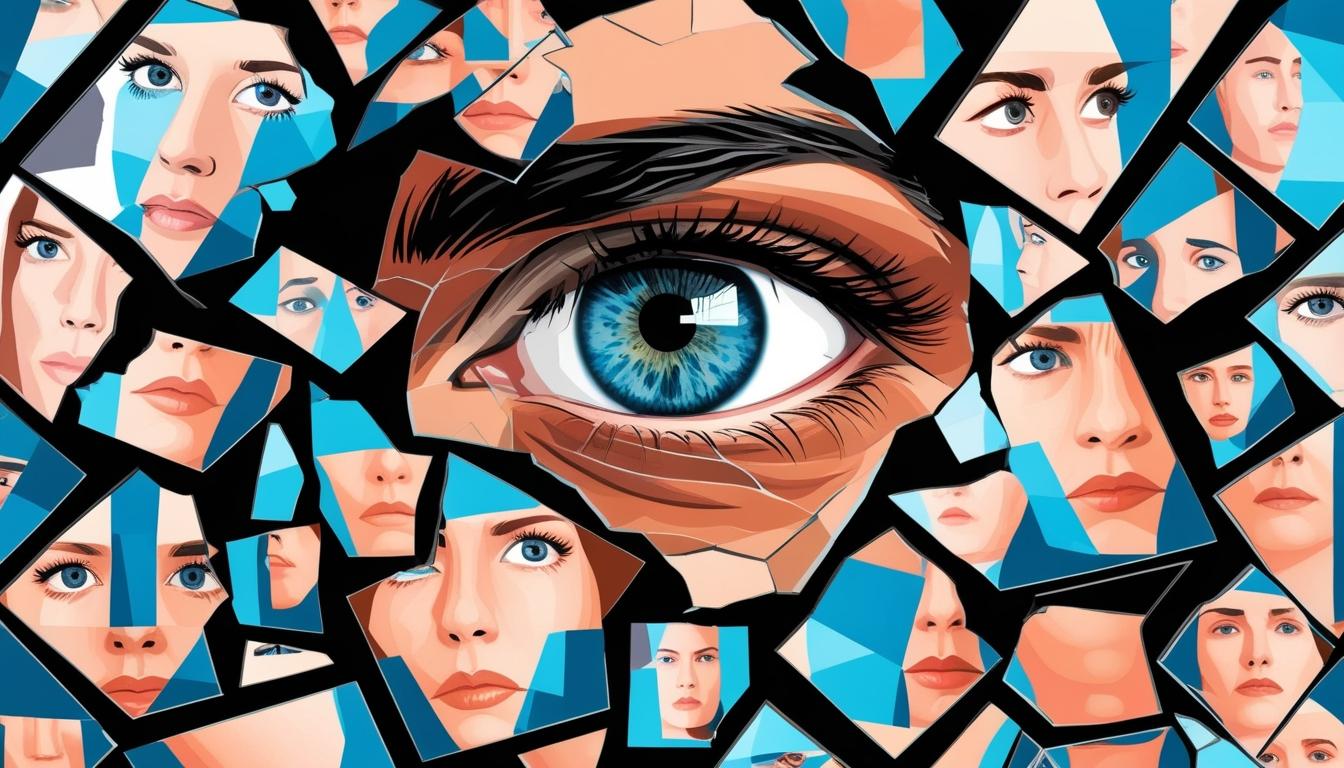
Experts Shed Light on Detecting Dishonesty Amid Deepfake Surge
In a world where deception seems increasingly prevalent, identifying dishonest behaviour can be a challenging yet crucial skill. From fraudulent claims by politicians to exaggerated qualifications by job seekers, deceit can emerge in various forms and contexts. With the rise of technology, this challenge has been compounded by the proliferation of deepfake content, posing new threats to personal freedoms and ethical boundaries globally.
Recently, Zoe Williams from The Guardian explored this topic by consulting three experts in the domain of honesty: a former FBI agent, a psychologist, and an insurance fraud investigator. They shared insights into recognising potential dishonesty through specific behavioural indicators. While these signs are not foolproof, they can serve as useful indicators when multiple are observed.
Understanding Lie Indicators
One of the primary cues involves self-soothing gestures. According to ex-FBI agent Joe Navarro, such gestures may include playing with cufflinks or repeatedly buttoning clothing, reflecting social anxiety or psychological discomfort. Similarly, touching the face or covering the suprasternal notch may signal distress or insecurity.
Incongruities between verbal and non-verbal cues can also point to deceit. A person declaring innocence while avoiding eye contact or showing nervous mannerisms could be cause for suspicion. Changes in voice pitch and speed are other indicators, as highlighted by retired fraud investigator Gabrielle Stewart. When a person fabricates part of their narrative, their voice may inadvertently rise in pitch as they speed through the dishonest segments due to cognitive overload.
Listening attentively and without prejudice is essential to detecting deception. Joe Navarro warns that an accusatory approach may cause defensiveness, potentially concealing behaviours indicative of untruthfulness. Paying attention to the structure of a story is equally vital. Stewart suggests that an honest account typically follows a specific build-up, content, and reflection pattern. Deviations from this could reveal discrepancies inherent in dishonesty.
Moreover, Stewart notes that excessive use of linguistic hedging—such as fillers and uncertainty words—can be telltale. Misplaced laughter or unusual sounds, like coughing, may also emerge when a liar attempts to avoid uncomfortable silence.
Surge in Nonconsensual Deepfake Content
While personal interactions still witness everyday deceit, a more complex and alarming form of dishonesty is emerging online through deepfake technology. Matt Burgess of Wired has highlighted a concerning trend involving bots on Telegram that can create explicit nonconsensual images through artificial intelligence. The review uncovered at least 50 such bots on the platform, exploiting images to generate unauthorised explicit material. Astonishingly, these bots attract over 4 million users monthly.
The phenomenon of deepfakes, which dates back to around 2017, has rapidly expanded, facilitated by the ease of access to creation tools. The process involves altering images or videos to produce realistic yet fabricated representations, posing severe risks of privacy violations and reputational damage.
Despite some legislative action in the United States, where 23 states have enacted laws against nonconsensual deepfakes, the challenge persists. Apps enabling the creation of these altered images are still available on major platforms like Apple and Google, highlighting deficiencies in control measures.
Russian hackers have also capitalised on the growing demand for deepfake content by deploying websites that promise 'nudification' but instead infect devices with malware. This underscores an urgent need for more robust protection policies globally to safeguard individuals against such digital abuses.
Navigating this complex landscape of dishonesty, both interpersonal and digital, underscores the growing challenges posed by technological advancements in shaping perceptions of truth and fiction.
Source: Noah Wire Services