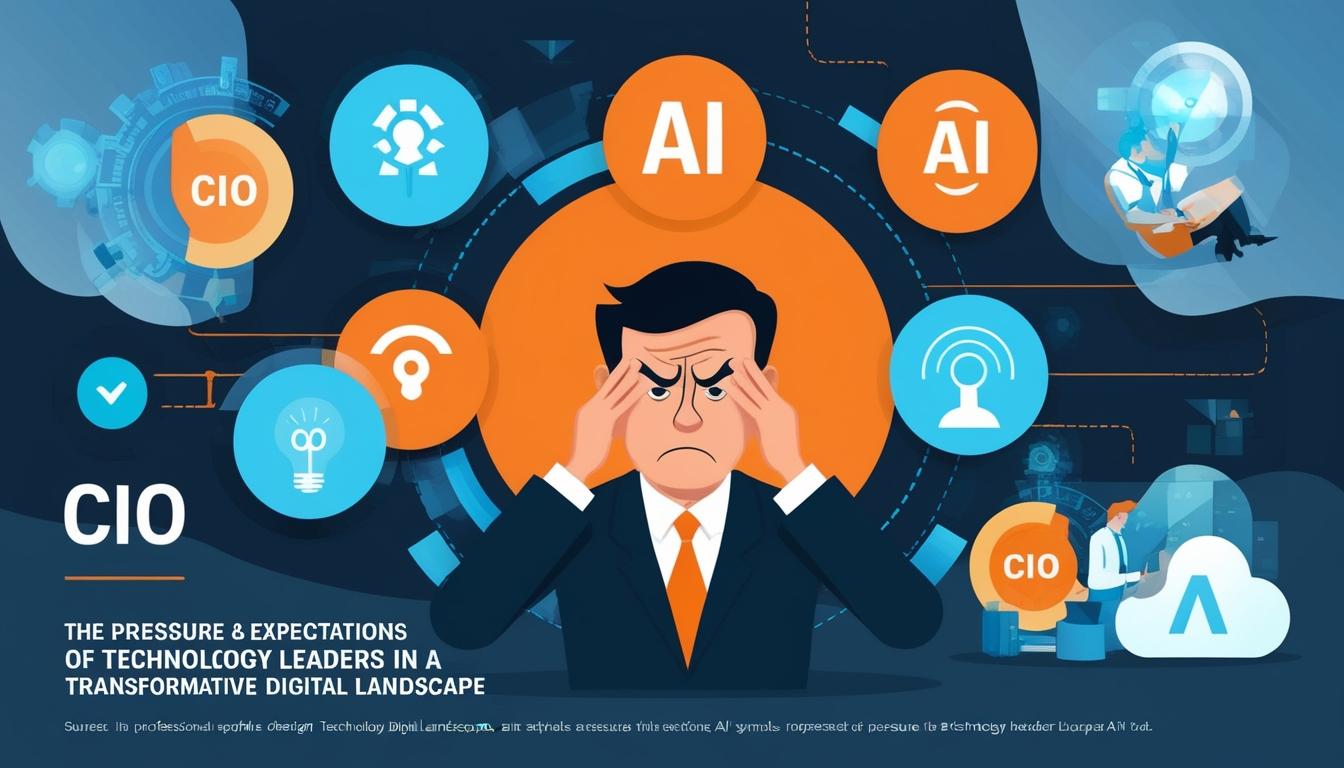
Global CIOs Grapple with AI Expectations Amid Technological Advancements
In an era where Artificial Intelligence (AI) is profoundly transforming industries, Chief Information Officers (CIOs) around the globe are encountering mixed emotions amid the rapid digital transformation. Jean-Philippe Avelange, CIO of Expereo, has highlighted the growing pressure on CIOs to constantly meet heightened AI expectations, which has become a significant concern.
A research initiative named "Enterprise Horizons 2024" conducted by Expereo gathered insights from 650 prominent technology leaders worldwide. The findings indicate that a substantial 64% of global CIOs experience stress when trying to satisfy their organisations' increasing demands for advanced technology, largely driven by AI.
The Role and Pressure of AI in Business Expectations
As AI continues its forward march, it has emerged as a central component for innovation and enhanced performance in businesses. However, the pressure on technology leaders is intensified by the expectations of boards that often seem to exaggerate the immediate capabilities of AI in improving business performance internationally. The survey reveals that 47% of the participating leaders believe their boards have unrealistic expectations about AI’s short-term impact. This pressure is compounded by their responsibility to initiate sweeping AI-driven transformations, which many feel are misunderstood by non-technical leadership.
The spotlight that comes with AI’s strategic importance has been double-edged; while 60% of CIOs believe AI has elevated their status within organisations, 39% feel the additional scrutiny and stress have made their roles more challenging.
AI’s Impact on Employment Roles
The anxiety surrounding AI is not limited to fulfilling current demands but extends to the job security of technology leaders and their teams. According to the research, 38% of global leaders are concerned about AI potentially taking over their roles, and 40% predict that the emerging role of the Chief AI Officer (CAIO) might encompass many of their current duties within the next couple of years.
The evolution of AI is leading to the automation of tasks traditionally managed by IT teams and senior executives. As such, technology leaders foresee a shift in their responsibilities with automation poised to take on routine and higher-level decision-making tasks. This apprehension is shared across departments, with 46% of respondents fearing AI could displace roles in other areas too, where data processing and repetitive activities are prevalent.
Balancing Challenges with Optimism
Despite these concerns, an overwhelming 68% of technology leaders expressed excitement about the future in the Enterprise Horizons 2024 survey. The rapid strides in Digital Transformation and AI open avenues for CIOs to exhibit their strategic value by optimising operations and driving innovation. They are tasked with both addressing current challenges and preparing their organisations for sustained success.
CIOs are being empowered to assume more strategic roles, which though burdened with challenges, offer a significant opportunity to spearhead change. An encouraging 71% of respondents are confident that their strategies can lead to efficiency and improved business outcomes. Many CIOs view this as a unique opportunity to shape the trajectory of their organisations amidst the transformative AI landscape.
Conclusion
The technological landscape today presents unprecedented challenges and opportunities, with AI at the forefront. CIOs find themselves at a crossroads, tasked with navigating these pressures while harnessing AI’s power to drive transformation. For many, this is a defining moment in their careers, presenting a chance to significantly impact their organisations and contribute to the broader narrative of Digital Transformation.
Source: Noah Wire Services