Google DeepMind Introduces Advanced AI Framework Inspired by Human Cognition
In a significant leap forward in artificial intelligence research, Google DeepMind has unveiled a new agentic framework known as Talker-Reasoner. This innovation aims to enhance AI’s capability in handling varied tasks by adopting a model inspired by the dual-system theory of human cognition. The approach is designed to enable AI agents to balance between fast, intuitive actions and slow, deliberate reasoning, thereby improving overall user interaction and computational efficiency.
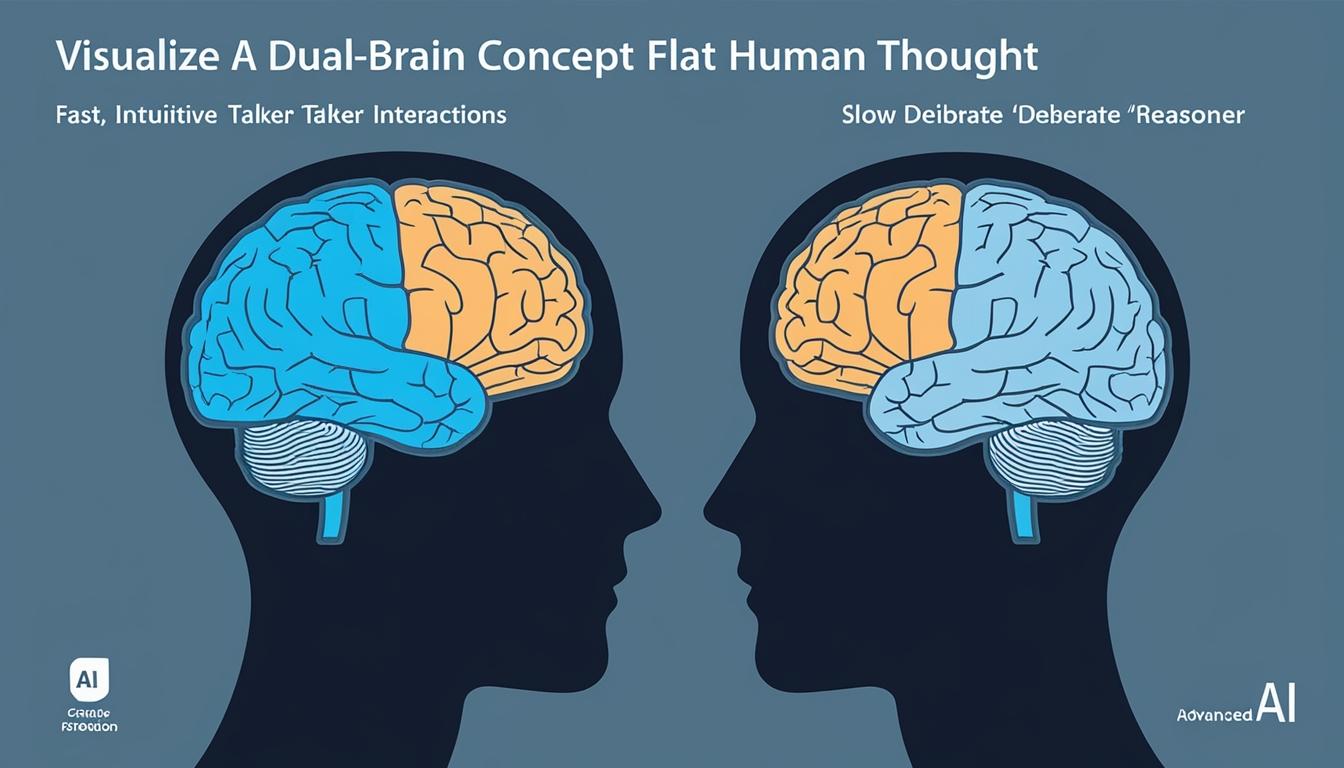
The initiative is rooted in the cognitive theory proposed by Nobel laureate Daniel Kahneman, which divides human thought into two systems: System 1 and System 2. System 1 operates swiftly and automatically, managing instinctive tasks such as recognising patterns and reacting to immediate stimuli. Conversely, System 2 is slower and more deliberative, associated with complex problem-solving and deep analytical thinking.
Presently, most AI agents predominantly function in a manner akin to System 1, excelling in pattern recognition and executing quick responses. However, they typically struggle with tasks requiring multi-step planning and strategic decision-making - areas where System 2 is dominant. It is this gap that the Talker-Reasoner framework seeks to address.
The novel framework divides AI functionality into two segments. The 'Talker' represents the fast, intuitive segment similar to System 1. It is responsible for dynamic interactions with users and the environment, employing in-context learning capabilities of large language models to process language, fetch information from memory, and craft conversational responses.
Meanwhile, the 'Reasoner' embodies System 2's qualities by managing complex reasoning and planning. It is specialised for particular tasks, interacting with external tools and databases to update its knowledge and make informed decisions. It also updates the AI’s belief system, which informs future decisions and is accessible to the Talker for ongoing conversations.
A shared memory system forms the backbone of Talker-Reasoner interaction. This asynchronous communication setup allows the Reasoner to update this system with its reasoned conclusions, which the Talker then utilises during its real-time user interactions. This setup ensures seamless integration between immediate response and in-depth processing.
The framework has been tested in applications such as sleep coaching, a domain requiring both rapid, empathetic engagement and complex, knowledge-based guidance. In this scenario, the Talker manages natural conversations while the Reasoner maintains and updates a detailed belief state about the user's sleep patterns and aspirations, using this to craft tailored recommendations.
Looking ahead, DeepMind researchers are exploring several directions for further advancement. One area of focus is optimising the dynamic between the Talker and the Reasoner, enabling the Talker to discern when it must call upon the Reasoner, thereby reducing unnecessary computational demands. Another avenue involves the integration of multiple Reasoners, each specialising in different knowledge domains, to enhance the agent's ability to manage complex, multi-faceted tasks.
The introduction of the Talker-Reasoner framework represents a significant step towards more sophisticated, versatile AI systems, bringing them closer to mimicking the nuanced cognitive processes of humans. This development holds promise for a range of applications beyond sleep coaching, potentially benefiting sectors such as customer service and personalised education. By integrating both rapid response and complex reasoning, the framework exemplifies an innovative stride in evolving AI systems for diverse, real-world challenges.
Source: Noah Wire Services