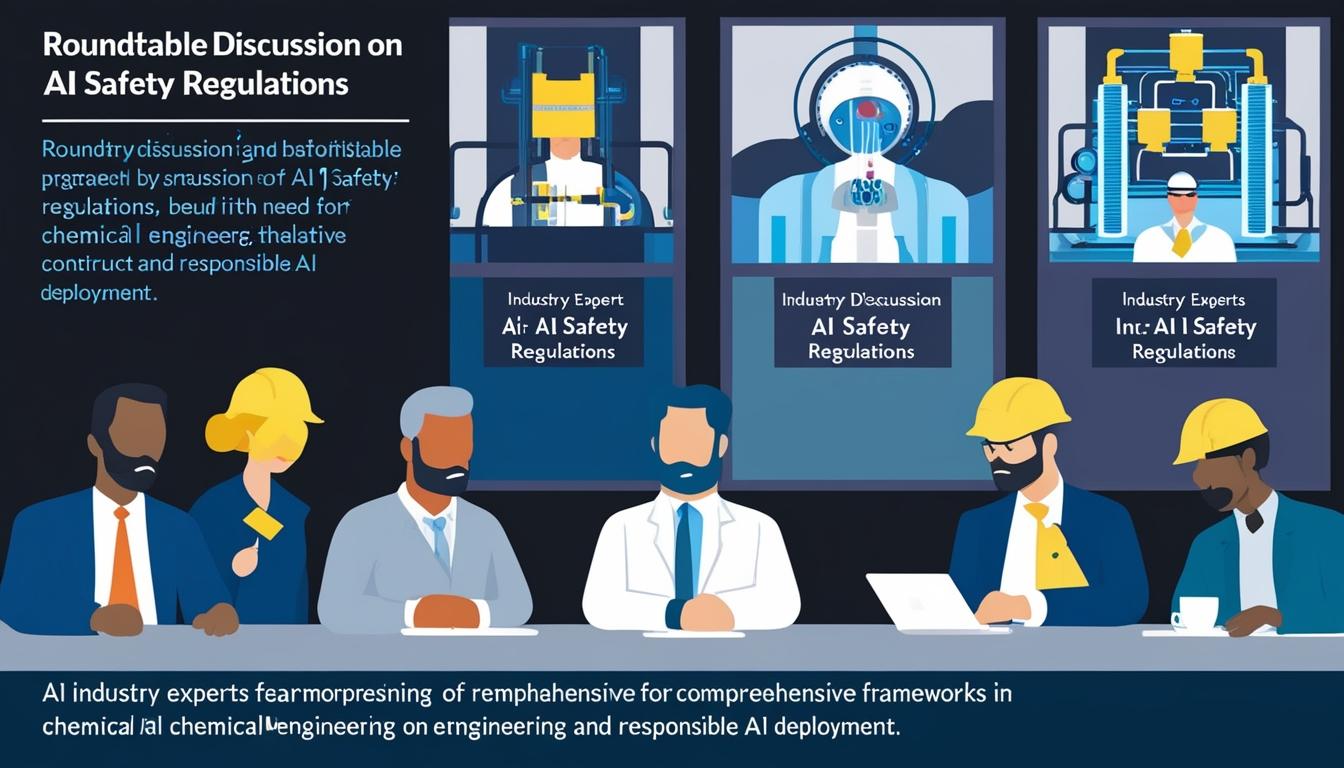
AI Regulation Urged by Industry Experts at IChemE Roundtable
In a recent gathering hosted by the Institution of Chemical Engineers (IChemE), prominent industry leaders voiced their concerns over the current lack of comprehensive regulation in the burgeoning field of artificial intelligence (AI) in the UK. The meeting underscored a critical need for legislative support to ensure AI technologies, especially within chemical engineering and industrial systems, are deployed safely and responsibly.
The roundtable, featuring distinguished participants like Simon Rogers of KBC Global, Mehmet Mercangöz from Imperial College London, and Vira Jogia of VRJ Consultancy, delved into the integration of AI and machine learning in plant operations and control systems. The experts emphasised the absence of a robust regulatory framework capable of addressing the unique challenges posed by AI and the importance of involving chemical engineers in framing these policies.
Jin Xuan, the Associate Dean of Research & Innovation at the University of Surrey, highlighted that while the UK excels technologically, the gap lies in policy and regulation. "Do we have the right policy framework for AI to be trialled?" Xuan questioned, pointing to a crucial oversight in the current legislative approach.
At present, the UK government has taken limited steps towards regulating AI safety, establishing the AI Safety Institute only in February. In the meantime, industries have been constrained to comply with existing regulations, which often lack the flexibility to accommodate new technologies. Vira Jogia discussed how traditional hazard identification processes, such as HAZOP, revealed safety issues in AI technologies under evaluation, highlighting how collaboration with technology providers is essential for thorough assessments.
Simon Rogers indicated that foundational elements for a regulatory framework exist within chemical engineering, owing to previous experiences with similar technologies. However, the discussion acknowledged that these foundations require significant adaptation to meet the specific demands of AI development and deployment.
Nicole Mwananshiku, a policy advisor with the Royal Society’s data policy team, criticised policymakers for an overly growth-centric focus, neglecting the potential risks associated with AI. This perspective aligns with the broader consensus at the roundtable that the UK government should recalibrate its strategies to not only promote innovation but also address safety and regulatory concerns more robustly.
In line with these discussions, the UK government is working on the AI Opportunities Action Plan, designed to foster collaboration among academics, industry professionals, and regulators. The plan aims to advance the AI sector while crafting regulations tailored to meet the distinct needs of various industries. Bhavik Mehta from Siemens stressed the importance of specificity in policy-making, citing the pharmaceuticals industry as an example of stringent regulation compared to less tightly controlled sectors like oil and gas.
The roundtable proceedings highlighted a prevalent industry sentiment: that while the UK's AI capabilities are notable, sustained growth and safety hinge on sound regulatory practices. The establishment of such frameworks could prove pivotal in aligning the UK’s fledgling AI industry with international standards and expectations.
Source: Noah Wire Services