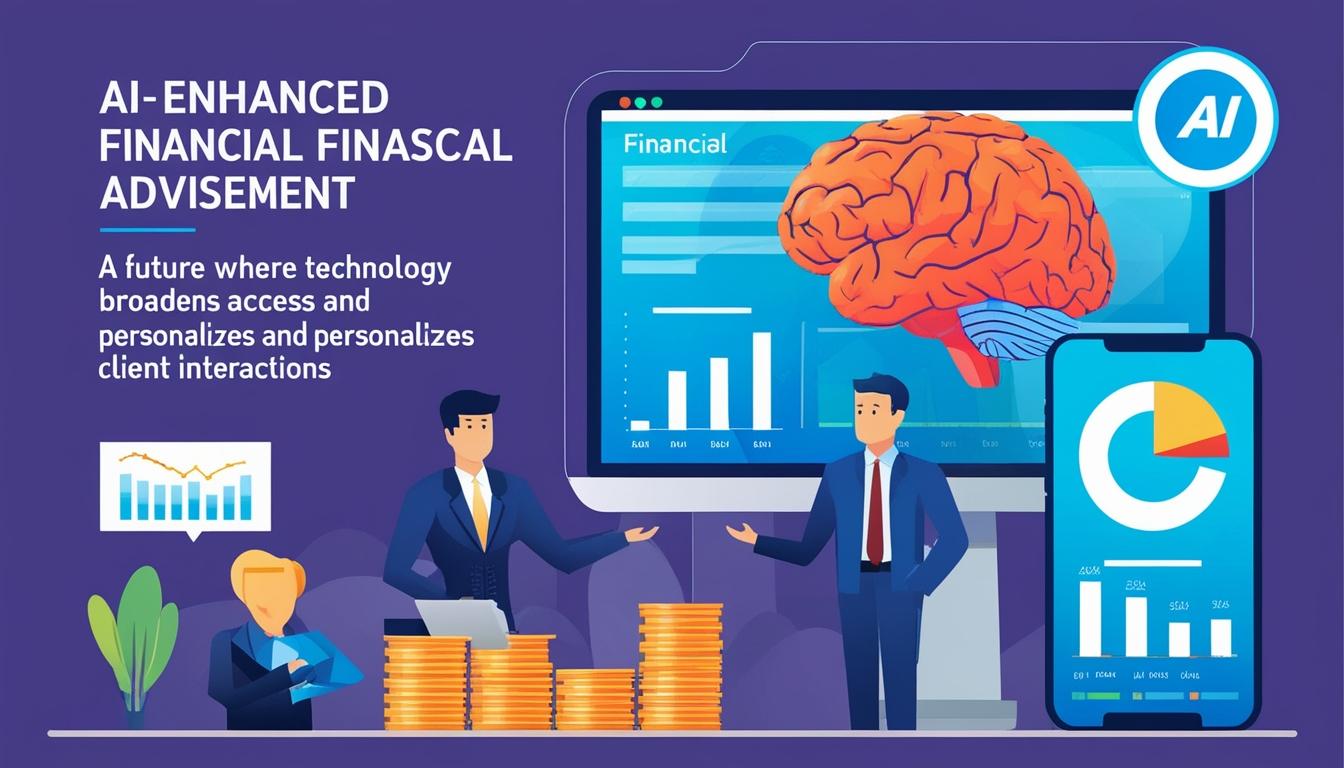
During a recent virtual summit held by eMoney Advisor LLC, industry leaders from major financial services companies explored the transformative impact of artificial intelligence (AI) on the financial advisory sector. The event, which took place on Wednesday, provided a platform for executives from companies like Allianz Life, Fidelity Investments, and Nationwide to discuss the evolving role of AI and its potential to revolutionise financial advisement.
Maxwell Lane, the CEO of Flourish Financial LLC, opened the discussion by tracing the evolution of financial advice accessibility. Historically, only America's wealthiest could afford such services, but today's landscape has shifted considerably, allowing a broader demographic to benefit from financial guidance. Lane highlighted that technology, especially generative AI, could further broaden this access by making financial advice more affordable and expansive.
The panellists outlined current and potential uses of AI within the financial services industry, with a focus on internal operations rather than direct client interaction. Specific applications mentioned included the utilisation of AI in back-office administration, the summarisation of client meeting notes, and the identification of prospective clients. Judy Lee, Vice President and Platform Consulting Team Lead at Fidelity Investments, anticipates AI's integration in these areas in the short term, with longer-term uses yet to be fully realised.
Erin Tyra, Director of Registered Investment Adviser Annuity Distribution at Nationwide, shared insights into Nationwide's initiative to develop AI tools aimed at enhancing client management. By optimising communication methods — whether through email, phone calls, or in-person meetings — AI systems could alleviate the pressures advisers face when managing extensive client portfolios. This, Tyra argued, would enable more personalised and effective client interactions.
The summit also addressed the implications of AI on the accessibility of financial advice. Lane expressed optimism that as AI enhances adviser efficiency, financial services could become accessible to a greater number of clients across varying income levels. This could lead to a reduction in the asset threshold required to receive advice, progressively allowing more individuals to benefit from financial guidance.
On the subject of fiduciary duties, Tyra emphasised the importance of understanding and aligning technology with regulatory frameworks to protect client interests. Advisers should leverage the time saved through AI automation to focus on more personalised, human-centric interactions, particularly those addressing clients' behavioural financial challenges.
The event coincided with the release of a report by Cerulli Associates and Osaic Inc., which underscored the increasing investor demand for comprehensive financial services that extend beyond traditional money management. According to the report, 55% of investors prioritise an adviser's understanding of their financial goals and risk tolerance over merely investment performance, a trend driven by market volatility and the diminishing role of employer pensions.
John Helmen, Head of National Accounts for Allianz Life Insurance Co. of North America, echoed the sentiment that AI could free up advisers to concentrate on broader services such as tax management and education for future generations. By handling routine tasks, technology could empower advisers to hone their soft skills and adopt a more holistic approach to client needs.
Despite concerns about the rise of automated services, the panellists agreed that AI would not replace human advisers. Instead, as Lane noted, the human touch remains indispensable in finance. The sentiment was shared by Helmen, who argued that the AI revolution, though gradual, holds the promise of enhancing the client experience by augmenting the value and quality of advice provided by human advisers.
In conclusion, the summit highlighted the ongoing transformation within the financial advisory industry, propelled by advances in AI technology. While challenges and uncertainties remain, the consensus among industry leaders is that AI offers significant potential to enhance both the scope and quality of financial advice, ultimately benefiting a wider audience.
Source: Noah Wire Services