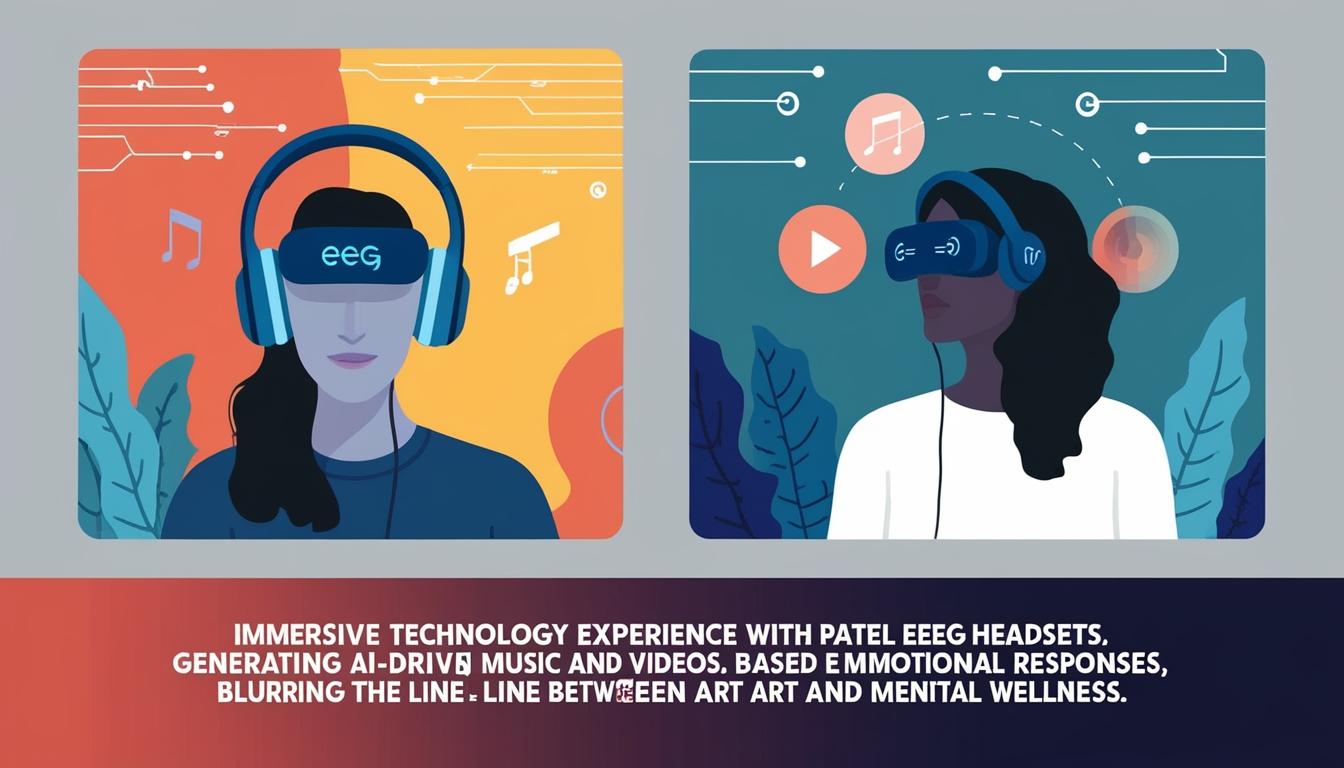
CEATEC 2024, a leading tech exhibition in Japan, witnessed the unveiling of JVCKENWOOD's latest technological innovations, underpinned by the theme of "Connecting people, time, and space to create the future." This exhibition took place at the Makuhari Messe in Chiba, Japan, and showcased how the company is aiming to enrich lives globally through its advanced video, audio, and wireless solutions.
One of the standout experiences at the JVCKENWOOD booth was located in the "Impression – Entertainment Area." This segment was dedicated to creating immersive, multi-sensory experiences by engaging all five senses. It featured a cutting-edge demonstration that synergised brainwave detection, artificial intelligence, and human senses to generate personalised music and video content based on a participant's subconscious emotional reactions.
The technology behind this intriguing demonstration was developed through a collaboration led by Suguru Goto, an Associate Professor in the Department of Musical Creativity and the Environment at Tokyo University of the Arts. Goto, who is also a composer and media artist, presented a system that employs a brain-computer interface using an Emotiv Insight EEG headset. This device is specifically designed for brainwave data capture, facilitating innovative solutions across varied fields.
The demonstration involved participants wearing the Emotiv Insight headset, which required just a few minutes of calibration. After a short meditation, participants viewed pre-prepared videos aimed at eliciting specific emotional responses. The EEG headset recorded brainwave activities throughout the process, while an AI-driven software decoded these signals.
Suguru Goto explained that the system's machine learning algorithms classify brainwave data into 28 distinct emotional states, depicted on a Cartesian plane measuring pleasure versus discomfort and alertness versus sleepiness. This allows for a refined categorisation into 64 emotional subdivisions, providing a comprehensive insight into each participant's emotional makeup.
Once the initial session was complete, the system automatically generated bespoke music and video that reflected the participant's emotional responses. These AI-driven creations were showcased using JVCKENWOOD wooden speakers and displayed on a large screen, adding to the immersive quality of the experience.
A private video shared by Goto revealed the dual visual aspect of this setup, wherein emotion-triggering content is shown on a monitor, while the resultant AI-generated visuals are projected on the floor of a darkened room where the participant is seated.
Beyond the realm of art, Goto suggested that this technology holds promise for applications in mental health care. The apparatus could potentially lead to new treatments, particularly in music neurofeedback therapy. The concept could be expanded by incorporating other sensory triggers, such as tactile and olfactory stimuli, to further explore emotional responses. For example, participants might hold a vibrating "Hug Speaker" or enjoy natural wood scents from specially crafted speakers.
While additional sensory demos were not part of the CEATEC showcase, the potential integration of such stimuli remains promising, indicating future directions for this technology. This setup could include generating audio-visual content based on more varied subconscious responses, paving the way for innovative approaches in human wellness and cognitive therapies. CEATEC 2024 thus not only highlighted the inventive collaboration between technology and art but also hinted at a paradigm shift in personal and mental health care industries.
Source: Noah Wire Services