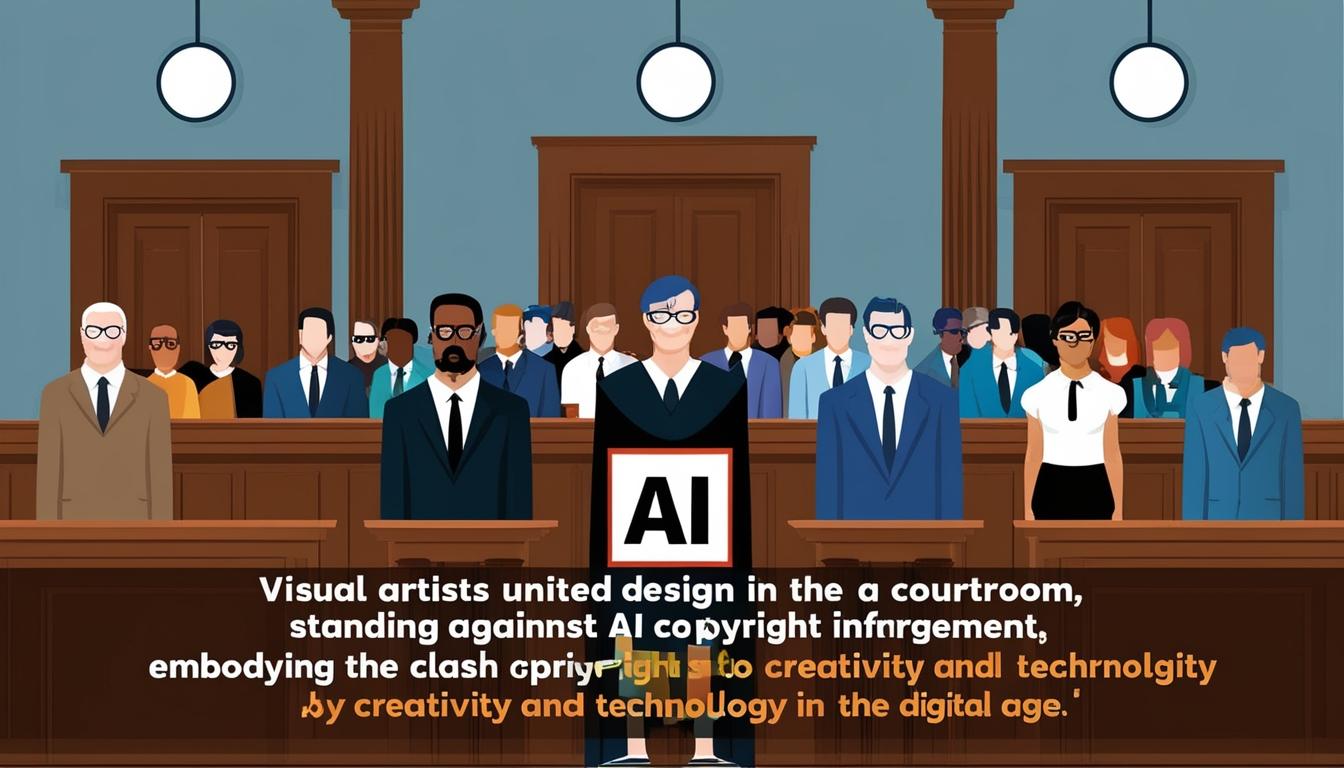
In 2023, a landmark legal battle commenced as visual artists Sarah Andersen, Kelly McKernan, and Karla Ortiz initiated a class action lawsuit against several prominent Artificial Intelligence (AI) companies. The artists alleged that these companies' AI models violated copyright law by utilising their artworks within their training datasets. The case is taking place in the Northern District of California and has drawn significant attention given its potential implications for both AI development and copyright law.
In August 2024, the legal proceedings reached a pivotal juncture when Judge William Orrick issued a ruling on the defendants' motion to dismiss the case. The judge's decision allowed the plaintiffs' copyright claims to advance, bolstering the artists' quest for justice. The court permitted not only the claims of direct infringement to proceed but also denied the dismissal of claims related to induced infringement.
Judge Orrick made a notable distinction between the AI models in question and previous copyright disputes involving other technologies, such as Video Cassette Recorders (VCRs). Unlike VCRs, which have legitimate uses beyond any potential copyright infringement and do not contain infringing content when sold, the AI models allegedly function in a manner that inherently infringes upon copyrighted materials, according to the plaintiffs' claims. This distinction was a critical factor in the judge's decision to allow the case to progress.
As the lawsuit moves into the discovery phase, Kelly McKernan has expressed cautious optimism. Discovery may provide the plaintiffs with vital information regarding the inner workings of the AI models, potentially substantiating their claims of copyright violation. The lawsuit stands as one of the early tests of how copyright laws will interact with AI technologies, particularly concerning how AI models source and process their training data.
The case's outcome is anticipated to have substantial ramifications for the future of AI development and the protection of intellectual property rights. This legal challenge underlines ongoing tensions between technological innovation and the safeguarding of creative works, setting the stage for a novel exploration of copyright implications in the digital age. As proceedings continue, both legal experts and industry stakeholders are closely monitoring the case for its potential to set precedents and influence future frameworks governing AI and copyright interactions.
Source: Noah Wire Services