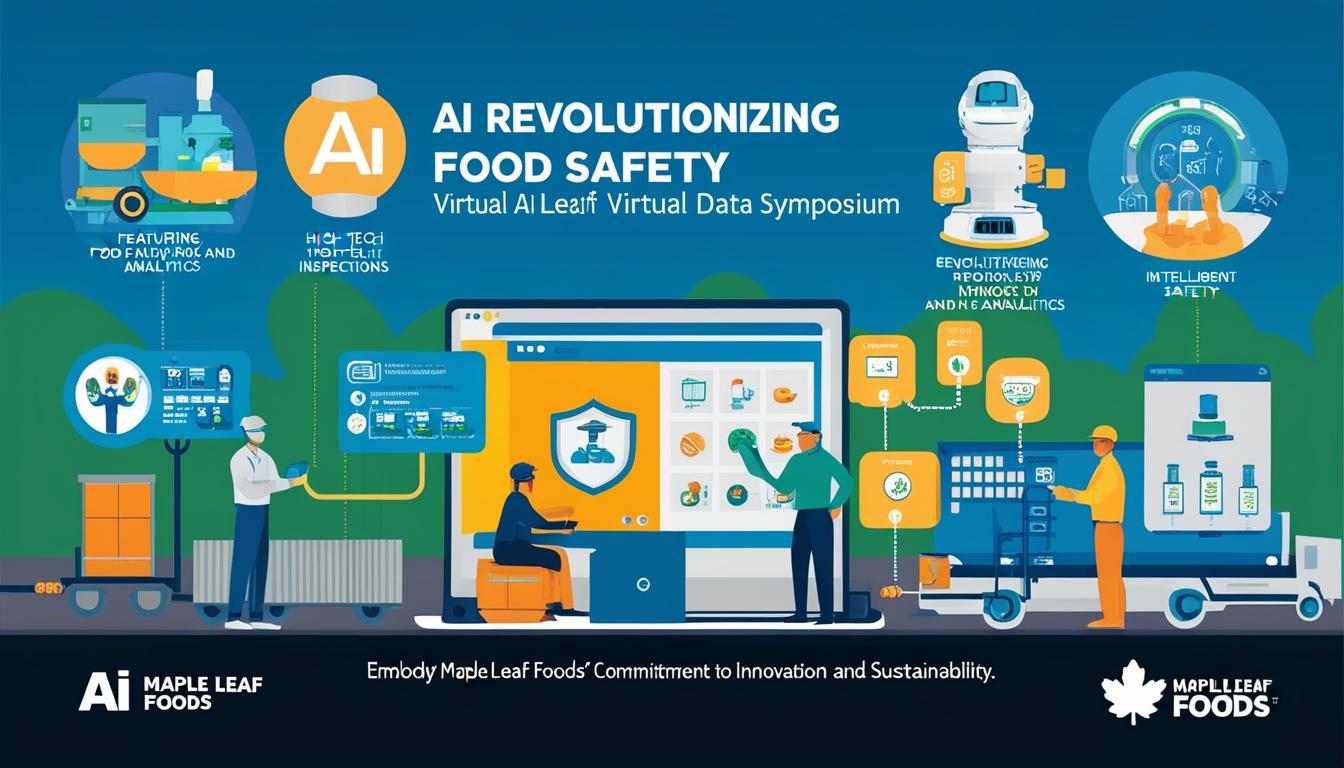
Maple Leaf Foods Inc. recently hosted its 14th annual Food Safety Symposium, demonstrating the organisation's ongoing commitment to ensuring food safety and fostering intellectual exchanges among professionals within the food sector. This year, the event, which was held virtually, focused on the transformative role of artificial intelligence (AI) in advancing food safety protocols.
The symposium featured an array of speakers who underscored the integration of AI technologies in food safety measures as an emerging essentiality. Curtis Frank, president and CEO of Maple Leaf Foods, emphasised the intertwined relationship between AI and food safety. He articulated that the development of AI technology is beginning to transform the food industry, and the company remains committed to using this evolution to deliver safer and more nutritious food. “AI is transforming our business in ways we are only beginning to understand,” Frank commented, highlighting the company’s enduring dedication to setting high standards in food safety.
A significant contribution to the symposium was made by keynote speaker Nihar Dalmia, a partner at Omnia AI, Deloitte. Dalmia described the present moment as a pivotal one, with AI no longer being confined to the realms of scientists and large enterprises but becoming a tool accessible to many. His insights touched on future trends in the industry, such as smart packaging, AI-powered robotics, and personalised food safety solutions. He noted that organisations must navigate forthcoming technological changes responsibly, employing AI practices that are comprehensive and ethical.
The symposium also included a panel discussion involving industry experts Conor Cahil from Dawn Farms Foods and Dr. James Doyle from Crème Global. This discussion centred around the enhancement of long-term sustainability and consumer safety through accurate data acquisition and process optimisation. Dawn Farms Foods shared case studies that highlighted their use of AI in forensic food safety approaches, which include improved labelling controls and predictive detection.
Additionally, several entrepreneurial tech firms presented cutting-edge solutions at the symposium. Innovations showcased included automated inspection technologies capable of detecting foreign materials via hyperspectral imaging, predictive data analytics for anticipating food recalls, and AI tools aimed at eliminating foodborne illnesses.
Dr. Randy Huffman, chief food safety and sustainability officer at Maple Leaf Foods, stressed the critical role of clean, trustworthy data in unlocking AI’s potential. He cautioned that AI models cannot rectify poor data, underscoring that data integrity relies on efficiently designed processes and skilled employees.
Andreas Liris, the company’s chief technology and information officer, echoed these sentiments, advocating for a balance between curiosity and prudence when exploring AI’s possibilities. He highlighted the opportunities AI presents in operational areas, such as yield improvement and the use of virtual assistants, while also pointing out the importance of investing wisely in appropriate technologies to sustain food safety advancements and business growth.
In conclusion, the symposium reinforced the necessity of responsibly integrating AI to exploit its full potential in revolutionising food safety practices, as Maple Leaf Foods continues to lead discussions and initiatives in this critical area.
Source: Noah Wire Services