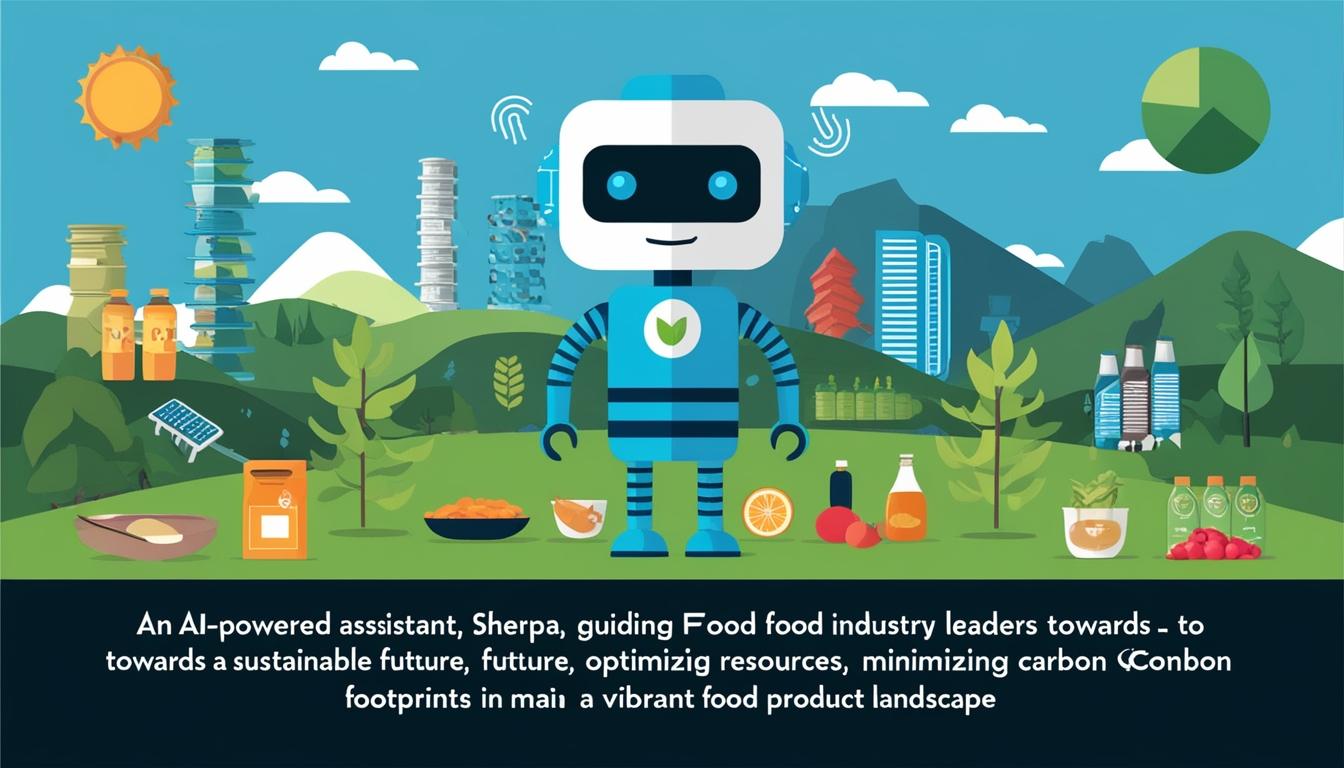
Mondra, a company specialising in product footprinting and supply chain decarbonisation, has introduced Sherpa, an innovative AI-powered assistant aimed at steering the food industry towards a net zero food system. This launch underlines Mondra's commitment to environmental sustainability within the food sector. Sherpa is built using Microsoft's Azure OpenAI secure servers, highlighting the ongoing partnership between Microsoft and OpenAI.
The launch of Sherpa coincides with a period of increased focus on Microsoft's AI capabilities, including its Copilot offering, despite media speculation about possible changes in the Microsoft-OpenAI collaboration. However, Azure OpenAI Service continues to provide robust API access to OpenAI's advanced language models, enabling the development of transformative tools like Mondra's Sherpa assistant.
Sherpa is integrated into the Mondra platform and operates on Microsoft Azure's secure servers, utilising the advanced GPT-4o model. This integration allows Mondra to automate the complex process of Life Cycle Assessment (LCA) on a large scale, a task previously deemed unfeasible. It empowers food retailers to evaluate the environmental impacts of every product they offer.
The assistant uses a chatbot interface to enable users to query and analyse data within the Mondra platform. It can identify significant impact areas, optimise resource usage, and simulate potential outcomes. For instance, it can generate lists of products with top environmental performance or identify ingredients with high emissions. Moreover, it can conduct "what-if" scenarios to illustrate how ingredient changes might impact environmental outcomes, facilitating data-driven decision-making to minimise environmental footprints and enhance operational efficiency.
During the Microsoft AI Tour in London, Mondra's founder and CEO, Jason Barrett, and CTO, Marco De Sanctis, discussed the challenges food companies encounter in their quest for net zero, particularly concerning Scope 3 emissions, which occur within the supply chain. They expressed optimism that Sherpa's insights could enable category teams to work closely with suppliers to improve performance, thereby accelerating the reduction of Scope 3 emissions, reducing business risk, and gaining a competitive edge in a regulated market.
De Sanctis, honoured as a Microsoft Most Valuable Professional for 13 consecutive years, highlighted the advantages of Microsoft Azure's cloud platform. He noted its ability to minimise not only cloud computing costs but also the carbon footprint of its infrastructure. This aligns with Mondra's commitment to maintain net zero efforts internally and externally.
OpenAI's generative AI, as implemented within Azure, greatly enhances Mondra's platform. It employs both traditional neural network AI and machine learning technologies to categorize a vast array of food ingredients, allowing Mondra to efficiently monitor over 30,000 own label products and more than a million unique ingredients. The generative AI facilitates tasks such as translating technical documents and performing semantic searches to determine product suitability, for example, for vegan consumers.
Jason Barrett shared an example of the platform's impact, revealing that reformulating a ready meal for a leading UK grocery retailer using Sherpa resulted in a significant environmental benefit. Just changing one ingredient in a lasagna cut its carbon footprint by 18%, an achievement comparable to the annual power consumption of 2,000 homes.
Barrett underscored the platform's efficiency, noting its capacity to analyse LCA data for 30,000 own label products in under four hours each day—an endeavour that would otherwise take over a century to complete manually.
The introduction of Sherpa marks a pivotal development in Mondra's efforts to facilitate environmentally aware decisions in the food industry, promoting a sustainable future without compromising on efficiency or competitive advantage.
Source: Noah Wire Services