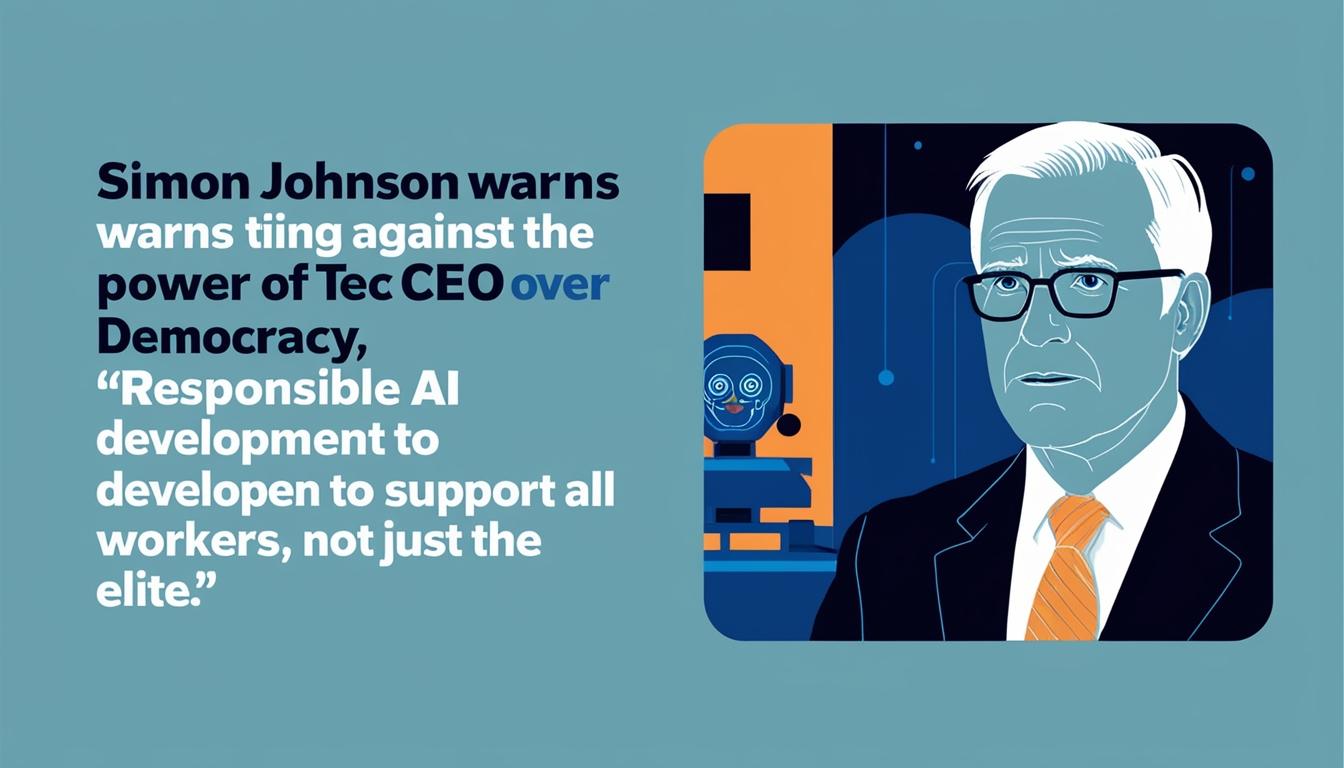
In a recent conversation with Agence France-Presse, Simon Johnson, a Nobel laureate in economics, expressed concerns about the growing influence of a few major technology corporations and their CEOs on the future of democratic societies and economic prosperity. Johnson, who teaches at the Massachusetts Institute of Technology, underscored the potential threat these entities pose to public interest if they amass excessive power.
Johnson, celebrated for his work on the intersection of democratic institutions and economic progress, which garnered him the Nobel Prize alongside fellow economists Daron Acemoglu and James Robinson, focused on automation and its repercussions on employment. He advocates for the development of artificial intelligence to advantage less qualified workers, rather than solely benefiting better educated individuals or large technology companies.
Drawing from his observations during the recent French elections, Johnson noted a palpable disillusionment among the populace with democratic outcomes, particularly in regions perceived as economically prosperous. His analysis pointed toward a systemic failure to deliver on the promises of better jobs with higher productivity and wages. According to Johnson, this unmet promise may lead to the rise of populist movements as people express their frustration and disappointment.
Discussing the current landscape of artificial intelligence, Johnson questioned its role in the labour market. He highlighted the risk of AI contributing to "hyper-automation," where workers are replaced by technologies like self-checkout kiosks, potentially exacerbating unemployment, especially in sectors reliant on low-skilled labour.
Johnson was particularly critical of the dominant role big tech companies play in shaping AI and digital landscapes, driven largely by the business models of Meta, Alphabet, and others, which rely heavily on digital advertising revenue. This model, he argues, captures and manipulates user attention, negatively affecting mental health and democracy by promoting division and anger. He suggested the similarity of this model to industries like tobacco and fast food in its societal impact.
The economist proposed that rather than banning digital advertising, governments should impose significant taxes on these revenues. In collaboration with Daron Acemoglu, Johnson proposed a tax initiative that could generate an estimated $200 billion in additional revenue for the United States. This revenue, he suggested, could potentially be channelled into supporting mental health initiatives, particularly for children.
In essence, Johnson warned against allowing the concentrated power of a few tech billionaires to define societal advancements, urging for changes in business models that currently destabilise societal cohesiveness and democracy. His insights call attention to the broader implications of current technological and economic policies, particularly the role of regulation in balancing corporate power and public welfare.
Source: Noah Wire Services