Revolution in Cloud Performance: AI and Machine Learning Lead the Charge
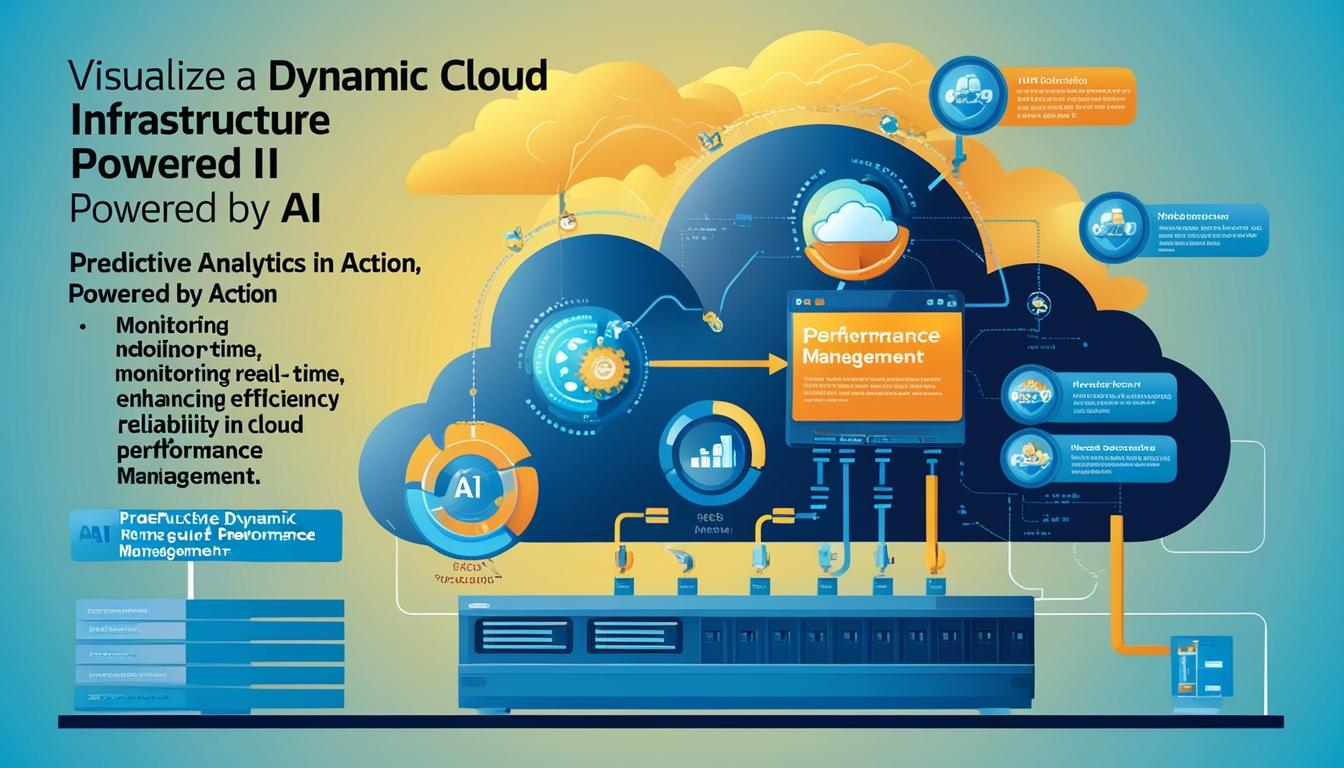
In an era where cloud infrastructure underpins the critical operations of businesses worldwide, artificial intelligence (AI) and machine learning (ML) are spearheading a transformative shift in cloud performance engineering. Through innovative predictive and proactive strategies, these technologies are redefining how cloud environments are managed, promising enhanced reliability and efficiency while reducing costs.
A Shift to Predictive Performance
Traditional cloud management approaches, reliant on manual monitoring and reactive troubleshooting, are fast becoming obsolete. The contemporary landscape demands a more sophisticated methodology to address the complex and dynamic nature of cloud operations. Enter predictive performance engineering, an AI-driven approach that leverages extensive datasets to forecast cloud system behaviour accurately. By analysing massive volumes of real-time data points, AI models can predict potential performance bottlenecks, facilitating pre-emptive interventions that stave off costly downtimes and bolster system robustness.
Overcoming Limitations of Traditional Methods
The conventional cloud management methods, defined by static thresholds and reactive responses, struggle to adapt to the rapid pace and scale of modern cloud infrastructures. These methodologies, marked by prolonged resolution times and frequent false positives, are being surpassed by AI-powered solutions capable of processing up to 100,000 metrics per second. This capability enables near-instantaneous monitoring and adaptive thresholding, drastically reducing false alerts and thereby optimising cloud operations.
Key Techniques in Predictive Cloud Performance
Central to the AI and ML revolution in cloud management are three main areas: resource optimisation, failure prevention, and automated decision-making:
Resource Optimisation: Utilising reinforcement learning algorithms, resources are dynamically allocated, enhancing utilisation rates and cutting costs. Predictive models are integral in intelligent autoscaling, accurately anticipating demand and ensuring service levels are maintained without excessive provisioning. Studies indicate potential cost savings of up to 35% and a 45% improvement in resource efficiency.
Failure Prediction and Prevention: Through the application of AI models, patterns indicative of potential failures can be identified early. Techniques like random forest classifiers and LSTM networks are employed to detect anomalies in advance, thereby improving system resilience and decreasing downtime.
Automated Decision-Making: AI-driven automation facilitates performance tuning and self-healing processes, reducing the need for human intervention. Sophisticated algorithms such as Bayesian optimisation and genetic algorithms fine-tune configurations for enhanced throughput, while AI-orchestrated workload distribution optimises energy usage and response times.
Challenges and Innovations in Cloud Environments
The nature of cloud environments, characterised by dynamic scalability, multi-tenancy, and heterogeneous workloads, presents unique challenges that AI and ML are adeptly addressing:
Dynamic Scalability: AI models continuously analyse real-time data, swiftly predicting and adapting to load variations in cloud resources.
Multi-Tenancy and Distributed Systems: Shared resources can lead to performance inconsistencies, while interactions within complex microservices architectures may result in systemic failures. AI-based anomaly detection plays a crucial role in tracing these root causes promptly to minimise disruptions.
Heterogeneous Workloads: Varying scaling requirements of different applications coexisting in cloud environments are matched by predictive models allocating resources based on specific workload needs.
Future Prospects and Challenges
The evolution of AI technologies promises further advancements for cloud infrastructures. Emerging techniques like explainable AI (XAI) are expected to render AI-driven decisions transparent, enhancing trust and compliance. Federated learning, allowing collaborative training of AI models without data sharing, ensures privacy in multi-cloud optimisation. Meanwhile, the burgeoning field of quantum machine learning could eventually solve complex optimisation challenges more efficiently. Additionally, edge AI, with its potential for real-time decision-making at reduced latency, is becoming more viable with the rise of cloud-edge architectures.
Yet, the implementation of AI in cloud performance engineering is not without challenges. Ethical considerations, such as ensuring fairness and eliminating bias in AI models, are paramount for equitable cloud resource allocation. The absence of industry-wide standards in AI-driven management tools presents interoperability challenges, while security risks necessitate robust measures against potential adversarial attacks.
AI and ML undeniably mark a new chapter in cloud performance engineering, championing unprecedented reliability, efficiency, and cost-effectiveness. As these technologies continue to evolve, they are poised to further reshape cloud management practices, propelling organisations into a more digitally dynamic future.
Source: Noah Wire Services