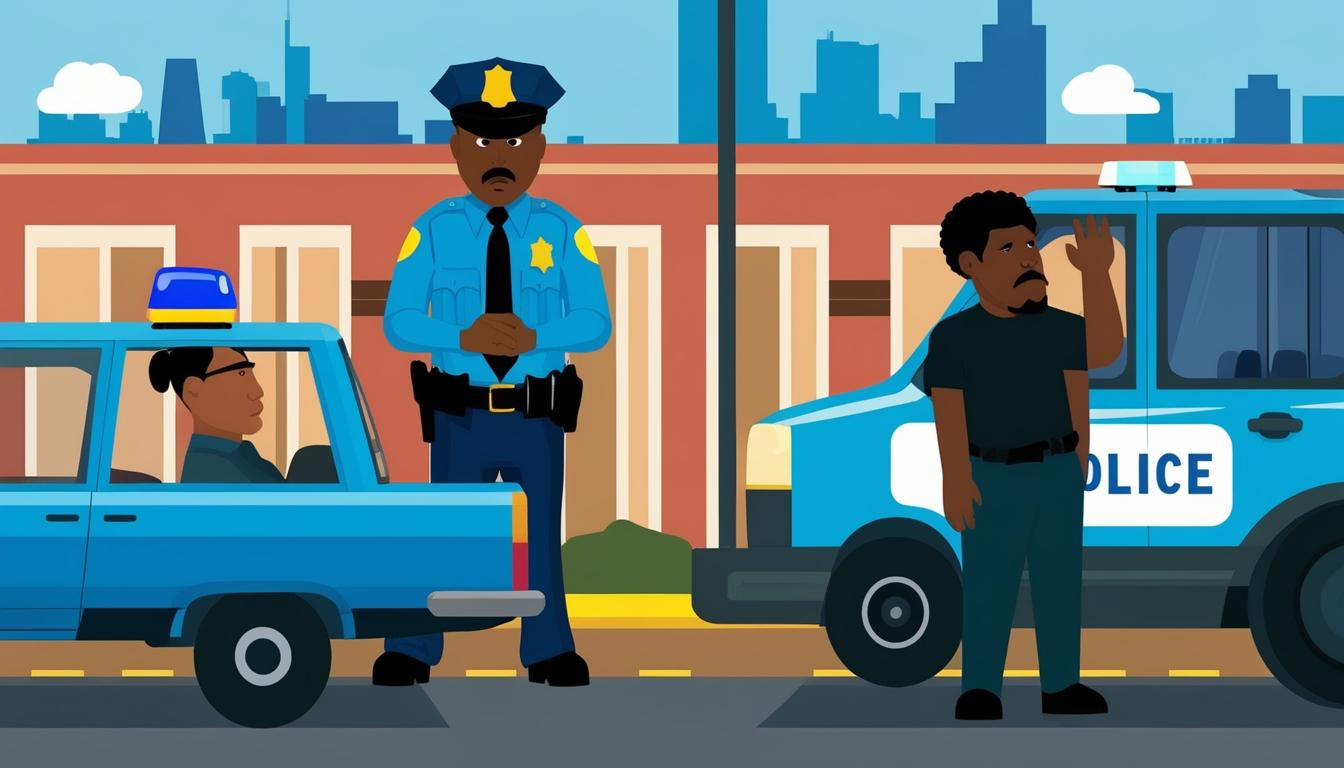
In recent years, there has been a marked increase in traffic stops by police in Chicago, rising dramatically from less than 200,000 in 2016 to over 570,000 by 2023. This surge has prompted concerns from the American Civil Liberties Union (ACLU), which likens this uptick to the controversial "stop-and-frisk" tactics previously used in cities like New York and Chicago.
"Stop-and-frisk" enabled officers to stop and search individuals based on "reasonable suspicion" of criminal activity, a practice known for disproportionately targeting Black and Latino communities. Its decline followed a 2015 reform agreement between the ACLU and the Chicago Police Department. However, the growing number of traffic stops is perceived by some as a continuation of racially biased enforcement.
Investigations into the racial dynamics of these stops reveal a distinct disparity. A recent study scrutinising the racial composition of drivers on Chicago's streets compared automated enforcement via speed cameras against human-initiated traffic stops. Findings showed that speed cameras distribute tickets to Black and white drivers in close proportion to their presence on roads. However, when police conduct stops, Black drivers are disproportionately affected: they constitute around 70% of traffic stops on roads where they represent just half of the drivers, compared to barely 20% for white drivers in similar scenarios.
This phenomenon is part of a broader trend sometimes referred to as "driving while Black," an issue with deep historical roots in the United States. Notably, the country has a history of law enforcement incidents disproportionately affecting Black individuals, such as the infamous 1991 beating of Rodney King in Los Angeles. Instances of racially charged enforcement have occasionally escalated into violence, leading to national debates on policing practices.
Noteworthy are recent measures taken to address these racial biases and disparities. Police departments nationally have begun employing implicit bias training. However, such initiatives appear to influence officers' perspectives on bias more than they change the statistics regarding which demographic groups police stop or search.
In reaction to these challenges, proposed reforms have suggested decriminalising minor traffic violations and involving trained civilians in certain enforcement roles, like how parking is managed separately from police duties in some locales. These efforts aim to reduce confrontations and bias-related interactions between police and motorists.
Parallel to these developments, technology has emerged as a pivotal tool in redefining traffic enforcement. Artificial intelligence-equipped speed cameras have been employed across various regions in the UK, including Durham, Greater Manchester, and Thames Valley. These AI systems have demonstrated their capacity to identify and penalise drivers engaged in illegal activities such as using mobile phones while driving or not wearing seatbelts. According to Rod Dennis of the RAC, the challenge has been a lack of consistent enforcement, which technology now seeks to rectify.
The deployment of AI in traffic cameras represents a step towards enhancing road safety and ensuring equitable law enforcement. Matt Staton of National Highways underscores the commitment to using technological advancements to combat dangerous driving behaviours effectively. By reducing human-initiated enforcement, these technologies aim to curtail opportunities for escalation and bias, offering a more consistent mechanism for addressing violations.
Therefore, as traffic stops in Chicago continue to rise, the intertwining of law enforcement reform and technology adoption seeks to address enduring racial biases while enhancing public safety on the roads.
Source: Noah Wire Services