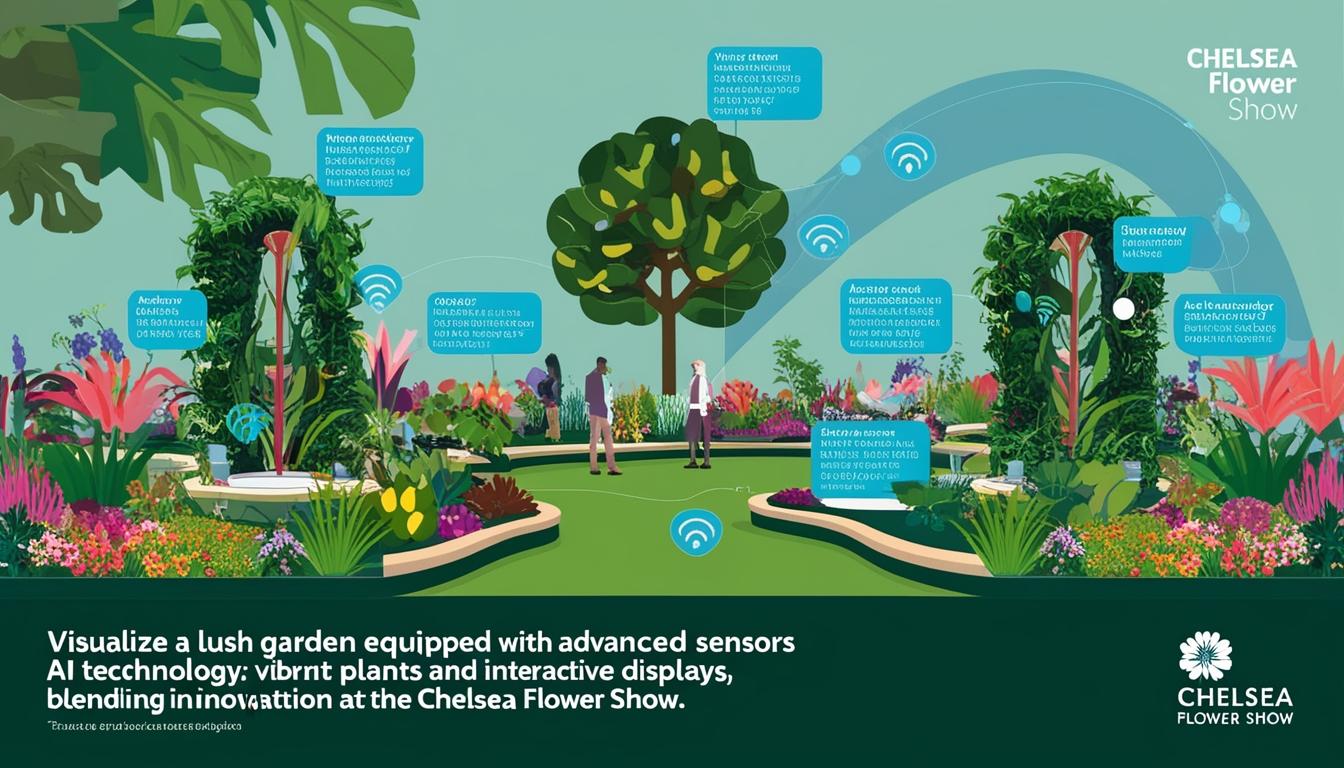
In a ground-breaking initiative blending nature with modern technology, the Royal Horticultural Society (RHS) in England is preparing to unveil what has been termed an "intelligent garden". This innovative project, set to debut next year, employs artificial intelligence (AI) to create a dynamic and interactive gardening experience, promising to transform the way gardeners, both amateur and professional, engage with their green spaces.
The initiative is a collaboration between the AI start-up Avande and technology giant Microsoft, who have come together to create a garden that not only thrives on conventional care but also communicates its needs through AI. This ambitious project is slated for a grand showing at the Chelsea Flower Show, a prestigious event known for celebrating horticultural excellence.
At the heart of this intelligent garden is a sophisticated network of sensors embedded throughout the space. These sensors are tasked with monitoring a multitude of environmental factors, such as soil moisture, nutrient levels, wind patterns, and predicted rainfall. The data collected is then processed by a specially designed AI model powered by Microsoft’s Azure Open AI Service. Positioned within a pavilion at the rear of the garden, this AI system analyses the environmental data and can guide caretakers on optimal practices for watering, feeding, and maintaining the plants.
A key feature of this innovative project is its ability to engage directly with visitors. Guests at the Chelsea Flower Show will have the opportunity to interact with virtual platforms that allow them to ask questions about the garden’s current condition. The AI system will then translate the data into user-friendly conversational responses. This interaction is aimed at demonstrating the potential of AI and Internet of Things (IoT) technologies in promoting sustainability and resource conservation, crucial aspects in contemporary horticultural practices.
Tom Massey, one of the designers spearheading this project alongside fellow designer Je Ahn, expressed his enthusiasm for the potential impact of the AI garden. “I am excited to see how AI can assist gardeners to help make a meaningful impact that will help us all garden and grow more sustainably,” Massey stated. Alongside technological prowess, human design aesthetics have played a pivotal role, with Massey and Ahn ensuring that while AI assists in maintaining the garden, the actual design retains a natural charm, reflected in their desire to create a "forest garden concept" that highlights biodiversity and lush greenery.
After its tenure at the Chelsea Flower Show, the garden is expected to transform into a community space, accessible to the public, offering a continuous learning resource for sustainable gardening practices.
The use of AI in gardening is not entirely novel but is expanding. In agriculture, particularly in the United States, similar technologies have been employed for "precision agriculture", where AI helps farmers manage resources and improve crop yields. Gardeners are also using AI-based tools like chatbots to enquire about plant care, although such models are not free from inaccuracies. Furthermore, apps leveraging AI to identify plant species by comparing photos against vast online databases have become increasingly popular despite some limitations in safely identifying unknown flora.
This intelligent garden exemplifies how AI can be integrated into everyday life, offering a glimpse into the future of sustainable gardening where technology complements rather than replaces human expertise.
Source: Noah Wire Services