Scientists Develop AI Tool to Predict Genetic Mutation Impact in Disease Interactomes
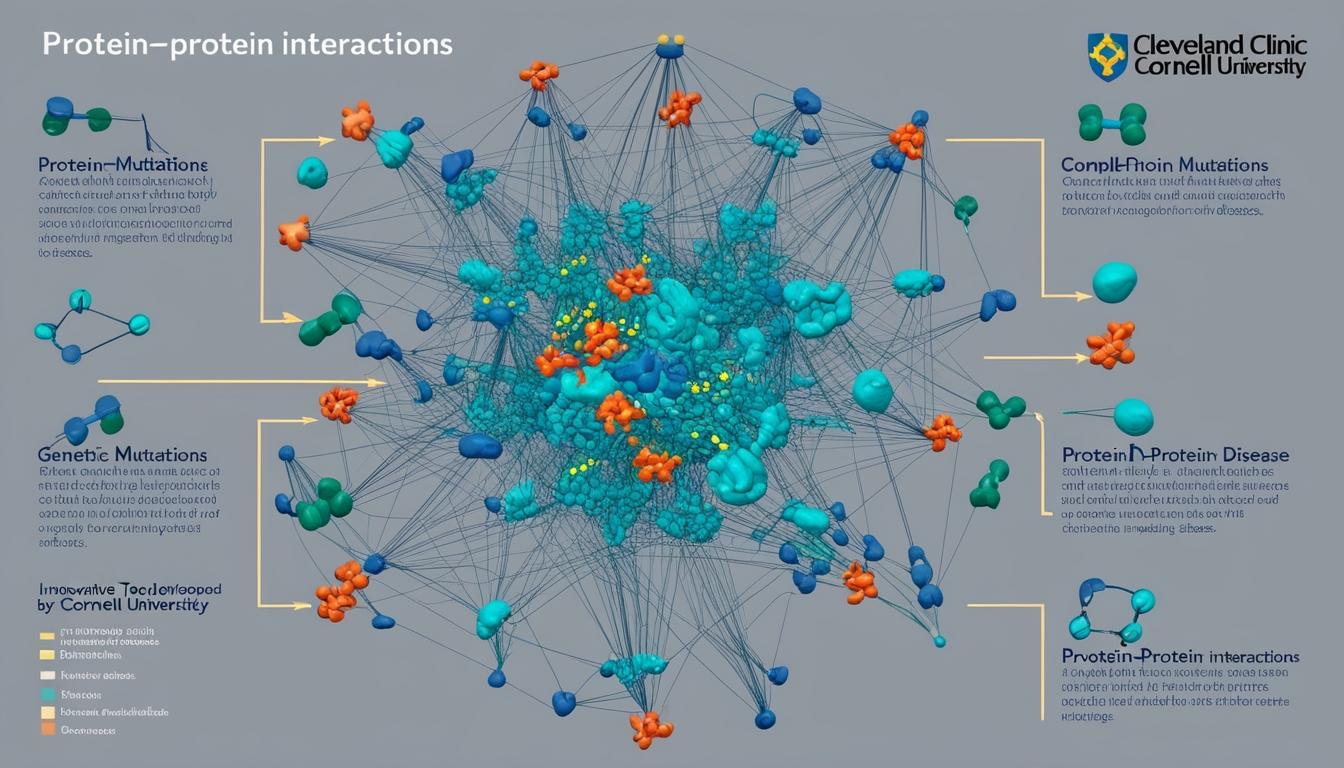
In the realm of human biology, proteins interact in a complex network known as the interactome. These interactions become increasingly complicated when genetic mutations that cause diseases are introduced into the genes coding for these proteins. This complexity presents challenges for drug developers as they face the daunting task of identifying therapeutic targets from a myriad of potential disease-causing interactions.
To address this challenge, scientists from the Cleveland Clinic and Cornell University have developed an innovative computational tool using artificial intelligence. This tool, named Protein-protein InteractiOn iNtErfacE pRediction, or PIONEER, is aimed at predicting the influence of genetic mutations on protein-protein interactions associated with cancers and other complex diseases. The development and implications of this tool are detailed in a recent publication in Nature Biotechnology titled, “A structurally informed human protein-protein interactome reveals proteome-wide perturbations caused by disease mutations.”
Dr. Feixiong Cheng, a co-lead author of the study and director of Cleveland Clinic’s Genome Center, explains the tool's significance: “In theory, making new medicines based on genetic data is straightforward: mutated genes make mutated proteins. We try to create molecules that stop these proteins from disrupting critical biological processes by blocking them from interacting with healthy proteins, but in reality, that is much easier said than done.”
The collaboration between Cheng’s laboratory and the team led by Dr. Haiyuan Yu at Cornell University’s Center for Innovative Proteomics facilitated the creation of PIONEER. The development involved assembling data from numerous sources, including genomic sequences from nearly 100,000 individuals with disease-causing mutations, along with three-dimensional structures of over 16,000 human proteins. This comprehensive dataset also includes information on how gene mutations affect protein structures, and known interactions among approximately 300,000 protein pairs.
This tool allows researchers to explore the interactome for more than 10,500 diseases, encompassing cancers, autoimmune disorders, and cardiovascular conditions. By inputting a disease-associated mutation into PIONEER, researchers receive a ranked list of protein-protein interactions pertinent to the disease, identifying potential targets for drug development. Alternatively, they can search by disease name to obtain a list of protein interactions that could be instrumental in addressing the disease.
Laboratory validation of the database’s predictions involved testing nearly 3,000 mutations across more than 1,000 proteins, assessing their impact on close to 7,000 protein-protein interaction pairs. Initial research stemming from these findings is already focused on developing and testing treatments for lung and endometrial cancers. Notably, the model has additional capabilities to forecast survival rates, prognoses, and responses to anticancer drugs.
Dr. Cheng highlights the critical resources traditionally required for interactome studies as a barrier for many genetic researchers. He expresses optimism that PIONEER will reduce these barriers computationally, enabling more researchers to innovate and foster new therapeutic developments. With this tool, the scientific community is better equipped to navigate the intricate landscape of protein interactions, potentially facilitating more rapid advancements in the development of targeted therapies for various diseases.
Source: Noah Wire Services