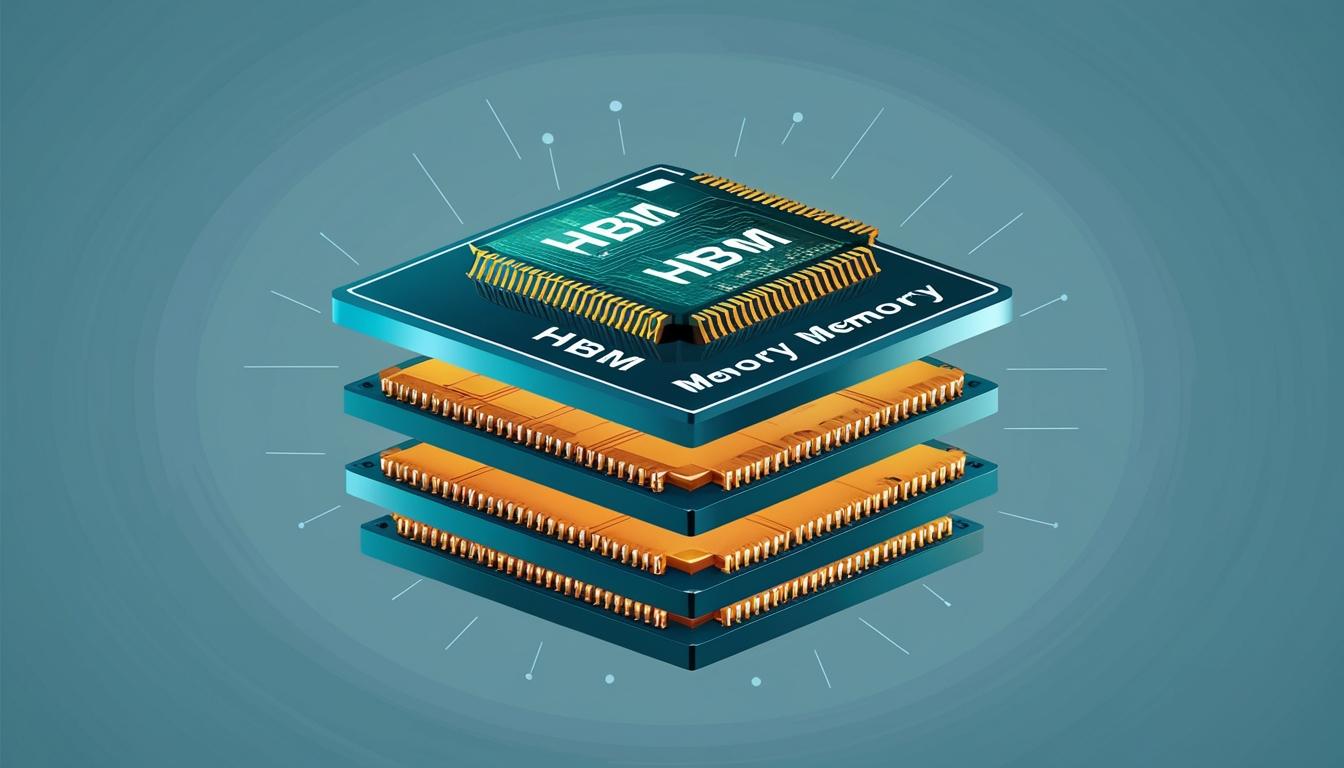
In recent weeks, the semiconductor industry has witnessed significant fluctuations, with the demand for artificial intelligence (AI) technologies taking centre stage. One of the pivotal components in the race to develop more powerful and efficient AI models is high-bandwidth memory (HBM) chips. This development has emerged not only as a critical factor beyond graphics processing units (GPUs) but potentially as a new focus in the United States' evolving sanctions against China.
On 15th October, ASML, a prominent chip equipment supplier, reported earnings that fell far below expectations, resulting in a sharp decline in its stock value. In contrast, just two days later, Taiwan Semiconductor Manufacturing Company (TSMC) reported record profits and increased its full-year financial forecast, leading to a surge in its stock prices. This stark difference highlights the growing disparities in chip demand driven by AI advancements. TSMC Chairman Mark Liu described the current demand for AI chips as "crazy."
The impact of AI on the semiconductor industry is also visible in the memory sector. On 7th October, Samsung Electronics issued a public apology due to disappointing financial performance, while SK Hynix, benefiting from rapid growth in the AI-required HBM sector, announced record-breaking profits.
AI models require powerful logic chips capable of processing vast amounts of data, along with memory that can quickly store and release that data. According to SK Hynix, AI models spend over 90% of their processing time on data transfers between logic chips and memory. HBM chips are specifically designed to accelerate this process and reduce energy consumption by stacking and integrating memory with logic chips.
Market analysis firm Arete Research projects that HBM sales will skyrocket from $4 billion last year to $18 billion this year, with further growth expected to reach $81 billion by 2026. The profit margins for HBM chips are also significantly higher, five times more than traditional memory. SK Hynix, which controls 60% of the HBM market and 90% of the advanced HBM3 market, has seen its stock value double over the past two years.
Nam Kim, an analyst at Arete Research, noted that SK Hynix had already invested in HBM chips even before the AI boom began. Collaborating closely with major industry players like TSMC and Nvidia has further cemented its leading position. Many AI models operate using Nvidia's graphic processing units.
Currently, the industry faces a bottleneck in HBM chip availability for AI model development. SK Hynix and Micron have almost entirely pre-sold their HBM production for the upcoming year and are investing billions of dollars to expand capacity, a process that takes time. Samsung, responsible for 35% of global HBM chip production, plans to reduce production by 10% next year due to manufacturing issues.
With an imminent shortage of HBM chips, the United States is reportedly increasing pressure on South Korean firms Samsung and SK Hynix to limit exports to China. Speculation suggests that the next round of US chip sanctions could include advanced HBM chips. As demand continues to rise, there is an increasing focus from governmental bodies on the strategic importance of these components.
Source: Noah Wire Services