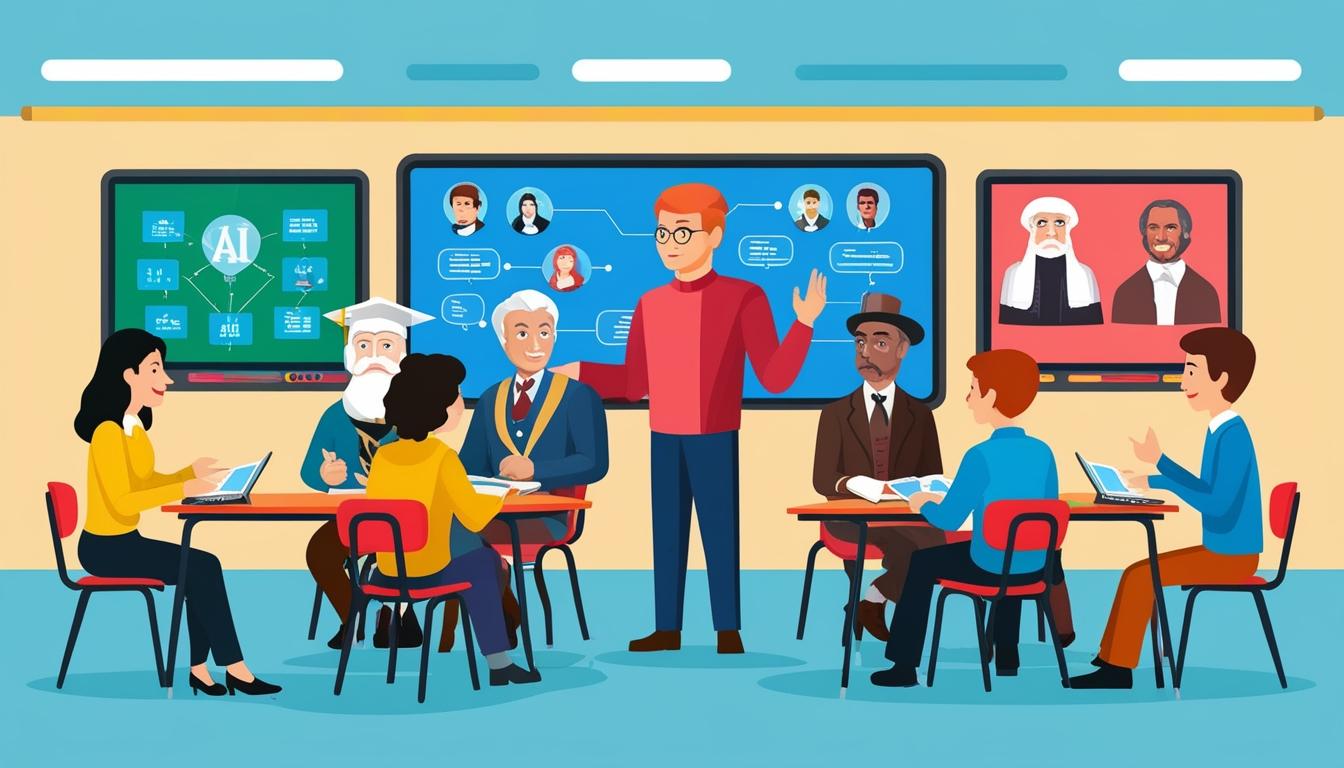
A recent study conducted by researchers from Monash University's Centre for Learning Analytics (CoLAM) delves into the implications of generative artificial intelligence (GenAI) in educational settings. Published in the esteemed journal, Nature Human Behaviour, the research identifies critical factors that policymakers, educational institutions, and technology firms should consider to effectively integrate GenAI tools in ways that enhance rather than supplant traditional human learning experiences.
The study, led by Professor Dragan Gasevic, the Director of CoLAM at Monash University's Faculty of Information Technology, underscores the potential of GenAI technologies to significantly transform educational methods, workplace training, and everyday life. Professor Gasevic envisions scenarios where students could interact with AI models of historical figures, such as debating with a digital Socratic twin or learning painting techniques from a robot version of Claude Monet.
These potential educational tools suggest a paradigm shift towards a dual learning approach. Participants would not only learn alongside GenAI but also receive education about its workings and applications. The research stresses that for this integration to be effective, unified efforts are required from academic institutions, technology developers, and government bodies to ensure educational tools are developed with rigorous research-backed methodologies.
One of the primary messages from the study is the necessity for educational assessment processes to evolve. These processes should prioritise authentic skill and knowledge development rather than allow AI-generated imitations to mislead educators and evaluators. Additionally, the study emphasises the need for emotional and professional support systems to help educators adapt to this GenAI-driven context and manage the associated technological stress and workload changes.
Dr. Lixiang Yan, the paper's first author and a CoLAM Research Fellow, highlighted the importance of improving AI literacy among students and teachers. With GenAI tools potentially reducing the teaching burden of disseminating information, educators could shift focus towards mentoring and fostering deeper connections with their students.
Moreover, the research outlines essential considerations for ethical standards, accountability, and inclusivity in developing and deploying GenAI technologies in education. These factors remain crucial given the ethical dilemmas that AI technologies can pose, including concerns about transparency, privacy, and equality, as well as the disruptions they may already be causing within traditional assessment systems.
The paper represents a collaborative effort involving researchers not only from Monash University but also from the University of Luxembourg and Goethe-University Frankfurt. The team is also expanding its research to develop new tools aimed at assessing collaborative human-AI writing and enhancing professional learning in sectors such as healthcare. Additionally, the researchers are engaging secondary students from across 10 countries and four continents in studies that explore how GenAI tools can enhance human skills in this new technological era.
Source: Noah Wire Services