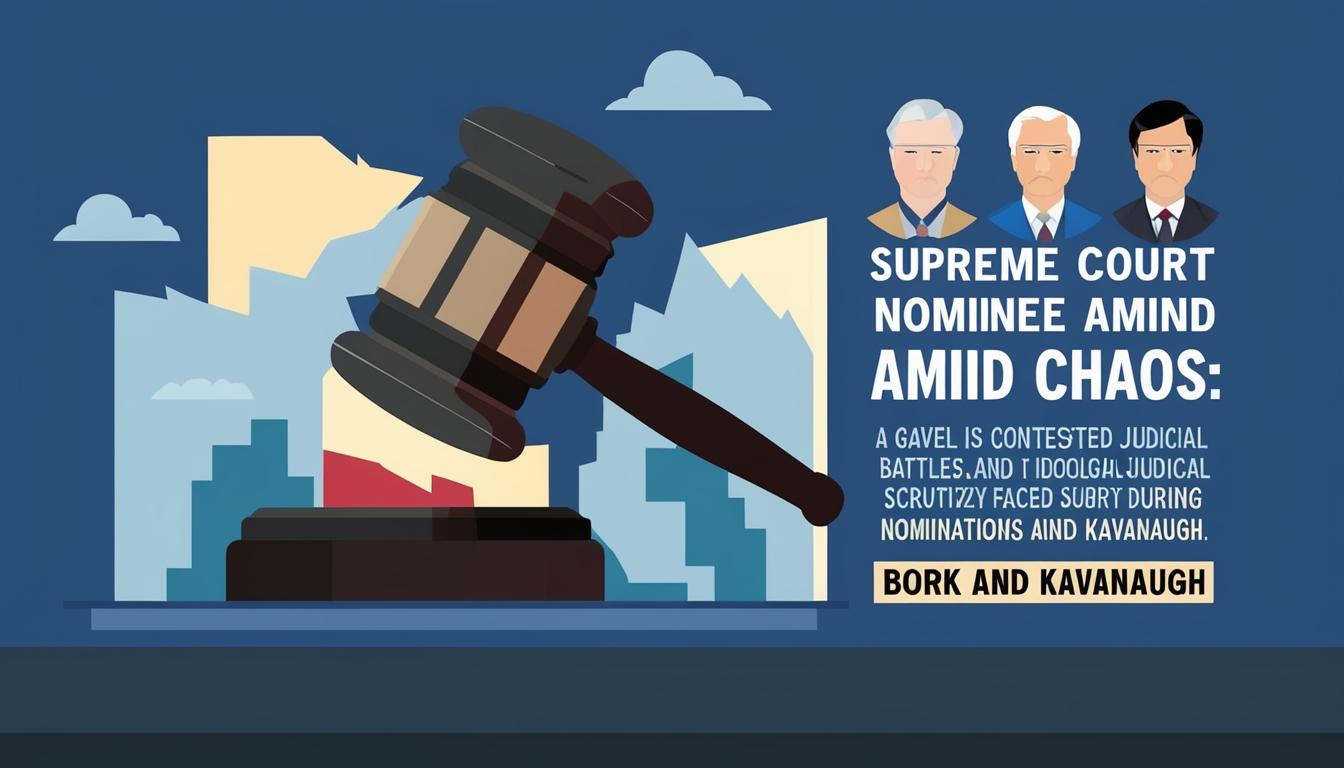
The political landscape in the United States has historically been fraught with intense battles over Supreme Court nominations, reflecting deep ideological divides that have persisted across decades. Two prominent instances underscore the contentious nature of these confirmation processes: the nominations of Judge Robert Bork in 1987 and Judge Brett Kavanaugh in more recent years.
On July 1, 1987, President Ronald Reagan nominated Judge Robert Bork to fill a vacancy on the Supreme Court. Bork's nomination was anticipated to be relatively smooth by many within conservative circles. However, the reality turned out to be far more combative. Bork faced fierce opposition, primarily from liberal factions who scrutinised his judicial philosophy. The ensuing weeks saw a highly charged and unparalleled campaign against his confirmation, which led to the Senate rejecting his nomination.
Decades later, Judge Brett Kavanaugh, nominated by President Donald Trump, faced similarly intense scrutiny and public attention during his 2018 nomination process. Kavanaugh's hearings were marked by a focus on his personal conduct and judicial temperance, becoming a national spectacle watched by millions. Despite the uproar and opposition, Kavanaugh was confirmed, aided significantly by his resilience and the support he garnered from key political figures and entities.
These historical events highlight the recurrent theme in American politics where Supreme Court nominations become flashpoints for broader ideological battles. In the current political climate, discussions continue around President Trump's nominations, with particular attention on Judge Roy Moore. Though the dynamics of Moore's potential nomination differ in specifics, the core issues remain resonant: the role of political strategy, the influence of partisan media, and the necessity for nominees to withstand extensive public and political scrutiny.
The conservative movement's response to nominations is often seen as pivotal in shaping the outcomes of these highly contentious hearings. Notably, outlets like The Wall Street Journal have been described as vocal supporters of conservative nominees, prompting discussions on how cohesive and effective the support strategy should be in future confirmation processes. The apprehensions around such nominations underscore the significant and enduring impact of Supreme Court appointments, which hold the potential to influence American jurisprudence for generations.
As discussions continue around future Supreme Court nominations, observers and political strategists from all sides remain keenly aware of the lessons and strategies learned from past confirmations as they navigate the complexities of current and future political landscapes.
Source: Noah Wire Services