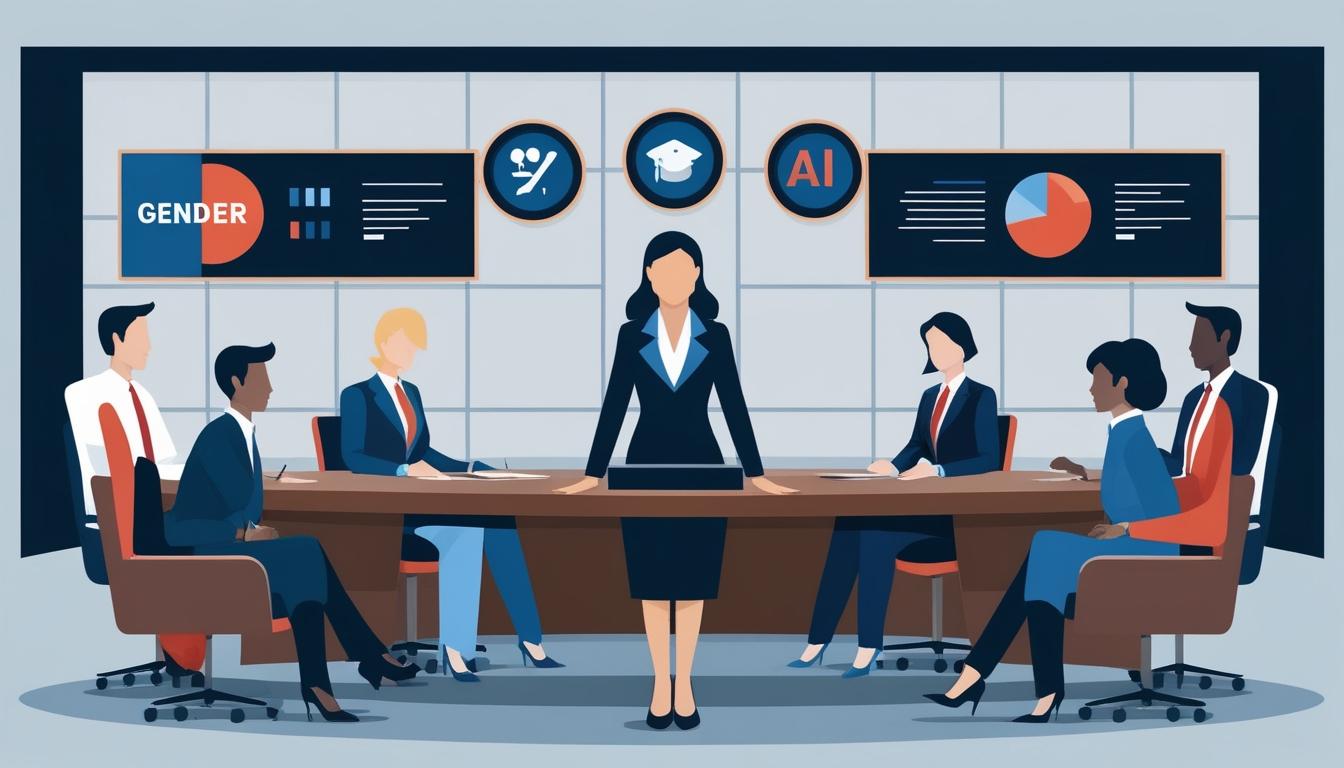
In a world where gender equality is still a significant challenge, recent discussions hinge on the role of artificial intelligence (AI) and boardroom dynamics in impacting women's progress in leadership roles. The ongoing debate, ignited by the winning entry in the Financial Times' 12th annual essay competition, revolves around whether AI will help or hinder women in advancing to leadership roles, while simultaneously addressing the authority gap in workplaces.
The essay, winning the competition organised with the 30% Club and Henley Business School, explored the dual nature of AI's impact. It highlighted that while advancements in AI could foster gender-neutral hiring processes by reducing human biases, there is potential for AI systems to perpetuate existing gender biases. Notably, a study found that generative AI may inadvertently reinforce stereotypes, portraying female leaders less favourably compared to their male counterparts. Such trends raise concerns about the double standards women face in the corporate ladder, particularly the expectation for them to demonstrate competency more than men.
Another critical angle in the discussion focuses on the authority gap—a term that encapsulates the disparity in the recognition and respect accorded to women in leadership roles compared to men. As Mary Ann Sieghart elucidates in her book "The Authority Gap," the invisible barrier is still prevalent in workplaces where women are often undervalued or their authority resisted. The findings from LeanIn.Org and McKinsey's Women in the Workplace report further underscore that a significant percentage of women encounter microaggressions and interactions challenging their competence, which affects their job progression and satisfaction.
In the context of corporate boardrooms, despite the progress in increasing female representation, a deeper issue persists. Women are more frequently appointed as non-executive directors rather than executive directors, which denotes a disparity in influence over day-to-day business operations. Altrata's Global Gender Diversity 2024 report shows that while women make up a noticeable percentage of non-executive directors across major economies, they hold far fewer executive roles. This suggests that while diversity in boardrooms may be improving, there remains a shortfall in female voices actively shaping business decisions.
The Women in the Workplace report also reflects on the varying perceptions of workplace gender progress between men and women. The data reveals a positive outlook among men, particularly those in senior positions, who believe women have made significant strides. However, this perception may overlook ongoing challenges, as many women still face structural hindrances that impede their career advancement.
Addressing these issues requires a multifaceted approach. Encouragingly, initiatives and discussions are underway to rethink the effectiveness of simply increasing women's numbers in boardrooms. While the role of non-executive directors shouldn't be undervalued, a strategic emphasis on nurturing female talent through the executive pipeline is crucial. This strategy includes ensuring women have opportunities in roles that traditionally lead to top positions, such as profit and loss responsibilities, rather than being pigeonholed into HR or marketing.
Moreover, there's growing interest in adopting a skill-based approach over experience accumulation when considering appointments to senior management roles. In today's rapidly changing business landscape, this might provide a sustainable model for achieving true representation in leadership roles.
Overall, the ongoing dialogue about AI's role, the authority gap, and boardroom gender dynamics represents a significant chapter in the quest for gender equality in business leadership. While technology and increased representation may provide tools and opportunities, the pathway to genuine equality requires dismantling structural biases and building an environment where women's leadership is valued on par with that of their male counterparts.
Source: Noah Wire Services