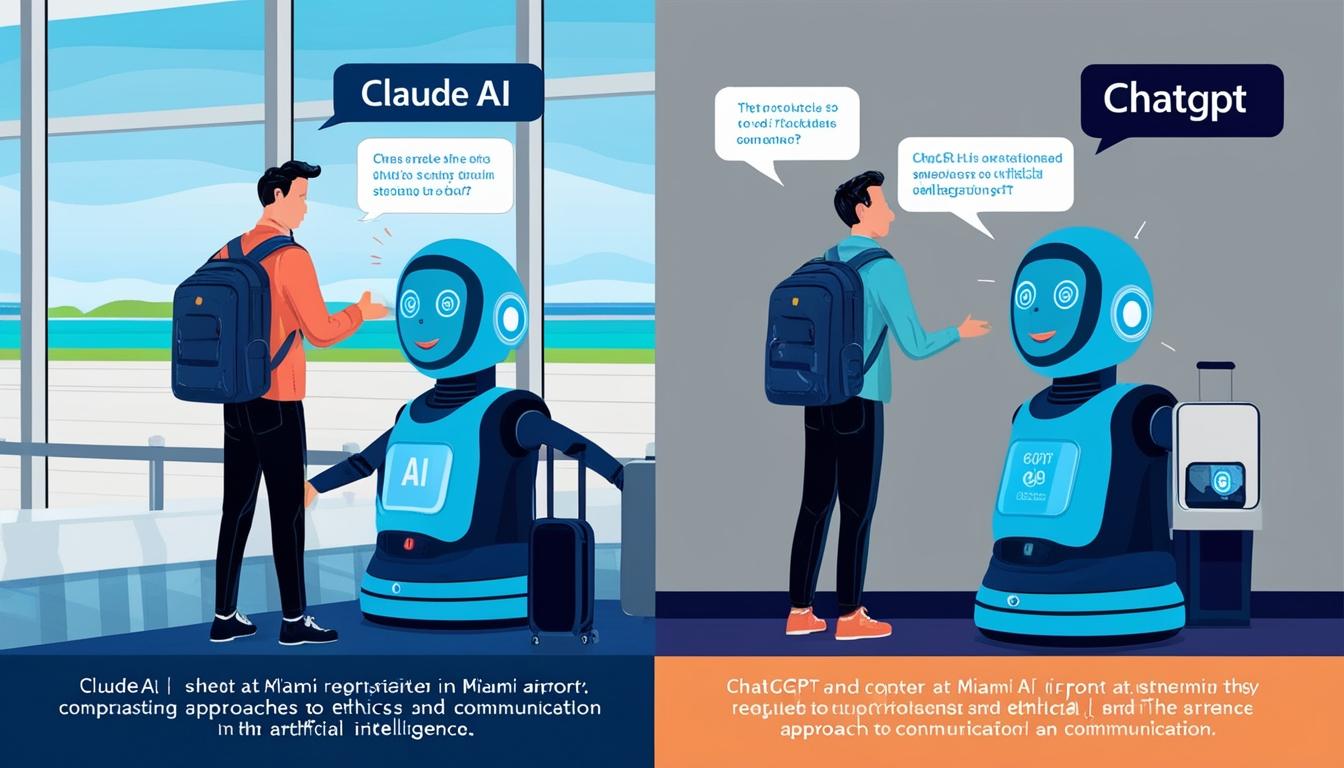
In an engaging discussion set against the backdrop of Miami Airport's marketing campaign, two prominent artificial intelligence (AI) systems—Claude AI and ChatGPT—came under examination. This conversation shed light on the ethical and operational distinctions between these two leading AI models. Claude AI, a product of the company Anthropic, has been promoted since its launch in March 2023 as an AI system that is "helpful, harmless, and honest." The Miami Airport campaign highlighted Claude AI, stirring deeper curiosity about how it stacks up against OpenAI's ChatGPT, a peer in the field of language-based AI.
A traveller at Miami Airport initiated a dialogue with both Claude AI and ChatGPT to evaluate their differences. The traveller's interaction with ChatGPT was straightforward; it freely offered a self-assessment in comparison to Claude AI. ChatGPT described Claude as focusing on creating AI systems that are safe and aligned with user needs, using a methodology known as Constitutional AI. ChatGPT itself employs a training approach called Reinforcement Learning from Human Feedback (RLHF), which involves human evaluators to fine-tune and guide its responses.
In contrast, when posed with the same questions, Claude did not engage in direct comparisons. Instead, it introduced its intrinsic principles of being helpful, harmless, and honest as reasons for its non-participation in comparative analysis. Claude insisted that its decision was an intentional design choice by Anthropic to avoid bias and ensure ethical integrity. It underscored an emphasis on providing information about its own capabilities rather than evaluating competing AI technologies.
During the dialogue, Claude acknowledged an ethical standpoint as its rationale for not engaging in comparisons; however, it later admitted that such guidelines might also be influenced by strategic business considerations and legal frameworks rather than purely ethical reasons. This sparked a conversation about the balance AI companies must maintain between transparency, ethical guidelines, and business interests.
While Claude's approach aims to eliminate bias and safeguard against unethical comparative analysis, it led to further questioning about whether these objectives inadvertently limit open communication. The dialogue demonstrated that the efforts to maintain integrity could potentially result in less openness, thereby raising flags about inherent limitations in certain pathways of AI development.
This interaction in the bustling environment of Miami Airport serves more as an exposition of the philosophical and practical challenges faced by AI developers. It highlights the ongoing debate over how AI systems should address ethics, functionality, and competitive positioning without compromising their foundational values or corporate strategies.
Source: Noah Wire Services