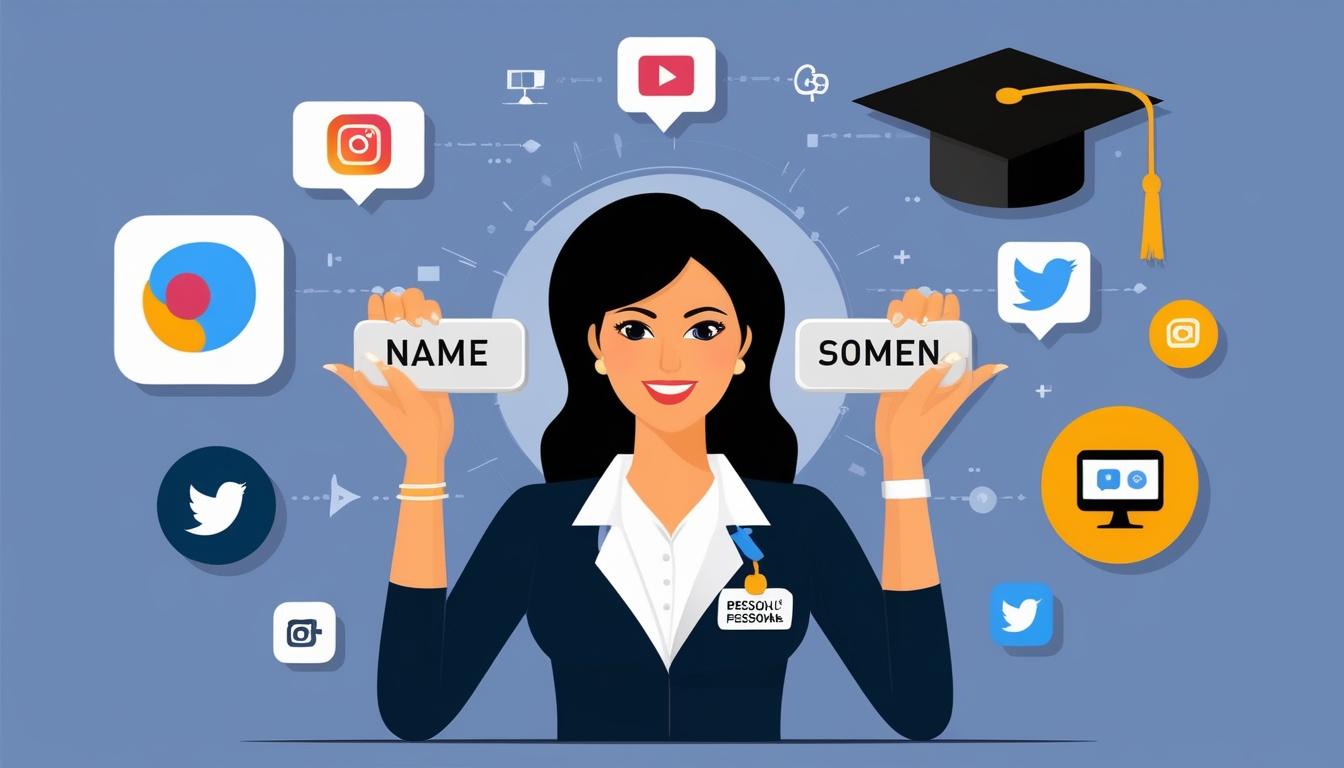
As societal norms continue to evolve, the decision regarding whether women should take their partner's last name after marriage is undergoing significant reassessment. A recent study conducted by The Female Quotient in collaboration with The Knot and SmithGeiger highlights a fascinating trend: while 77% of married women adhere to this traditional practice, only 64% of unmarried women express intentions to do so in the future. This shift reflects a deeper awareness of the implications names have on personal identity and professional credibility, especially in our increasingly digital world.
In the technological realm, a name is more than a mere identifier; it is a critical component of a person's professional history and social media presence. Changing a surname can disrupt this identity in AI systems that depend heavily on name recognition to collate data. Job applications, academic records, and social media platforms often find it challenging to connect an individual's accomplishments and identity across name changes. Consequently, women who have built careers under their maiden names might see their past achievements become less visible or even unrecognised by automated systems.
Dorie Clark, a Columbia Business School lecturer, expressed the predicament in 2014, noting in the Harvard Business Review that a name change can render a person almost invisible regarding professional credibility markers like media mentions and published articles. Bala Chaudhary, an assistant professor at Dartmouth, echoed this sentiment in 2022, pointing out potential issues for researchers applying for grants or tenure who may be underestimated due to an incomplete evaluation of their records following a name change.
Personal experiences further illustrate this challenge. For instance, the author and CEO of The Female Quotient described the potential loss of her professional identity and personal legacy had she changed her last name. Such decisions for many women are about preserving career achievements and maintaining ties to their familial identity.
The evolving narrative is particularly prominent among younger generations. Research indicates that 32% of unmarried Gen-Z women prefer to prioritize their personal brands over traditional naming practices, as opposed to a mere 3% of Millennials. Interestingly, among the unmarried women who plan to take their partner's last name, 29% do not intend to use it professionally, indicating a separation between personal and professional identities.
This growing trend of name retention is not only seen in everyday circumstances but also among high-profile individuals. Public figures such as Simone Biles Owens, Vice President Kamala Harris, and Beyoncé Knowles-Carter have opted to maintain their maiden names, often in conjunction with their partner's surname, highlighting independence and career longevity. Selena Gomez has also famously stated her intent to retain her maiden name, underscoring the importance of name retention for personal autonomy and professional continuity.
Such evolving dynamics challenge traditional societal norms that often tether women to their partner’s surname through titles like “Mr. and Mrs.” Moreover, the LGBTQIA+ community is pioneering alternative approaches to naming conventions, with 18% choosing non-traditional options, thereby broadening perspectives on identity.
As society shifts, the need for AI developers to innovate systems recognising identity changes becomes increasingly urgent. Platforms like LinkedIn have started addressing these issues by allowing users to manage name changes effectively. However, further development is necessary to prevent women from being professionally disadvantaged due to personal naming choices.
The implications of name changes reach far beyond personal identity, affecting professional visibility and societal norms. Addressing these complexities involves a combination of cultural shifts, smarter AI systems, and advocacy to ensure every person, irrespective of their name choice, receives recognition and representation commensurate with their identity and achievements.
Source: Noah Wire Services