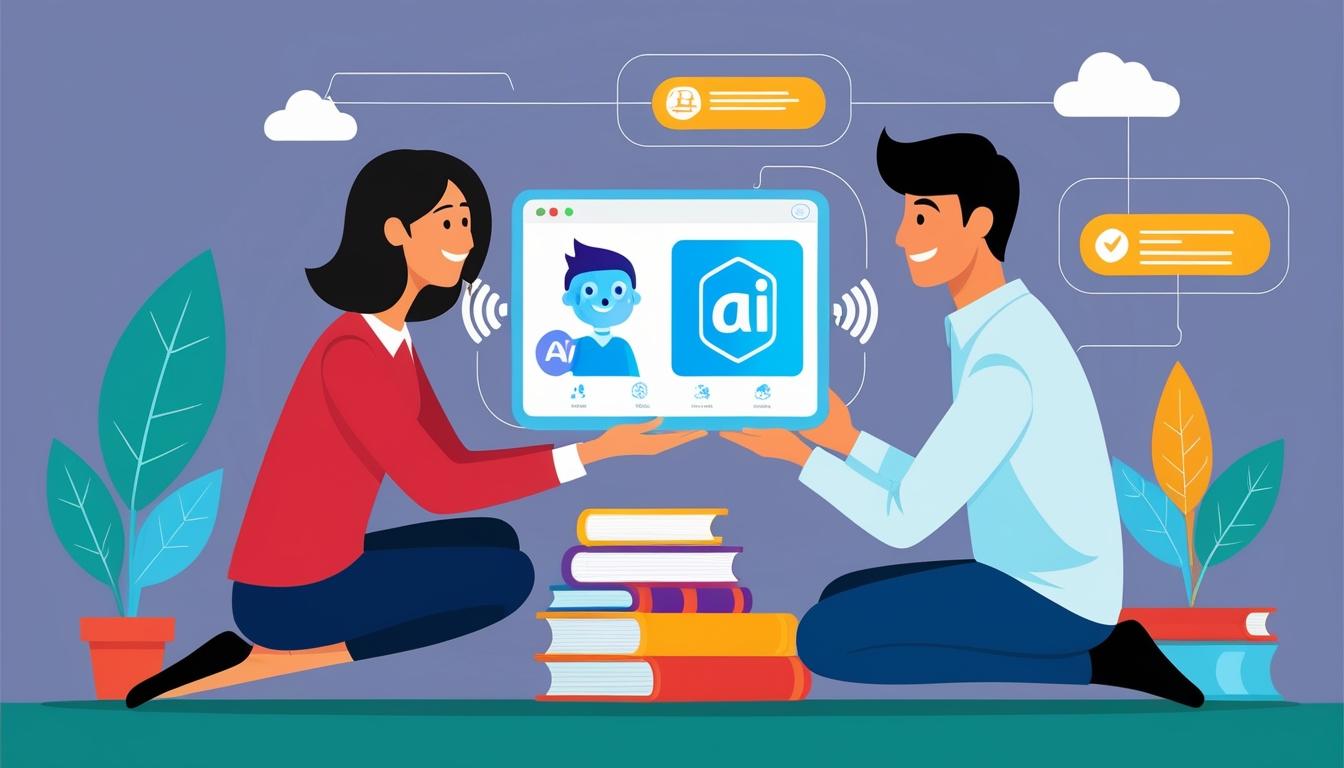
With the rapid advancement of artificial intelligence technology, a growing debate has emerged among parents regarding its role as a learning aid for children. The question at the forefront of discussions is whether AI can effectively complement traditional teaching methods and support children's educational development.
Parents, such as the father of a primary school student who has experience in the educational technology sector, are considering whether AI could be a viable alternative or supplement to human tutoring. They aim not only to provide academic support but also to nurture a genuine love of learning in their children. This deliberation comes at a time when academic struggles remain a significant concern for many students, and research indicates that tutoring can have a substantial positive impact on educational outcomes.
AI technology offers several promising features for personalised learning. It can tailor content delivery according to a child's learning style, be it visual, auditory, or kinesthetic. By providing a range of materials like videos, interactive exercises, and reading content, AI can attempt to engage students on an individual level. However, AI lacks the human touch that comes from a tutor who understands a child's specific interests and strengths, enabling them to adapt their teaching methods more effectively than any AI can currently achieve.
In terms of fostering critical thinking and problem-solving skills, AI can present challenging tasks and scenarios, aiding the development of analytical abilities. Immediate feedback can be an advantage, supporting children to reflect on and improve their performance. Yet, the potential of AI to cultivate deeper critical thinking remains limited. Nuanced understanding and interactive discussions that human tutors facilitate are crucial in helping children explore complex ideas and reasoning processes.
AI tools like ChatGPT are advancing in interactive capabilities, potentially motivating students with their quick responses and extensive data access. However, they inherently lack the personal experiences that can truly inspire a child’s curiosity and love for learning—a role that human tutors naturally fulfil by sharing personal anecdotes and passion for subjects.
An essential part of effective tutoring is nurturing confidence, accountability, and motivation in learners. Human tutors possess unique capabilities to identify motivators and interests in students, boosting their self-esteem as they achieve success. This personal interaction encourages accountability and perseverance, critical factors in fostering a lasting interest in education.
For AI to be effectively utilised in education, it requires a balanced approach. Parents must understand their children's skills and behaviours to determine if they can independently engage with AI tools for learning purposes. Questions arise about whether a child can create prompts for learning, their willingness to use these prompts, and if adult intervention is needed for guidance and supervision.
As the world evolves, the development of 21st-century skills such as problem-solving, creative thinking, and collaboration becomes imperative. Although AI can assist in fostering these skills, the most profound deep learning experiences continue to be those cultivated through meaningful human interactions—interactions that are unlikely to be replaced by technology anytime soon.
Source: Noah Wire Services