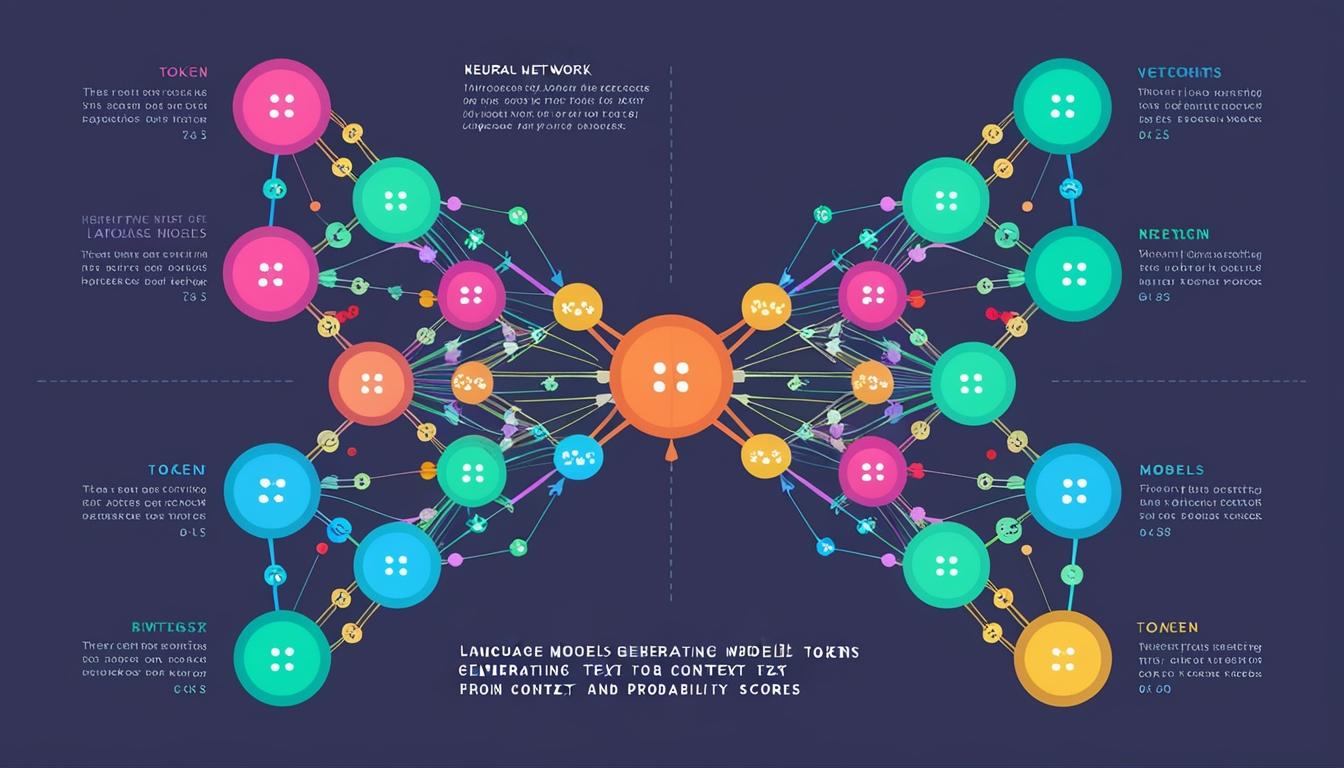
A recent analysis into how large language models (LLMs) generate text reveals intriguing insights into their operations. These sophisticated models, renowned for generating human-like text, function by predicting the most likely subsequent token based on the context provided by preceding words. The foundational elements they work with, called tokens, may vary in size, representing anything from a single character to an entire word or a fragment of a phrase.
To elucidate how this predictive process works, consider the sentence initiation, "My favourite tropical fruits are __." An LLM, when completing this sequence, calculates probability scores for various potential tokens that could complete the sentence. For instance, potential endings could include "mango," "lychee," "papaya," or "durian." Each of these tokens receives a probability score indicating its likelihood of being the correct continuation of the sentence.
Moreover, technology like SynthID has developed to fine-tune these probability scores. It adjusts the scores subtly to enhance text coherence and creativity, ensuring that the output remains high quality and accurate without drifting into nonsensical or excessively redundant language. This adjustment occurs without undermining the integrity of the LLM's output, maintaining a balance between structure and fluidity.
Throughout an extended text generation, this process replicates itself multiple times. A single sentence might involve ten or more tokens, each linked to an iteratively adjusted probability score. When generating longer passages, the entire output could involve hundreds of such adjustments.
An advanced feature of these models is how the cumulative pattern of scores—covering the original predictions alongside the refined probabilities—creates what is referred to as a "watermark". This watermark essentially acts as a distinctive signature of the model's decision-making process, reflecting the nuanced interplay between probability assessment and artistic linguistics.
This exploration into LLM functionality underscores the complexity of their internal workings and highlights the role of probability and algorithmic fine-tuning in generating coherent and contextually appropriate text. However, while these insights deepen understanding, they leave ample room for further inquiry into the technological intricacies behind automated text generation.
Source: Noah Wire Services