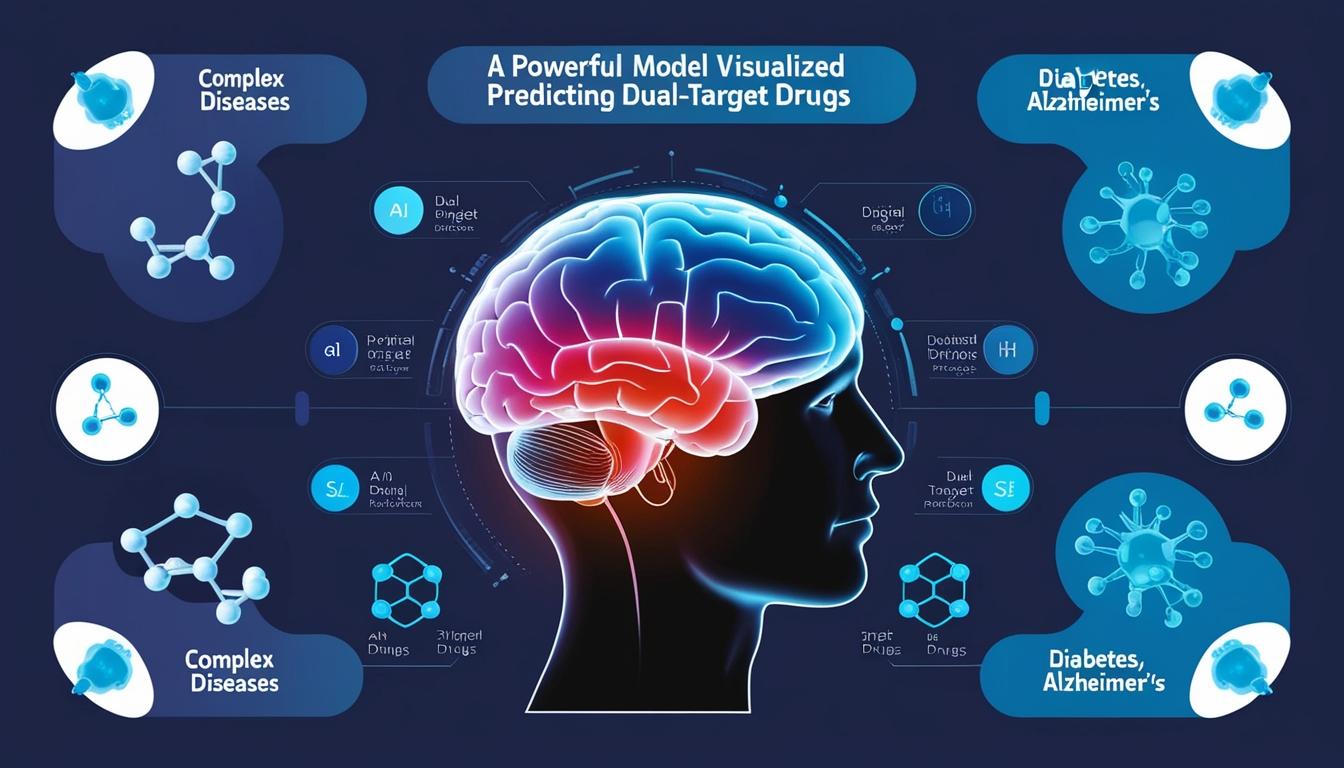
In a significant advancement for the biotechnology and pharmaceutical industries, researchers from the University of Bonn have demonstrated the potential of artificial intelligence (AI) in predicting dual-target drugs. This groundbreaking study, published in Cell Reports Physical Science, suggests that AI models, similar to ChatGPT, can effectively accelerate the field of polypharmacology by predicting compounds capable of influencing multiple drug targets concurrently.
The research, spearheaded by Dr. Jürgen Bajorath and Sanjana Srinivasan, addresses the challenges posed by multifactorial diseases. Such diseases, which include conditions like Type 2 diabetes, Alzheimer's disease, and rheumatoid arthritis, arise due to a complex interplay of genetic, lifestyle, and environmental factors. Traditional drug development for these conditions often faces hurdles due to the need for medications that can act on multiple pathways or targets simultaneously.
By utilizing a chemical language model trained on the Simplified Molecular Input Line Entry System (SMILE) strings, the researchers aimed to bridge this gap. SMILE strings offer a concise, symbolic representation of chemical molecules, allowing the AI model to interpret and predict complex interactions. The model was trained using over 75,000 target pairs, where one molecule in a string pair impacted a specific target protein, while the other molecule affected both the original protein and an additional target.
This approach draws on the capabilities of transformer-based large language models (LLMs), such as OpenAI's ChatGPT, which excel at parsing and understanding complex data structures thanks to their self-attention mechanisms. These deep learning architectures enable the model to focus on the most relevant parts of data sequences, facilitating accurate predictions.
The study's results were promising, with the AI model successfully reproducing known dual-target compounds that had been purposely excluded during the model training phase. This finding underscores the model's ability to identify viable polypharmacological candidates rapidly, potentially leading to faster drug development processes.
AI's integration into drug discovery is poised for substantial growth, with market forecasts by Statista suggesting revenues could reach $13 billion by 2032. This trend is primarily driven by AI's efficiency in accelerating the research and development phases across the pharmaceutical landscape.
The University of Bonn's study not only showcases a novel application of AI in drug discovery but also provides a promising outlook for the treatment of complex, multifaceted diseases. As AI continues to evolve, it holds the potential to transform medical research by providing innovative solutions to longstanding challenges in biotechnology and pharmacology.
Source: Noah Wire Services