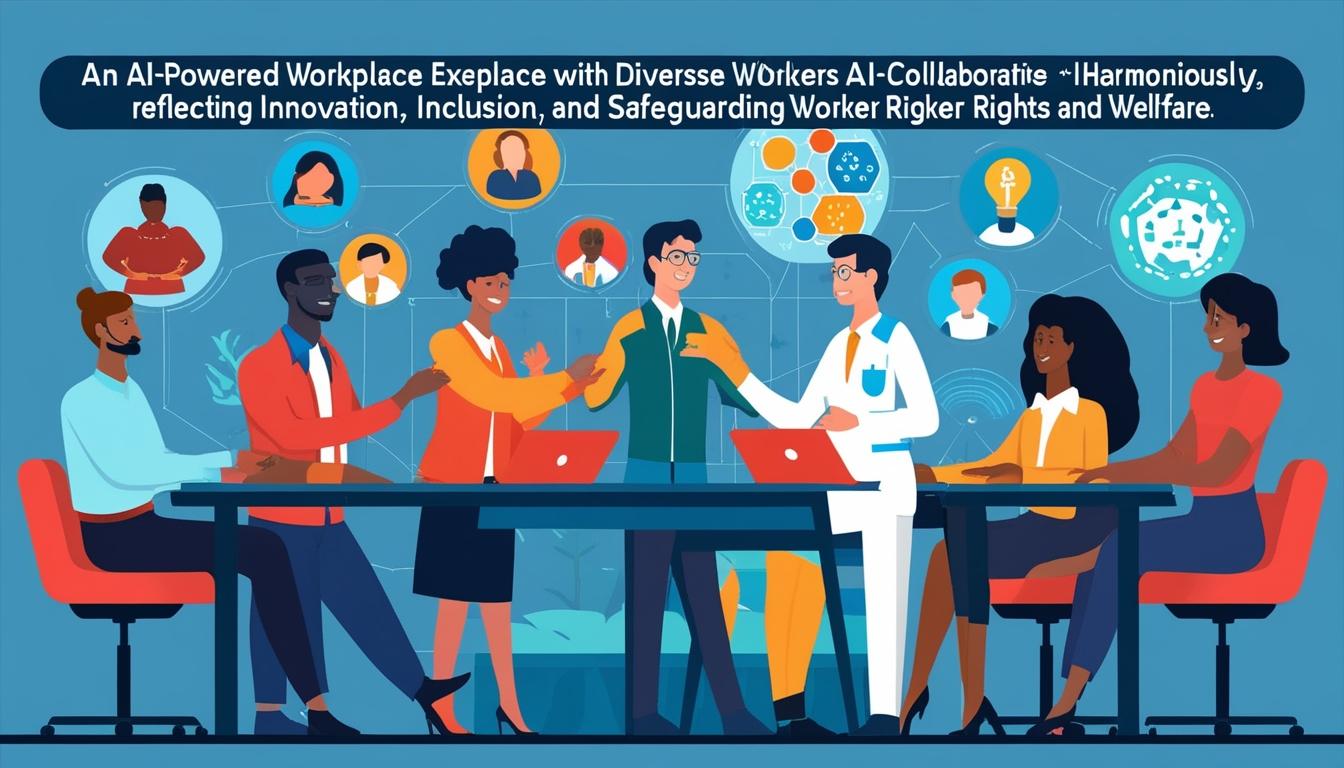
The United States Department of Labor (DOL) has unveiled a set of voluntary guidelines aimed at harnessing the benefits of artificial intelligence (AI) while safeguarding workers’ rights. Released last week, this initiative seeks to protect workers from discrimination and job displacement, providing a balanced framework for AI's integration into the workplace.
The guidelines, entitled "Artificial Intelligence and Worker Well-being: Principles and Best Practices for Developers and Employers," are the culmination of input from diverse groups including workers, unions, researchers, academics, and employers. They are intended to balance the innovative potential of AI with the mitigation of its risks, such as ethical concerns, data breaches, and job losses.
This initiative is part of a broader governmental approach to AI, stemming from an executive order signed approximately a year ago by President Joe Biden. The order aimed to evaluate AI's potential and risks across the public and private sectors, establishing measures like the White House AI Council to create frameworks for privacy protection, workforce impacts, and equitable AI usage.
President Biden underscored the importance of a comprehensive approach to AI, stating last year, "This endeavour demands a society-wide effort that includes government, the private sector, academia, and civil society."
Outlined in the DOL’s report are eight key principles, with an overarching theme of centring workers in AI deployment. It stresses that workers, particularly those from underserved communities, should be involved in the design and implementation processes of AI systems in their workplaces. This participation is seen as crucial to improving job quality and helping businesses to achieve their objectives. Moreover, unions are encouraged to engage constructively in negotiations concerning AI and electronic monitoring.
The best practices highlight the need for ethical AI development that takes into account feedback and protections for workers. Organisations are advised to adopt transparent governance systems for evaluating workplace AI and to ensure that these systems don't infringe on basic worker rights, such as organising and safeguarding health, safety, and anti-discrimination protections.
Before deploying AI tools, the report advises employers to conduct audits to assess any potential differential impacts based on race, gender, age, or other protected categories. Results from such audits should be made publicly available to demonstrate accountability and transparency.
Furthermore, the guidelines recommend that employers think ahead about how AI might affect employment opportunities and be open about these impacts. Companies that experience increased productivity or profit through AI are encouraged to share these benefits with employees through higher wages, improved benefits, or training opportunities.
AI’s potential to displace jobs is acknowledged, and to counteract this, the report suggests employers prepare by providing relevant training for staff and exploring opportunities to redeploy displaced workers within the organisation. Employers are also encouraged to collaborate with local workforce programs to facilitate skill development.
Privacy and data protection are additional concerns addressed by the guidelines, with a recommendation for employers to minimise data collection to what is strictly necessary, ensure robust data safeguarding, and avoid sharing data externally without obtaining explicit consent from employees.
The DOL stresses that these guidelines should not replace existing laws but serve as a strategic framework adaptable to specific workplace needs, developed with feedback from employees. Acting Secretary of Labor, Julie Su, remarked on the initiative, "We should think of AI as a potentially powerful technology for worker well-being, and we should harness our collective human talents to design and use AI with workers as its beneficiaries, not as obstacles to innovation."
These thoughtful and inclusive guidelines propose a future where AI technology and workforce welfare can progress hand in hand, fostering collaboration and mutual benefit across all sectors.
Source: Noah Wire Services