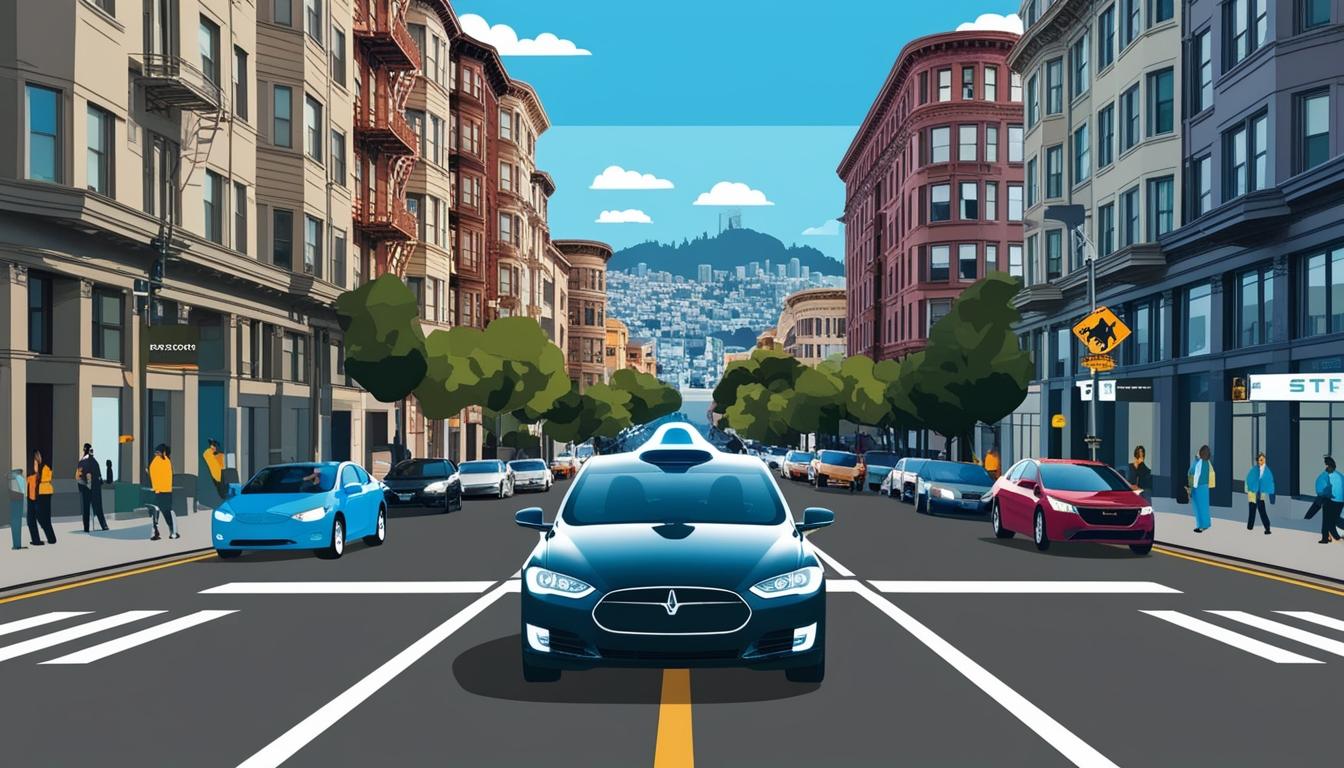
Wayve Expands Testing of Driverless Cars to San Francisco
In a significant development for the autonomous vehicle sector, the UK-based startup Wayve has announced plans to extend its driverless car testing from the busy streets of London to San Francisco. This strategic move presents a unique challenge as the firm's artificial intelligence (AI) system must adapt from driving on the left side of the road, as practised in the UK, to the right side, as per US norms.
The urban landscape of San Francisco, with its distinct road systems and traffic norms, will serve as a complex new environment for Wayve’s technology, which the company believes offers a more general-purpose solution compared to its competitors. The trial will thoroughly test the adaptability and learning capabilities of Wayve's AI as it tackles different driving regulations and road configurations.
Wayve has built a reputation for focusing on a data-centric approach, where their vehicles learn driving patterns and behaviours through experiences on London's roads. The shift to San Francisco marks the first major expansion for Wayve into the US, a market teeming with industry giants such as Cruise, Waymo, and Tesla, who have already established substantial autonomous vehicle testing programmes.
As autonomous driving technology continues to develop, this move by Wayve is a clear indication of its ambitions to compete with the current market leaders by leveraging its strengths in machine learning and computer vision. Additionally, this initiative will provide insights into the flexibility of Wayve's systems, potentially setting it apart in an increasingly competitive field.
Innovative AI Education for Young Minds
In a separate innovative venture in the field of artificial intelligence, a programme known as Little Language Models has been initiated to help children understand the intricacies of AI. This application, developed by Manuj and Shruti Dhariwal, both PhD researchers at MIT's Media Lab, offers an interactive platform for children to create their own miniature AI models.
The programme is designed to break down the intricate mechanics behind AI models into comprehensible chunks for young learners. Instead of traditional theoretical approaches, Little Language Models allows children to engage directly with the technology by building and visualising AI models themselves.
According to 10-year-old Luca, one of the participants, "This new AI technology—it’s very interesting to learn how it works and understand it more." The programme aims to stimulate a deeper understanding and interest in AI from an early age, equipping the next generation with the skills and knowledge to navigate and innovate within an AI-driven future.
These developments in autonomous vehicle testing and AI education highlight the diverse avenues through which technology continues to evolve, impacting not just industries, but also educational paradigms and societal norms. As these projects unfold, they illustrate the ongoing interplay between technological advancement and its adoption in both practical and educational contexts.
Source: Noah Wire Services