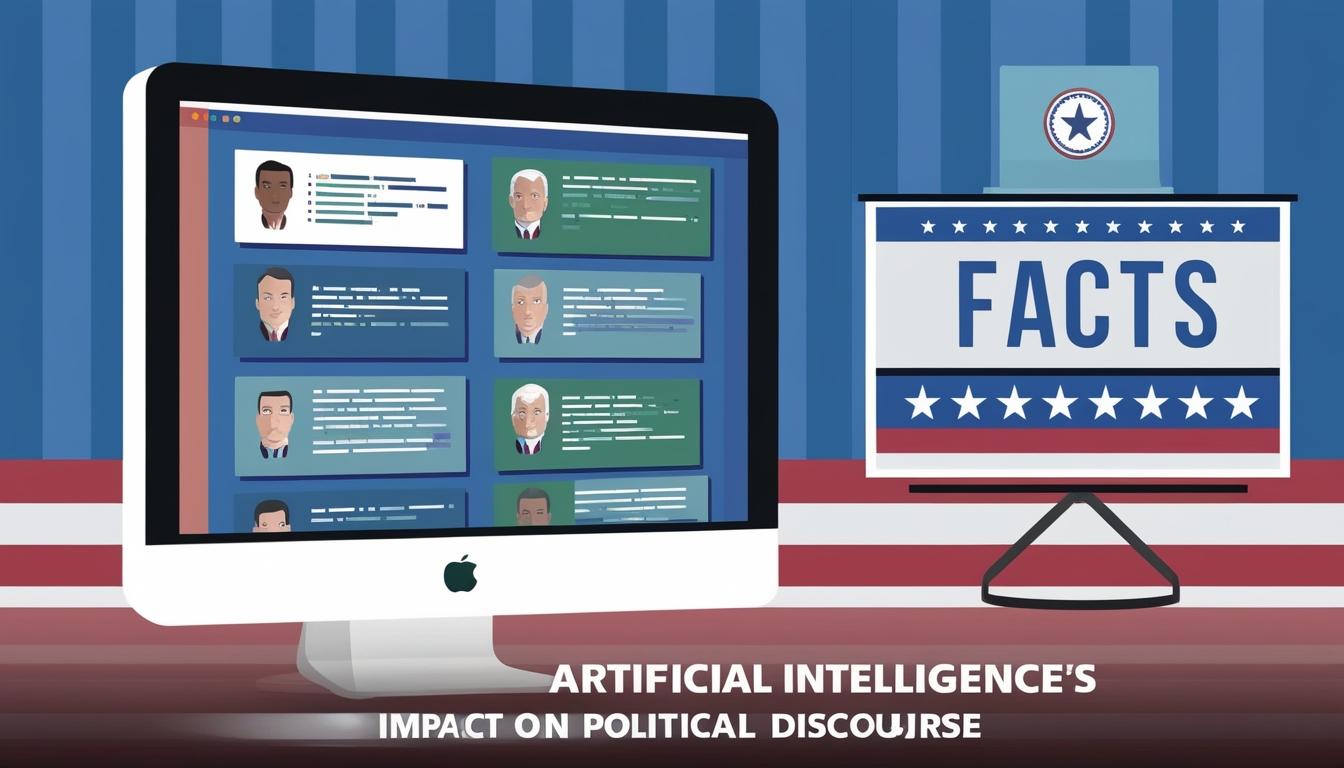
In the constantly evolving landscape of technology, the influence of Artificial Intelligence (AI) on the political discourse is becoming a subject of increasing interest. A recent poll conducted by the Associated Press-NORC Center for Public Affairs Research, in collaboration with USAFacts, indicates that about two-thirds of U.S. adults harbour scepticism towards AI's ability to produce reliable information. This context sets the stage for an experiment by Capital News Service (CNS), which aimed to assess the accuracy of AI, specifically ChatGPT-4, in providing information about the upcoming U.S. presidential election.
The experiment involved posing a series of questions to ChatGPT-4 about the forthcoming election, and measuring the accuracy of its responses with insights from political communication and public policy experts. The findings highlighted a mixed bag of successes and failures in the AI's responses. While ChatGPT could furnish basic overviews that potentially served an educational purpose, its shortcomings, particularly in a fast-changing political landscape, were starkly evident. Notably, it incorrectly claimed that no presidential debate had taken place and erroneously asserted that former President Donald Trump had not been convicted of any crimes as of the date of the inquiry.
Peter Loge, a founding director at the George Washington University, characterised ChatGPT as a "status quo machine," remarking that the technology is adept at collating popular information but often falls short of accuracy and fails to incorporate new developments. Thessalia Merivaki, an associate professor at Georgetown University, alongside Loge, evaluated ChatGPT's responses on various topics such as issues likely to impact the election, and the strengths and weaknesses of candidates including Kamala Harris, Donald Trump, Minnesotan Governor Tim Walz, and Ohio Senator J.D. Vance.
ChatGPT identified ten key issues for the 2024 election, ranging from the economy and health care to climate change and immigration. Experts noted that these issues reflected the concerns of voters, though Merivaki expressed surprise at the omission of discussions on the national debt. When it came to evaluating the candidates, the AI's performance raised some eyebrows. While outlining Kamala Harris's strengths, such as her experience and progressive appeal, ChatGPT's analysis was criticised for being outdated and occasionally incorrect. It cited nonexistent articles, underscoring the caution needed when relying on AI-generated information.
Similar assessments of Donald Trump portrayed him as enjoying a strong base and media attention but facing significant legal challenges and voter fatigue. Loge, however, disputed fundraising as a strength for Trump, pointing to recent reports where Harris outpaced Trump in financial resources. The AI's assessment of Walz and Vance was deemed more accurate, though Loge noted some nuances that AI missed regarding Vance's relationship with influential figures like Peter Thiel.
A glaring example of ChatGPT's limitations was in its handling of questions about the 2024 debates. Initially, it erroneously denied that any debate had transpired between Kamala Harris and Donald Trump. Upon clarification, ChatGPT acknowledged the debate, providing details on Harris's performance. However, Merivaki's separate experiment with other AI models yielded varying results, underscoring inconsistencies within AI systems.
When probed about Trump's legal matters, ChatGPT-4 continued its pattern of inaccuracies, stating he had not been convicted despite evidence to the contrary. This discrepancy was exacerbated by the fact that its advanced version, ChatGPT Omni, correctly identified Trump's legal status, spotlighting the inconsistency between different versions of the technology.
The exercise from CNS, while highlighting AI's potential in streamlining information, also underscores significant risks when it comes to political discourse. The inaccuracies noted in AI-generated content suggest a need for public caution and the importance of cross-referencing information from credible sources, particularly in the context of significant national events such as elections. As AI technology continues to develop, the interaction between these systems and human users, especially in politically sensitive contexts, will likely remain a pivotal area of discussion and scrutiny.
Source: Noah Wire Services