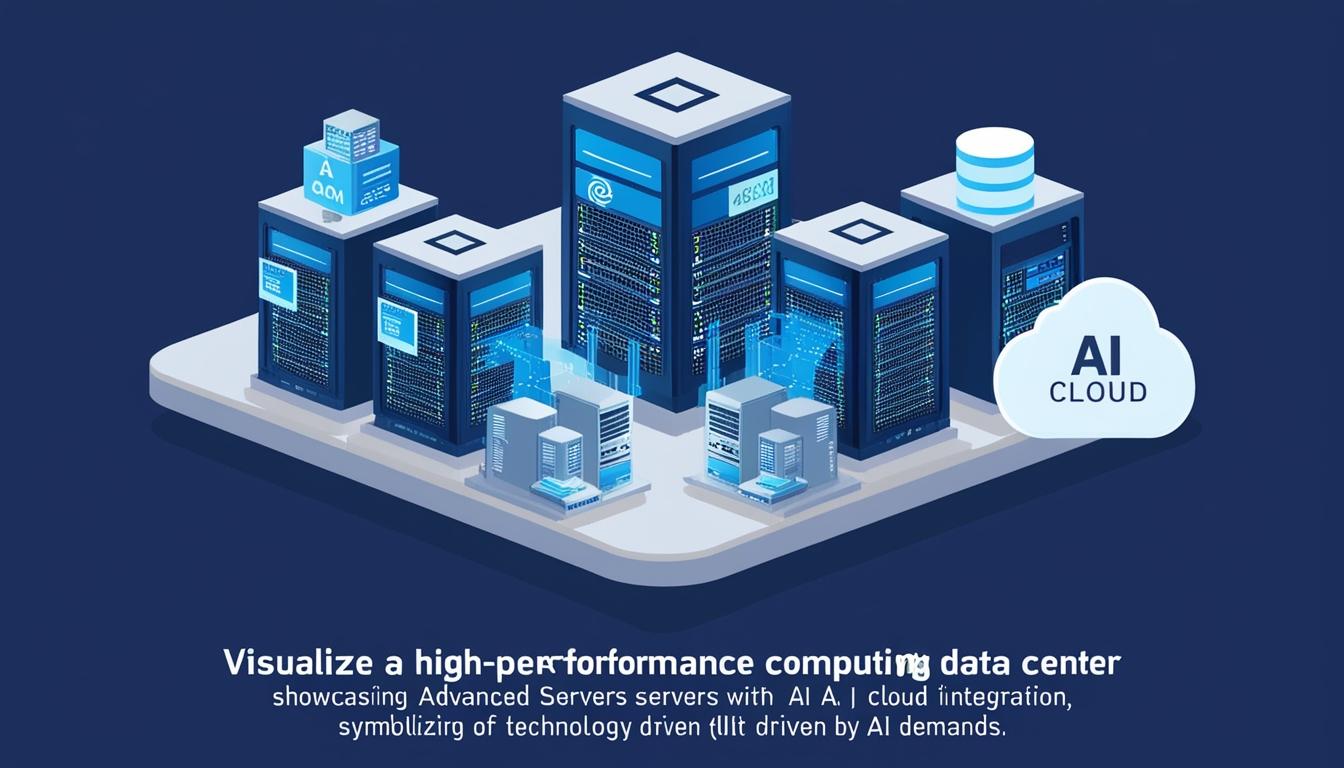
Boom in High-Performance Computing Driven by AI Demands
In recent years, the landscape of high-performance computing (HPC) has seen significant evolution, primarily driven by the growing need for handling large language models (LLMs) and generative AI. This technological shift allows organisations to harness HPC for training extensive models and responding to queries in real-time, thus offering substantial business benefits. As more enterprises recognise the performance advantages of HPC, the call for these sophisticated solutions continues to rise.
The Transformation of HPC Deployment
Previously confined to government research facilities and major corporations, HPC's scope is broadening. Research director for high-performance computing at IDC, Josephine Palencia, notes that "the AI revolution of the past few years has paved the way for organizations gaining an understanding of the importance of performance-intensive computing for business success.” This revolution is reflected in three predominant trends reshaping the HPC marketplace.
Emergence and Trends in HPC
One major shift is towards cloud delivery. Historically, enterprises relied on on-premises setups, incorporating cloud solutions for peak periods. However, a report by Hyperion Research suggests that cloud-based HPC is projected to expand at a faster pace compared to on-premises solutions. Despite starting from a smaller base, cloud HPC is expected to reach half the size of its on-premises counterpart by 2026.
The second trend involves HPC as a service. This model provides organisations with a fully managed HPC service within their data centres, adopting a pay-as-you-go approach instead of traditional capital expenditure. This setup allows enterprises to swiftly implement HPC, leveraging the service provider’s expertise and staffing, while ensuring data remains secure within their infrastructure.
The third significant development is edge computing. This strategy decentralises data processing, bringing resources closer to the data source. Industries such as manufacturing, retail, banking, and healthcare—where real-time data processing is crucial—are increasingly deploying edge data centres equipped with HPC to optimise operations and support innovations like IoT.
Key Players in the HPC Arena
The vendor landscape for HPC is diverse, comprising traditional server vendors, hyperscale cloud service providers, and new cloud-centric firms specializing in HPC services.
Among traditional server vendors, Dell emerges as a prominent player. The company offers an integrated HPC platform allowing businesses to build bespoke, on-premises setups by combining its proprietary servers, storage, and networking equipment.
Hyperscale cloud providers such as AWS, Azure, and Google Cloud continue to expand their HPC offerings, enabling organisations to leverage cloud infrastructure for intensive computational tasks without maintaining on-premises resources.
Lastly, a new category of cloud-based HPC providers is gaining traction, offering purpose-built solutions tailored to modern computational needs, notably in AI and data science domains.
The Future of HPC in AI
As more organisations explore the integration of HPC systems, they must identify use cases that either resolve ongoing challenges or provide significant competitive benefits. The adoption of HPC across various industries signifies its growing role in improving business efficiencies and driving technological boundaries. As the global demand for complex computational solutions continues to rise, the significance of HPC in supporting AI innovations is expected to grow, further transforming the technological infrastructure of enterprises.
Source: Noah Wire Services