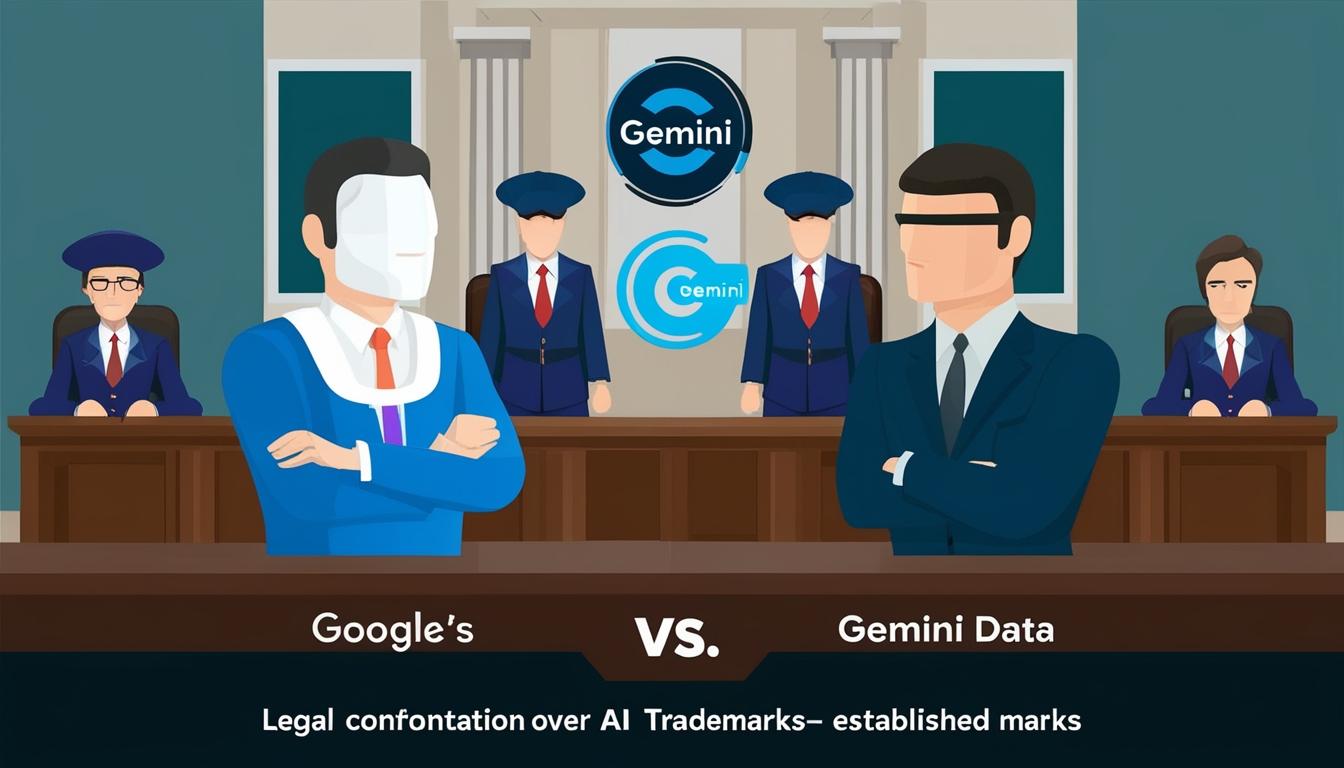
The United States Patent and Trademark Office (USPTO) has recently issued refusals to register Google’s trademark applications for the name 'GEMINI', on the grounds of a potential likelihood of confusion with the trademarks of another technology company, Gemini Data. The refusals were announced after Google sought to rebrand its artificial intelligence products from 'BARD' to 'GEMINI' earlier in the year.
Google's application to register the 'GEMINI' mark was filed in relation to AI-related software services and products. However, in May and August, the USPTO refused the applications, citing possible confusion with the existing GEMINI and GEMINI DATA marks registered by Gemini Data. These existing marks are associated with data collection and analytics software that utilise AI and machine learning technologies. In response, Gemini Data has filed a complaint in federal court, accusing Google of proceeding with the 'GEMINI' mark despite being aware of their trademark, likely having conducted a trademark clearance search in advance of their rebranding initiative. The company further alleges that Google attempted to purchase Gemini Data’s trademark rights through an intermediary.
Adding a curious twist to the legal proceedings, a footnote in the complaint refers to a statement allegedly made by Google's AI chatbot. According to the claim, the chatbot responded affirmatively when queried about infringing on Gemini Data's trademark, a quote that the court may choose to address in the future.
Google has not yet provided a legal response to this complaint but has approached the USPTO to pause any further examination of their trademark applications, pending the outcome of the ongoing lawsuit.
This legal confrontation provides an interesting perspective on the intricacies of trademark law. While Gemini Data’s claims appear straightforward, a review of the USPTO records shows that Gemini Data itself has faced similar trademark hurdles. Previously, the company’s own trademark applications encountered refusal due to possible confusion with other existing GEMINI-associated marks held by unrelated entities. To overcome the objections, Gemini Data had to tailor the scope of its trademarks and present detailed explanations, asserting that the 'GEMINI' trademark is common and widely used, thereby diminishing its distinctiveness and limiting its protection. The company argued that the stylised nature of its mark differentiates it from others and emphasised specific differences in their services’ nature and function.
These arguments might not inhibit Gemini Data from confronting Google legally, but Google might leverage them as part of their defence, potentially complicating matters for Gemini Data's infringement claims.
The unfolding litigation represents a significant moment in understanding trademark rights concerning artificial intelligence technologies. The case could have wider ramifications regarding how trademarks are protected within the domain of AI, considering the subtle product differences, consumer bases, and distribution channels that could influence consumer perception and potential confusion.
Ultimately, both Google and Gemini Data are engaged in a complex legal battle that might set precedents for how emerging technologies’ brand identities are managed and defended in the future. As the AI landscape continues to expand, the industry will watch closely how this particular case affects the broader regulatory framework and enforcement strategies surrounding trademarked AI products and services.
Source: Noah Wire Services